27 July, 2026 | 3:13 AM


Who Scripted Vijay’s Win?
26-05-2026 12:00:00 AM
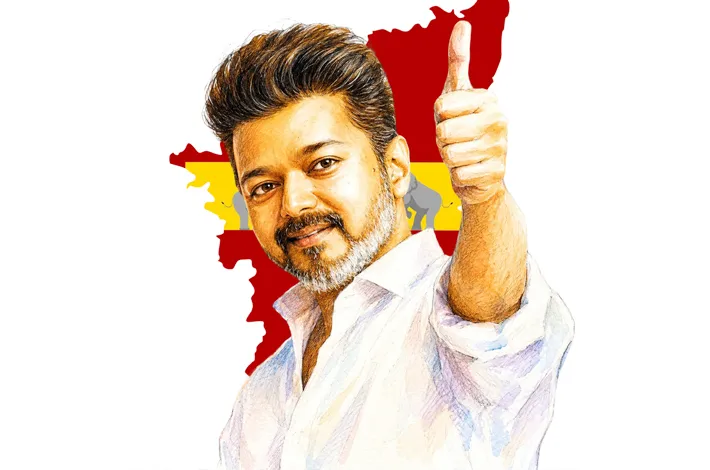
A 40-member Gen Z team led by chief strategist Kapil Sahu orchestrated the victory. Here’s how and why it worked
INSIDE TVK’S WAR ROOM
■ Kapil Sahu, former IPAC executive led the campaign
■ Their approach distilled into three words: “Less Vijay, more crazy.”
■ Strategy emphasized viral digital narratives, youth mobilization, and targeted constituency penetration
■ Field researchers fanned out across all 234 constituencies, mapp-ing anti-incumbency seat by seat.
■ They documented grievances against sitting MLAs, tracked internal factionalism in DMK and AIADMK
■ Local business communities—private school operators, restaurant owners, and textile businessmen—provided quiet logistical support after feeling squeezed by the established parties
■ Strategist Jhon Arokiasamy shaped narratives and ghost wrote content
■ Speeches for Vijay maintained tight focus, with tone and duration calibrated for maximum impact
■ The campaign avoided over-reliance on Vijay’s personal charisma
■ Channelled “craze” through memes, youth outreach, and stories of change.
metro india news I Chennai
In the bustling lanes of Chennai, tucked away from the glare of film sets and political podiums, a nondescript office buzzed with quiet intensity throughout the year 2025. Rows of workstations in yellow and maroon—the signature colours of Tamilaga Vettri Kazhagam (TVK)—filled the space. A life-size cut-out of actor-turned-politician Joseph Vijay watched over young analysts glued to screens and field reports. This was the war room of Voice of Commons (VoC), the outfit that engineered one of the most stunning debuts in Indian electoral history.
On May 4, 2026, TVK, a party barely two years old, secured 108 seats in the 234-member Tamil Nadu Assembly. The result shattered the decades-old Dravidian duopoly of DMK and AIADMK. Actor Vijay, with support from allies, stood poised to lead the state as chief minister, marking a seismic shift in Tamil Nadu politics. The credit for this meticulously orchestrated victory belongs not to star power alone, but to a 40-member Gen Z team led by chief strategist Kapil Sahu.
Kapil Sahu, a 30-something political consultant and former IPAC executive, brings over a decade of experience in campaign planning, data analysis, and grassroots mobilization. He previously contributed to efforts for parties including Congress, AAP, and Sikkim Democratic Front. Two years ago, Sahu departed Prashant Kishor’s organization with colleagues to launch his independent venture. When Vijay formed TVK in 2024 without an established cadre or booth-level structure, Sahu and his team faced a formidable challenge: building a viable alternative from scratch.
Their approach distilled into three words: “Less Vijay, more crazy.” The strategy emphasized viral digital narratives, youth mobilization, and targeted constituency penetration over traditional star-led rallies. Public appearances by Vijay remained limited, especially after the tragic Karur stampede in September 2025 that claimed 41 lives. Security protocols tightened, and the team canceled multiple events. This restraint, combined with crisis management, turned potential liabilities into assets of sympathy and underestimation by rivals.
The team’s real work began around June 2025. Field researchers fanned out across all 234 constituencies, mapping anti-incumbency seat by seat. They documented grievances against sitting MLAs, tracked internal factionalism in DMK and AIADMK, and profiled potential defectors. Disgruntled insiders from both Dravidian parties supplied critical intelligence, often competing to share details. This data-driven groundwork uncovered pockets of resentment invisible in macro-level polling.
Recruitment formed a cornerstone of the playbook. The team brought in AIADMK veterans such as K.A. Sengottaiyan, V. Sathyabama, and J.C.D. Prabhakar. Former DMK associates, including figures like Navalpattu Viji in Thiruverumbur and VS Babu in Kolathur, joined the fold. Local business communities—private school operators, restaurant owners, and textile businessmen—provided quiet logistical support after feeling squeezed by the established parties. Independent activists and writers with prior DMK ties also fed information into the network.
Caste arithmetic received careful attention without overt dominance. TVK fielded 37 candidates from the Vanniyar community and 25 from Mukkulathor groups, alongside Muslims and Christians. The party appointed 16 Dalit district secretaries out of 120, signaling inclusivity while prioritizing winnability. This balanced approach helped TVK make inroads into urban areas like Chennai and consolidate support among first-time voters.
Digital warfare amplified the ground efforts. Strategist Jhon Arokiasamy shaped narratives and ghostwrote content, feeding it to virtual warriors. Speeches for Vijay maintained tight focus, with tone and duration calibrated for maximum impact. Social media reels and stories reached Gen Z audiences untouched by traditional Dravidian loyalty. The campaign avoided over-reliance on Vijay’s personal charisma, instead channeling “craze” through memes, youth outreach, and stories of change.
Crises tested the operation. The Karur tragedy could have derailed the novice party. Team members reached out to victims’ families, capturing sympathetic messages that neutralized negative campaigns. Controversies around Vijay’s personal life, including divorce proceedings, similarly failed to stick.
The war room converted challenges into momentum, proving the resilience of their data-backed, narrative-driven model.
Vijay himself visited the VoC office multiple times, engaging personally with team members. His conviction, shared by close aides like Aadhav Arjuna, sustained the group through skepticism from outsiders. The strategy hinged on booth-level execution: understanding voters who had rarely been consulted before. Sahu’s emphasis on last-mile connectivity paid rich dividends.
Political observers note how TVK’s model departs from conventional Dravidian formulas. By going solo in all constituencies, the party positioned itself as a serious contender rather than a spoiler. Youth, particularly first-time voters, responded enthusiastically to messages of anti-corruption and fresh governance. Strong urban performance underscored the generational shift.
As TVK prepares to govern, questions arise about translating campaign innovation into administration. The coalition-building phase tests the same strategists who delivered victory. Sahu and his young team remain behind the scenes, their workstations now symbols of a new political template.
This victory highlights the power of disciplined execution in an era of fragmented loyalties. A Gen Z war room, armed with spreadsheets, local intel, and digital agility, dismantled entrenched machines. In Tamil Nadu’s evolving landscape, the silent operators have spoken loudly through results. Their formula—rooted in patience, precision, and people—offers lessons for campaigns far beyond the state