22 November, 2026 | 1:51 AM


We Share One Planet, One Fate
22-11-2026 12:00:00 AM
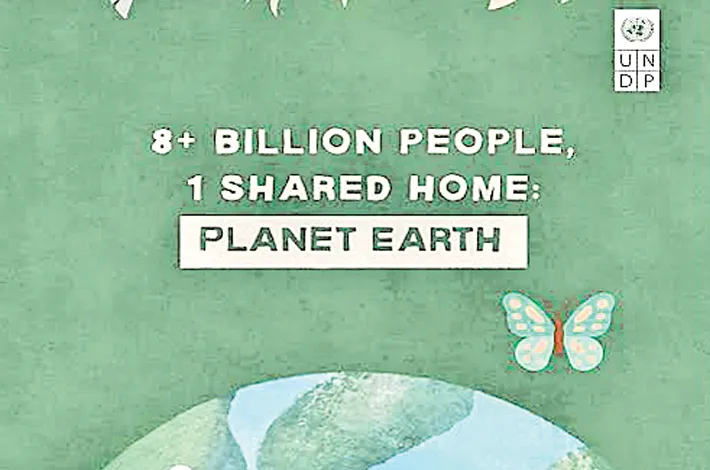
Climate change recognises no borders; protecting the planet demands collective responsibility
At his final press conference at the 31st United Nations Climate Change Conference (COP31) in Antalya, Turkiye, UN Secretary-General Antonio Guterres delivered a powerful message after nearly a decade of addressing global challenges. Reflecting on the growing consequences of climate change, he observed that environmental degradation transcends geographical boundaries, aggravating hunger, displacement, economic instability and competition for natural resources. Emphasising the limitations of individual national responses, he remarked, "No country can protect itself from climate change alone. We share one planet – and whether we like it or not, we share one fate." His statement captures the urgency of international cooperation and the shared responsibility of humanity to safeguard the planet.
A crisis that travels beyond borders
Climate change is no longer a distant scientific prediction; it is an unfolding global reality. Rising temperatures, erratic rainfall, prolonged droughts, devastating floods, melting glaciers and extreme heatwaves are increasingly threatening ecosystems, economies and human livelihoods. What makes this crisis particularly concerning is that environmental disturbances in one geographical region can generate consequences thousands of kilometres away.
Consider El Nino, a naturally occurring climate phenomenon characterised by the warming of surface waters in the central and eastern tropical Pacific Ocean. Although it originates in the Pacific, its influence extends across continents by altering atmospheric circulation, rainfall and temperature patterns. According to the World Meteorological Organization (WMO), the El Nino event established in 2026 is expected to remain influential into early 2027, increasing the likelihood of extreme weather in several regions.
India is particularly vulnerable to El Nino-induced rainfall fluctuations, which can weaken monsoon patterns and threaten agriculture, groundwater recharge and rural livelihoods. Its influence extends far beyond India, contributing to drought risks in Australia, Indonesia and Southeast Asia while altering rainfall in parts of South America and East Africa. Ocean temperature variations also disrupt fisheries and coral ecosystems, affecting food security, international trade and commodity prices. Thus, climatic disturbances transcend geographical boundaries.
The unequal burden of a shared crisis
Climate change disproportionately burdens developing nations, island states and vulnerable communities, despite their limited historical emissions. Rising seas threaten coastal settlements, glacier retreat jeopardises Himalayan water security, while erratic rainfall and prolonged drought undermine agricultural productivity, food security and rural livelihoods.
Climate related disasters also create economic repercussions beyond national boundaries. Agricultural losses can disrupt global food markets, damage to infrastructure can interrupt international supply chains, and extreme weather can increase public expenditure on disaster recovery. Climate change is therefore not merely an environmental issue; it is deeply connected with economic development, public health, food security and social justice.
Individual responsibility must become a way of life
Governments must strengthen environmental governance, accelerate renewable energy adoption and enhance climate resilience. However, policies alone cannot resolve the crisis without public participation. Individuals must minimise their carbon footprint through energy efficiency, sustainable mobility, waste segregation, afforestation and responsible consumption. Promoting a circular economy, reducing single-use plastics, conserving water and supporting carbon offset initiatives can further advance sustainability. Environmental literacy must translate into ecological consciousness and behavioural change. Awareness without action only widens the gap between knowledge and responsibility. Citizens must embrace sustainable lifestyles, businesses must adopt low-carbon production, and educational institutions must nurture environmental stewardship. Ultimately, individual accountability, reinforced by corporate responsibility and effective governance, is essential to achieving meaningful climate action and long-term ecological sustainability.
Every Nation Must Contribute to a Shared Future
Climate action demands differentiated responsibilities based on historical emissions, economic capabilities and developmental priorities. Developed nations must accelerate decarbonisation, honour climate-finance commitments and facilitate technology transfer, while developing economies pursue low-carbon industrialisation and renewable energy transitions. Vulnerable nations require adaptation finance, climate-resilient infrastructure and disaster-risk reduction mechanisms.
Nevertheless, environmental transformation begins with individual behavioural change. Resource efficiency, carbon-footprint reduction, sustainable consumption, waste minimisation and ecological stewardship can collectively strengthen climate mitigation. Environmental commitments must extend beyond diplomatic negotiations into everyday practices. Ultimately, effective climate governance requires synergy between multilateral cooperation, technological innovation, corporate accountability and individual responsibility. Safeguarding planetary health is not merely a policy obligation; it is an intergenerational responsibility shared by every nation and citizen.

-Ruthik Rao Pulloor specialises in forestry