8 October, 2026 | 12:39 AM


Visa to vishwaroopam
08-10-2026 12:00:00 AM
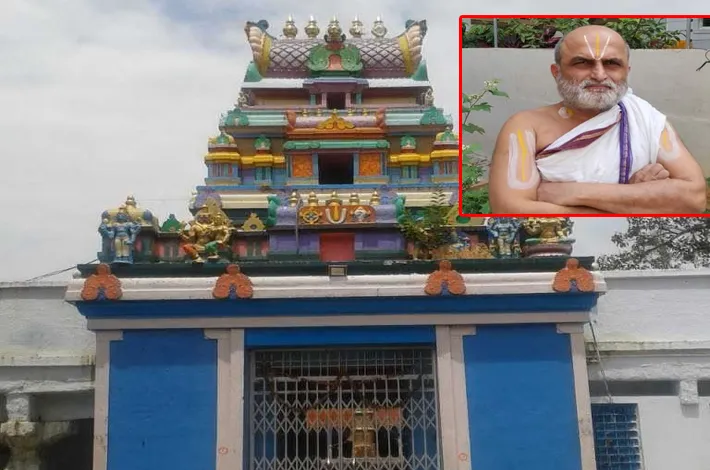
Chilkur Balaji’s spiritual reclamation
Metro India News | Hyderabad : There is an interesting way in which faith responds to ridicule. It does not always have to answer insult with anger. Sometimes, the most powerful response is to rediscover a deeper meaning in what has been misunderstood. For years, Chilkur Balaji has been popularly known as “Visa Balaji”. The name emerged from the faith of thousands of devotees who prayed at the temple for opportunities to study, work or build a life abroad. Over time, the expression became part of the popular vocabulary surrounding the temple.
But what happens when a sacred tradition is reduced to a stereotype?
Recent remarks from the United States have attempted to portray the aspirations of Indian professionals through the language of a “visa cartel”, turning a legitimate aspiration for education and employment into an object of political caricature. Perhaps it is time to reclaim “Vi-Sa”. Not as Visa. But as Vishwaroopam Sakshatkaram—the realisation of the Cosmic Form. This is not a rejection of worldly aspiration. Young Indians will continue to travel across continents, study at the world's best universities and build careers around the globe.
There is nothing inherently unspiritual about such aspirations. But the Bhagavad Gita reminds us that there is a destination greater than any geographical destination. The world outside—and the universe within. In the 11th chapter of the Bhagavad Gita, Arjuna asks Sri Krishna to reveal his supreme form. What follows is one of the most extraordinary descriptions in world spiritual literature.
Krishna grants Arjuna divine vision, and Arjuna beholds a reality in which countless forms, beings and worlds are contained in the Divine. The lesson is profound. That is why Chilkur Balaji Temple's decision to encourage the daily recital of Chapter 11, Vishwaroopa Darshana Yoga, deserves attention. A temple that refuses to commercialize faith. There is also an important context that must not be forgotten.
Chilkur Balaji is unusual precisely because it has resisted many of the commercial trappings that have accompanied modern pilgrimage. There is no hundi, no VIP darshan and no fee for special privileges. The temple's relationship with its devotees has therefore never been fundamentally transactional. A young person may come praying for a visa. But the temple does not promise a bureaucratic outcome. It offers a space in which a person can place his or her aspirations before the Divine.
The distinction is important. A visa is a document issued by a state. Faith is a relationship with the Divine. Devotees traditionally perform 11 pradakshinas of the temple. The renewed emphasis on the 11th chapter of the Gita creates a beautiful spiritual association. The young devotee who walks around the sanctum eleven times can now also be encouraged to contemplate the chapter in which Arjuna is given the vision of the lord's infinite form.
(C S Rangarajan
is the Head Pujari of
Chilkur Balaji Devasthanam.)