28 November, 2026 | 12:00 AM


Union Cabinet Okays Delimitation bill
28-11-2026 12:00:00 AM
metro india news I new delhi
The Union Cabinet on Friday approved key amendments to the proposed Constitutional Amendment Bill linked to delimitation and women’s reservation, clearing the way for a revised package that proposes a uniform 50 per cent increase in Lok Sabha seats across all states while freezing the inter-state allocation of seats until 2051.
Sources confirmed that the revised framework keeps the relative share of seats among states broadly intact, based on the existing proportions rooted in the 1971 Census. The 50 per cent hike would apply uniformly, so every state gains representation without any state losing its proportional weight in the House. Constituency boundaries within states would be redrawn using more recent census data, but the inter-state seat distribution would remain frozen for another 25 years. The total strength of the Lok Sabha is expected to rise significantly (projections in the earlier package had spoken of a ceiling around 850 seats).
The decision comes seven months after the government’s earlier attempt in April 2026 failed in the Lok Sabha for want of the required special majority. That package of three Bills — the Constitution (131st Amendment) Bill, the Delimitation Bill and the Union Territories Laws (Amendment) Bill — had sought to advance 33 per cent women’s reservation to the 2029 general elections by linking it to a delimitation exercise. The Constitution Amendment Bill was defeated 298-230. A special sitting of Parliament has now been called from November 30 (Lok Sabha) to December 3, with the Rajya Sabha scheduled to meet from December 2, to take up the revised legislation.
The amendments are widely seen as a direct response to objections, particularly from southern states, that a pure population-based delimitation after the long freeze would penalise regions that successfully controlled population growth. Southern states have argued that using post-1971 population figures would shift relative political power northward, even if absolute seat numbers did not fall, because northern states have recorded higher population growth.
Under a strict recent-census formula, the collective share of the five southern states (Tamil Nadu, Kerala, Karnataka, Andhra Pradesh and Telangana) was projected to decline from around 24 per cent towards 20 per cent or lower, while northern states would gain. The uniform 50 per cent expansion with a freeze is designed to maintain the existing balance.
DMK’s firm stand
The Dravida Munnetra Kazhagam has been among the most vocal critics of any exercise that could dilute Tamil Nadu’s representation. Tamil Nadu currently holds 39 Lok Sabha seats, or roughly 7.18 per cent of the House. DMK president M.K. Stalin on Friday reiterated that the party remains firm on two core demands: Tamil Nadu’s existing share must not fall below 7.18 per cent even if the total number of seats rises, and the inter-state proportions based on the 1971 Census must stay frozen for another 25 years.
“There is no change in our position, and there is no question of any compromise,” Stalin said, dismissing speculation that the party might soft-pedal its stance. While some reports suggested the DMK could be open to supporting the revised Bill if these safeguards are written into law, the party leadership has stressed that it will examine the fine print carefully and will not dilute its insistence on “fair delimitation.” The DMK has 22 MPs in the Lok Sabha. Similar concerns have been voiced by other southern parties, though the YSRCP has signalled greater willingness to support a formula that protects regional balance.India Today
NCP (Sharad Pawar) position
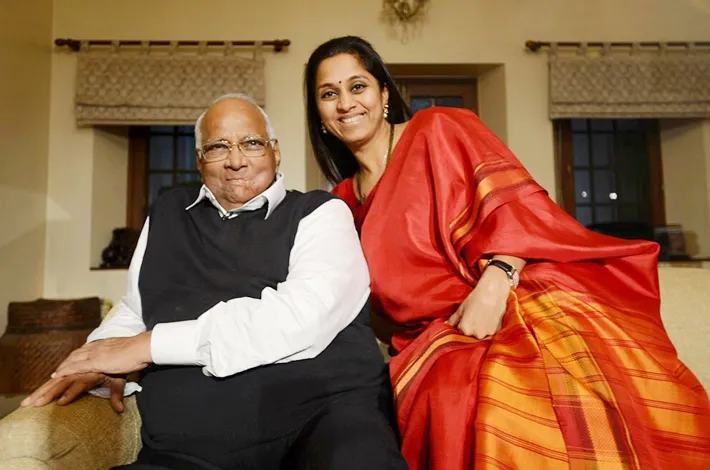
The Sharad Pawar-led Nationalist Congress Party (SP) has adopted a more flexible approach. Working president and MP Supriya Sule has indicated that the party could support the legislation if it provides for a uniform 50 per cent increase in seats across all states and is linked to the women’s reservation measure. The NCP(SP)’s eight Lok Sabha MPs could prove crucial in the arithmetic for the two-thirds majority required for the Constitution Amendment.
The stance has caused unease among some INDIA bloc allies, particularly the Congress, with reports of persuasion efforts under way. Pawar’s party has not issued a final formal commitment, but its conditional openness marks a shift from the united opposition that defeated the Bill in April. Senior NCP leaders have described the position as issue-based rather than a broader realignment.I
Likely impact on southern states
For the southern states, the revised formula offers significant relief compared with a pure population-based redraw. Under the uniform 50 per cent increase, Tamil Nadu’s seats would rise from 39 to around 58-59, Kerala from 20 to about 30, and the five southern states collectively from 129 to roughly 195, preserving their overall share near 24 per cent. Absolute numbers would rise and relative political weight would be protected until at least 2051.
Without such safeguards, even an expanded House could have seen the South’s percentage share erode, reducing bargaining power on federal issues, fiscal transfers and national policy. Southern leaders have long argued that states that invested in education, health and family planning should not be disadvantaged for their success. The freeze also buys time for further negotiation on long-term principles of representation.
The government is now focused on mobilising the necessary numbers in both Houses. With the special session days away, the revised Delimitation package — combining seat expansion, a long freeze and accelerated women’s reservation — is set to dominate the political agenda, testing whether the Centre’s concessions have bridged enough of the North-South divide to secure passage.