14 July, 2026 | 6:20 PM


Two Ragi Modaks a Day
27-02-2026 12:00:00 AM
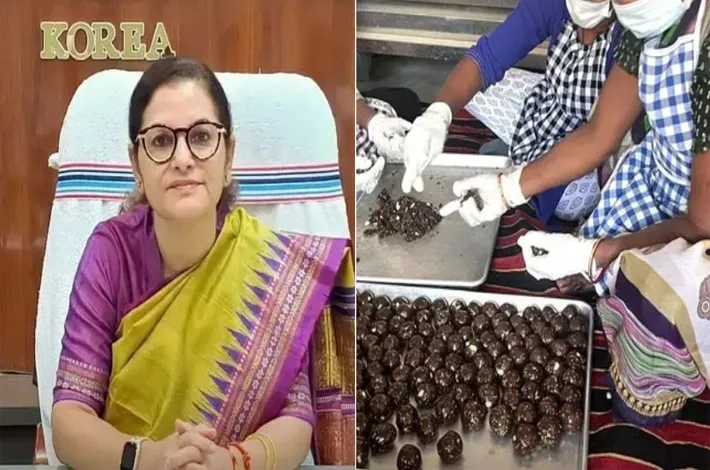
How Koriya District Quietly Reversed a Maternal Health Crisis
hema singuluri I koriya
In the tribal district of Koriya district in Chhattisgarh, poor maternal health is being tackled in an unexpectedly simple way: by giving every pregnant woman two nutritious ragi modak ladoos daily.
What began as a local nutrition intervention has grown into one of the district’s most closely watched public health successes. Faced with high-risk pregnancies, severe anaemia among expectant mothers, and alarming rates of low-birth-weight babies, District Collector Chandan Sanjay Tripathi chose not to rely on expensive technology or large-scale infrastructure. Instead, the administration turned to a traditional homemade sweet, the ragi modak ladoo and transformed it into a structured maternal nutrition programme.
Under what came to be known as the Koriya Modak Ladoo initiative, every pregnant woman in the district receives two iron-rich ragi modaks daily. The recipe, vetted for nutritional value and approved by dieticians, was designed to address calorie deficits and iron deficiency, a major contributor to maternal complications. From the fifth month of pregnancy onward, iron supplementation is added to the regimen.
But nutrition supply alone was not considered enough.
Each expectant mother is paired with a “Poshan Sangwari” literally, a nutrition companion, who ensures the ladoos are consumed regularly and monitors basic health indicators. This personalized follow-up closed the gap between distribution and actual intake, a common weakness in top-down welfare schemes.
The measurable results have drawn attention. District data indicates a 57 per cent decline in low-birth-weight cases since the programme began. Of 398 underweight pregnant women tracked under the initiative, 362 achieved healthy weight gain during pregnancy. More than 3,00,000 ladoos have been distributed so far.
Equally significant is how the programme is produced. Rather than outsourcing manufacturing, local women’s self-help groups prepare for the ladoos. Members earn between Rs 10,000 and Rs 12,000 per month, turning beneficiaries into producers and embedding the intervention within the community itself. This decentralized production model has strengthened local ownership and created livelihood support alongside health gains.
Public health experts often emphasize that maternal nutrition is one of the most cost-effective investments in long-term human development. In Koriya, that principle has taken the form of a grandmother’s recipe, systematized, monitored, and scaled.
At a time when complex solutions often dominate policy conversations, Koriya’s experience suggests that measurable health improvements can emerge from culturally familiar foods, community trust and administrative will two modaks at a time.