26 September, 2026 | 12:18 PM


Twenty Years of Rang De Basanti
23-02-2026 12:00:00 AM
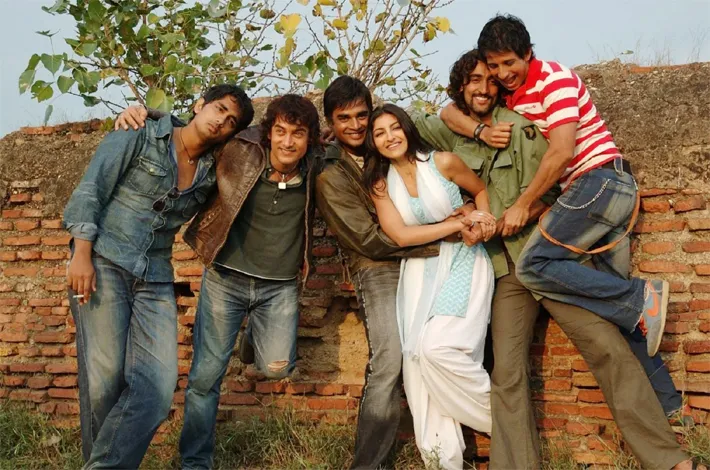
Twenty years. Two decades. And yet, if someone plays the opening notes of Lukka Chuppi right now, there’s a very good chance you’ll need a moment. Just a moment. You’re not crying. There’s dust in your eye. There’s always dust in your eye. Rang De Basanti released on Republic Day, January 26th, 2006, and the timing, in hindsight, felt less like a marketing decision and more like destiny showing off. Here was a film that dared to ask, on the very day India celebrates its Constitution, what it would take to mean it.
A Breath of Fresh Air in a Decade of Breezy Romance
Cast your mind back to the early 2000s. Bollywood had been on a reliable diet of sweeping Swiss Alps romances and colour-coordinated families. But Rang De Basanti arrived like that one friend who walks into a house party, turns down the music, and says, “Okay, but what are we actually doing with our lives?” And unlike the jingoistic, chest-thumping nationalism that Bollywood would occasionally serve up, this wasn’t that. It didn’t make you proud, and all puffed up - It made you uncomfortable, then it shook you by the collar.
The Cast That Made India Feel Pan-Indian
Director Rakeysh Omprakash Mehra assembled what can only be described as an audaciously well-cast ensemble. Aamir Khan headlined, because of course he did, but the real magic was in how the film blended Bollywood and South Indian talent in a way that genuinely felt pan-Indian - perhaps one of the first times Hindi cinema had managed that without it feeling like a forced PR exercise. Sharman Joshi brought the laughs, Atul Kulkarni brought the gravitas, Kunal Kapoor brought a quiet intensity, and then there was Siddharth and Madhavan - both of whom made you forget, entirely, that this was supposed to be a “Bollywood film.”
The Transformation Arc That Hit Different
At the heart of Rang De Basanti is Sue McKinley, a British filmmaker who arrives in India clutching her grandfather’s diary - notes from a British officer who witnessed the Indian freedom struggle up close. She wants to make a documentary about Bhagat Singh, Sukhdev, Rajguru, Chandra Shekhar Azad, Ashfaqullah Khan and Ram Prasad Bismil. She ends up casting a ragtag group of apathetic, irreverent Delhi University students in these roles.
The irony is delicious and heartbreaking in equal measure. Karan (Siddharth), who plays Bhagat Singh - a man who gave up his life for this country - is himself convinced that India is a sinking ship best abandoned at the earliest opportunity. The transformation of this character, in particular, is the film’s quiet masterstroke. And then there’s the pairing of Laxman Pandey (Atul Kulkarni), a card-carrying worker of what the film very subtly calls a “Hindutva Conservative Party” - ahem, ahem - and Aslam (Kunal Kapoor).
They are cast as Ram Prasad Bismil and Ashfaqullah Khan: a Hindu and a Muslim who were hanged together, who wrote poetry for each other, who called each other brothers. Watching Laxman and Aslam find their way toward understanding through the act of playing these men is, frankly, the kind of storytelling that makes you mourn the films that could have been made in the years since.
The Audacity of the Plot
Let’s talk about what this film actually does, because it’s easy to forget how audacious it was. A group of young people, enraged by the death of their friend Ajay Rathod (Madhavan) - a MiG-21 pilot killed because of corruption in defence procurement, because someone in power decided that human lives were an acceptable line item to cut costs on - kill the defence minister. And then they walk into All India Radio and broadcast their story to the nation.
The film draws explicit, unapologetic parallels with the freedom struggle: the killing of Saunders after Lala Lajpat Rai’s death, the bombing of the Parliament during the British Raj. The message is uncomfortable and it is meant to be. Are you willing to sit with that discomfort? Rang De Basanti does not let you look away.
The Ripple Effect — A Decade of Movements
Here’s the thing about great films: their impact rarely ends in the theatre. Rang De Basanti planted something in the collective consciousness of a generation, and you could see it bloom - and rage - in the years that followed. The Anna Hazare movement for a corruption-free India carried that same energy: ordinary people, fed up, stepping out, refusing to accept that this is simply how things are.
The nationwide outrage following the Nirbhaya case, the demand for political and legal reforms that followed - the DNA of Rang De Basanti was in all of it. A generation had been told, in no uncertain terms, that you can either crib and resign yourself to your country’s fate, or you can decide to do something about it. That’s a dialogue from the film, more or less - “Koi bhi desh perfect nahin hota, use perfect banana padta hai.” No country is perfect. It has to be made perfect. By its citizens. By you.
AR Rahman and the Great Academy Awards Mystery
The soundtrack. The soundtrack. AR Rahman outdid himself which, given that this is AR Rahman, is saying something significant. Apni Toh Paathshaala will have you raising a fist. Khalbali will have you on your feet. And Lukka Chuppi - well, we’ve already established what Lukka Chuppi does to you. Rang De Basanti was India’s official entry for the Golden Globes and the Academy Awards in the Best Foreign Language Film category.
It received a nomination for Best Foreign Language Film at the 2007 BAFTA Awards. And yet, AR Rahman would go on to win his Academy Award for Jai Ho - from Slumdog Millionaire. Why the Academy chose Jai Ho over this body of work is, to borrow the film’s own spirit, a question worth hijacking a radio station for.
Twenty Years On
“Yeh anth kahaan, Mr. McKinley?” - This is not the end, Mr. McKinley. Twenty years later, the film doesn’t feel dated. If anything, it feels like it was made for right now, or for whenever now happens to be - because the questions it asks are permanent ones. Corruption, accountability, apathy, the seductive comfort of just leaving, of letting someone else deal with it. These haven’t gone anywhere. Rang De Basanti didn’t just tell us a story. It handed us a mirror, and then, very gently, dared us to do something about what we saw. Happy 20th. Go watch it again. Keep tissues handy - for the dust.
- Pavan Murthy Tallapragada