25 September, 2026 | 11:41 AM


Gujarat introduces stricter marriage registration rules amid debate on liberties
23-02-2026 12:00:00 AM
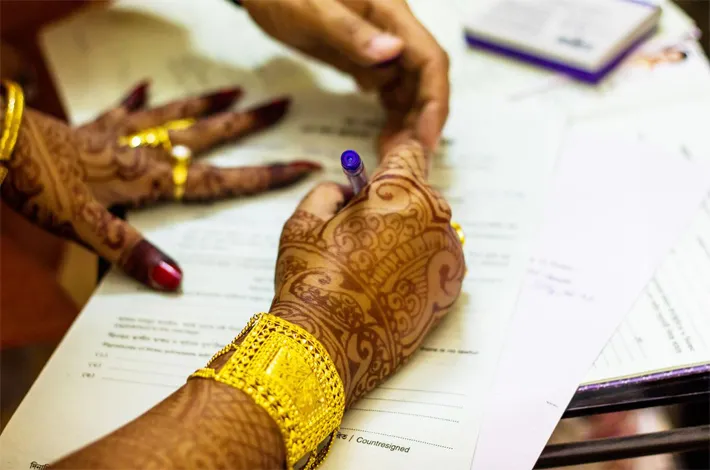
In a significant move aimed at enhancing transparency and digitizing records, the Gujarat government has announced amendments to the Registration of Marriages Act, 2006. These changes mandate parental notification for marriage registrations and impose a 30-day waiting period before issuing certificates. Deputy Chief Minister H. Sanangevi outlined the new multi-step verification process, which requires couples to declare whether their parents are aware of the marriage.
Authorities will inform parents via WhatsApp and SMS, and couples must provide parents' Aadhaar cards, wedding invitations, and other details. During the waiting period, wedding photos and witness information will be uploaded to a centralized state portal. The government claims these measures respond to community feedback pushing for greater parental involvement and a trackable system across the state.
The proposed amendments introduce several key requirements to streamline and secure the marriage registration process. Parental consent will now be mandatory for registration, with applicants needing to submit detailed documents including Aadhaar cards, birth certificates, school certificates, identity proofs, wedding photos, invitation cards, and notarized declarations.
Feedback from communities, including those representing around 14% of Gujarat's population like the Patidar community, has highlighted issues such as discrepancies in certificate issuance in certain districts. For instance, towns like Kora Koi and Nagua in Panchmahal district have seen hundreds of certificates issued despite no minority community residents living there, raising suspicions of irregularities.
However, the amendments have sparked a heated debate on adult autonomy, privacy, and societal interference. In a recent discussion on a private news channel experts weighed in on the implications. A social activist strongly opposed the parental notification requirement, arguing that it infringes on constitutional rights under Article 21, which guarantees personal liberty and the right to life.
She pointed out that adults over 18 can vote and decide the nation's fate, so they should be free to choose their partners without parental or societal interference. Citing Supreme Court rulings, such as in the Lata Singh vs. State case, she emphasized that harassment based on caste, religion, or choice of partner is unacceptable. She argued that the Constitution, crafted by figures like Babasaheb Ambedkar, upholds women's rights, and no civilized society can deny them access to such freedoms.
A senior journalist countered this view, acknowledging the right to personal liberty but warning against its misuse. He argued that while love marriages are fine, cases of deception—such as identity concealment or enticement—have led to chaos in society. He cited examples where young adults, influenced or fooled, enter marriages that later collapse, sometimes resulting in family tragedies like suicides.
He referenced complaints from communities like Patidars and Thakurs in Gujarat, suggesting the amendments target "weaponization" of individuals, particularly in inter-caste scenarios. Dismissing criticisms as "woke philosophy," he questioned why notifying parents via a simple SMS would be problematic if the couple's intentions are genuine, especially in a culturally rooted society like India's where family hierarchies remain strong.
The debate also touched on privacy concerns and the practical effects of the 30-day waiting period. Questions were raised about uploading sensitive details like wedding photos and Aadhaar information to a centralized portal, labeling it a potential breach of privacy for adults. The advocate echoed this, noting that many couples opt for court or registered marriages precisely because parents object, often in inter-caste or love marriage scenarios.
She referenced a recent Gujarat court case where a 16-year-old girl (a minor at the time) was protected from her parents due to fears of harm, allowing her to marry upon reaching legal age. She criticized parental involvement in such cases, pointing out that even in arranged same-community marriages, women face domestic violence, yet parents often advise them to "adjust" rather than intervene supportively.
Another section of observers and analysts however defended the notifications as a safeguard, insisting they provide parents one chance to address potential cheating or coercion before it's too late. They clarified that the government, including Deputy Chief Minister Harsh Sanghavi, has stated the rules are not against love marriages but aim to root out discrepancies.
They highlighted the invitation for public suggestions during the 30-day finalization period, suggesting the amendments are responsive rather than rigid. However, they maintained that in India's social context—distinct from Western cities like London or New York—informing parents aligns with prevailing values and prevents exploitation.
As the amendments move toward implementation, critics worry they could deter inter-caste unions and empower conservative elements, while supporters see them as a balanced approach to transparency. The bottom line remains: in a democracy guided by the Constitution, balancing adult rights with family and community concerns continues to fuel contention.