8 September, 2026 | 9:57 AM


‘Transport decarbonisation key to Net Zero 2070’
11-02-2026 12:00:00 AM
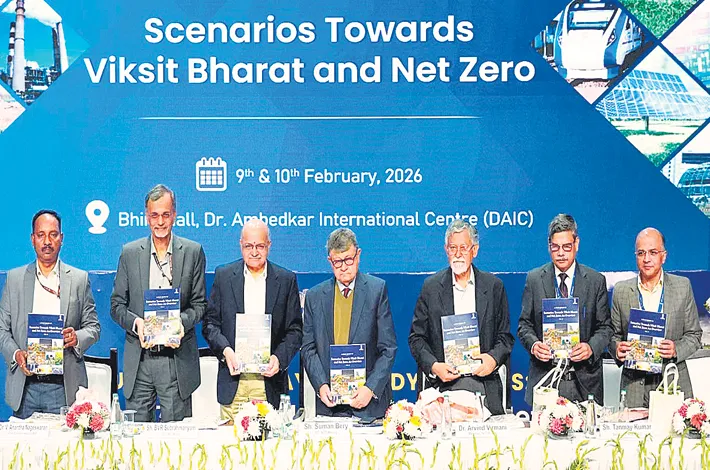
The report warned that with rapid urbanisation and rising travel demand, India risks being locked into higher fuel imports, deteriorating air quality, and increasing logistics costs if transport emissions are not addressed in time
NITI Aayog has called for a major push to decarbonise India’s transport sector through modal shift, adoption of zero-emission vehicles (ZEVs), and cleaner fuels and technologies to achieve the country’s Net Zero emissions target by 2070.
In a report released on Tuesday, the government think tank said the transport sector plays a crucial role in India’s economic growth but is also a major contributor to energy consumption and emissions. In 2020, transport accounted for nearly 20 per cent of final energy demand and about 10 per cent of India’s greenhouse gas emissions.
According to the report, following a Net Zero pathway would require cumulative investments of around USD 4.3 trillion by 2070, which is about 25 per cent higher than the USD 3.44 trillion projected under the current policy pathway. However, NITI Aayog described the additional investment as a strategic opportunity rather than a financial burden.
The report warned that with rapid urbanisation and rising travel demand, India risks being locked into higher fuel imports, deteriorating air quality, and increasing logistics costs if transport emissions are not addressed in time.
It emphasised that decarbonising transport through modal shift, zero-emission vehicles, and clean fuels is critical to meeting India’s long-term climate goals. The Aayog said adoption of ZEVs such as battery electric vehicles, hydrogen-based vehicles, and biofuel-powered options including ethanol-based flex-fuel vehicles and compressed bio-gas vehicles should be a long-term priority.
NITI Aayog recommended formalising segment-wise ZEV acceleration plans up to 2035 for two- and three-wheelers, passenger cars, buses, and trucks. It also suggested promoting modal rebalancing by expanding metro networks, regional rapid transit systems, and bus services, supported by strong last-mile connectivity and integrated paratransit systems.
The 136-page report also proposed advancing clean fuel diversity while addressing emissions from aviation and shipping. In a separate report, NITI Aayog said India’s industrial transition will require technology upgrades, electrification, renewable energy adoption, and supportive policy frameworks as the country aims for developed-nation status.