2 June, 2026 | 5:29 AM


Centre gives nod to Vizag Metro Rail Project
11-02-2026 12:00:00 AM
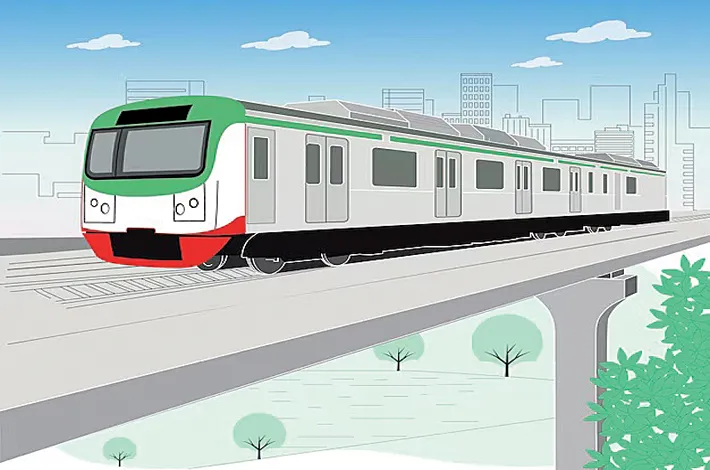
Giving a huge boost to Andhra Pradesh’s urban infrastructure plans, the Union Government has given in-principle approval for the long-pending Visakhapatnam Metro Rail project. The development came during Chief Minister N. Chandrababu Naidu’s ongoing visit to New Delhi, marking a significant step forward in addressing the growing transportation needs of the state’s largest city.
Chandrababu Naidu, who arrived in the national capital on Monday night, held a series of high-level meetings with key Union Ministers on Tuesday. During his interaction with Union Minister for Housing and Urban Affairs Manohar Lal Khattar, the Centre formally conveyed its approval for the Visakhapatnam Metro project.
The approval is seen as a major breakthrough for the state government, which has been actively pursuing metro rail connectivity for both Visakhapatnam and Vijayawada to ease rising traffic congestion and support rapid urban expansion. Officials believe that with the Centre’s green signal, the Visakhapatnam Metro project is now set to move into the execution phase without further delay.
According to the Detailed Project Report (DPR) prepared by the state government, the first phase of the Visakhapatnam Metro will be implemented at an estimated cost of Rs 11,000 crore. The project proposes to develop three major metro corridors covering a total length of 46.22 kilometers with 43 metro stations. The first corridor will run from Kurmannapalem to Kommadi Junction, covering 34.4 kilometers with 29 stations. The second corridor will connect Gurudwara Junction to Old Post Office, spanning 5.07 kilometers with six stations. The third corridor is planned between Thatichetlapalem and Chinnawaltair, extending over 6.75 kilometers with seven stations.
Officials said the metro system has been designed on a modern double-decker model, integrating road and metro transport infrastructure. Key integrated metro stations are proposed at NAD Junction, Thatichetlapalem, Gurudwara, Maddilapalem and Hanumanthavaka, ensuring seamless connectivity across major transit points in the city.
The Visakhapatnam and Vijayawada metro proposals were originally submitted to the Centre in 2015 during the earlier TDP government. Though the projects received preliminary approval at that time, the Centre later asked the state to revise the DPRs in line with its updated metro rail policy. However, after the change of government in 2019, both projects suffered prolonged neglect, with no fresh DPRs being submitted for nearly five years. Following the return of the TDP-led coalition government in 2024, the metro projects were revived on priority. Revised DPRs for both Visakhapatnam and Vijayawada metros were prepared within six months and submitted to the Centre in December 2025 for approval. The projects are proposed to be executed in two phases under a joint venture model, with the Centre and the state sharing 40 percent of the project cost equally.
The Andhra Pradesh government has already expressed readiness to contribute its 20 percent share of funds and initiate preliminary works such as land acquisition and civil construction. To avoid further delays, the state had recently sought permission from the Centre to begin works using its own resources, even before final financial approvals are granted.
With major investments flowing into Visakhapatnam, including data centers by global tech giants like Google and rapid industrial growth, the metro rail project is considered crucial for sustainable urban mobility. State officials believe that early implementation of the first phase will significantly improve public transport and reduce traffic congestion in the port city.
While the Visakhapatnam project has now received the Centre’s nod, clarity on the Vijayawada Metro proposal is also expected soon. The state government is hopeful that both projects will be taken up simultaneously to strengthen urban infrastructure and support Andhra Pradesh’s long-term development plans.