29 September, 2026 | 12:37 AM


Then Simon Go back, Now SIR Go Back
29-09-2026 12:00:00 AM
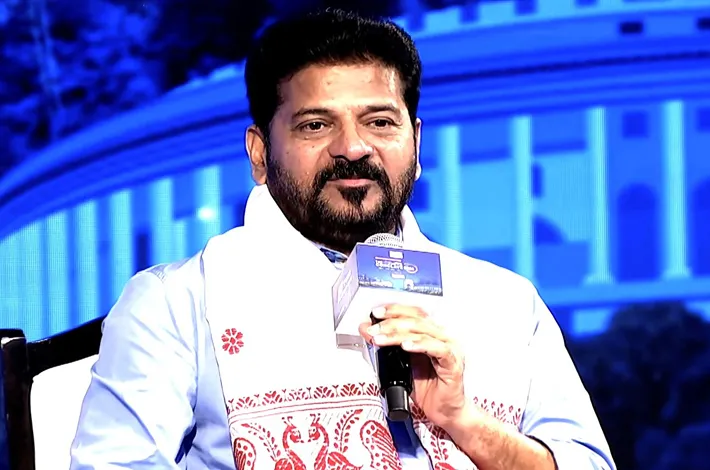
metro india news I hyderabad : Chief Minister A Revanth Reddy on Monday drew a sharp historical parallel between the colonial-era Simon Commission and the present Election Commission of India, declaring that just as the nation once united under the slogan “Simon Go Back,” it would soon rally under “Sir Go Back” against what he described as a systematic assault on democratic institutions.
Speaking at the Pratidin Conclave in Delhi on the theme “India’s Next Chapter,” Revanth Reddy said the country was witnessing a deliberate attempt to mirror the tactics of the British-era commission. In 1928, he recalled, the all-British Simon Commission had been appointed to review constitutional reforms under the Government of India Act of 1919.
The absence of any Indian member had provoked widespread protests led by Lala Lajpat Rai under the “Simon Go Back” banner. Lathi charges followed, Rai later died of injuries, and Bhagat Singh took up the fight. Nearly a century later, the Chief Minister alleged, Prime Minister Narendra Modi and the Election Commission were deploying similar exclusionary methods.“After independence, the Constituent Assembly ensured universal adult franchise. Earlier, kings decided who would rule; now the people decide,” Revanth Reddy said. He claimed that successive Special Intensive Revision (SIR) exercises had historically expanded the voter list.
This time, he charged, the process was being used to delete names. According to him, the electorate grew from 81 crore in 2014 to 91 crore in 2019 and 97 crore in 2024.Still he alleged that 13 crore names had been removed ahead of the 2029 elections. With India’s population rising from 35 crore at independence to 140 crore today, and the voting age lowered from 21 to 18, the Chief Minister asked why the Prime Minister and Chief Election Commissioner Gyanesh Kumar were deleting crores of voters.
Revanth Reddy further alleged that technology and social media were being deployed selectively. “Those who post against them on WhatsApp or social media—regardless of religion or caste—are seeing their names struck off. Only those favourable to Modiji retain the right to vote,” he said. He claimed artificial intelligence was being used for deletions and that of the three election commissioners, Gyanesh Kumar was taking decisions without the knowledge of the other two.
Powers once exercised by booth-level officers and district collectors, he added, had been concentrated entirely within the Commission.The Chief Minister framed the issue as a threat to democracy itself rather than a partisan Congress concern. “Our Constitution makers wanted democracy to flourish. Instead, a large-scale conspiracy is being hatched in the name of the Election Commission,” he said. Drawing a provocative comparison,
he remarked that if Gyanesh Kumar spent ten days in North Korea, he would return trained by Kim Jong-un and ensure 100 per cent votes for Modi.Revanth Reddy predicted that opposition leaders across parties—Mamata Banerjee, Sharad Pawar, Uddhav Thackeray, M.K. Stalin and others—would unite under the “Sir Go Back” slogan just as the nation had once united against the Simon Commission.Turning to state politics, the Chief Minister reflected on the limited influence of student organisations in Telangana compared with the North.
He noted that political styles differed between North and South India and that while ABVP might win university elections, family loyalties often kept voters with the Congress once students returned to their villages. The BJP, he said, lacked significant traction in the state.Recounting his own journey, Revanth Reddy said he won as an independent Zilla Parishad Territorial Constituency member in 2006 and as an MLC in 2007, defeating Congress candidates both times. He later joined the Telugu Desam Party, won assembly seats in 2009 and 2014, and switched to the Congress in 2017, becoming an MP in 2019. After state bifurcation, he explained, the TDP’s focus shifted to Andhra Pradesh and its national alliance with the NDA created political difficulties in Telangana, prompting his move.
He recalled repeated jail terms under the previous BRS government and said a 15-minute meeting with Rahul Gandhi convinced him that the Congress leader had no personal agenda, only the nation’s interests at heart.On development, Revanth Reddy praised Jawaharlal Nehru’s post-independence focus on education, irrigation and health. Literacy was under 12.5 per cent and life expectancy just 33 years at independence; both improved dramatically through IITs, IIMs, universities and major projects such as Bhakra Nangal, Nagarjuna Sagar and Srisailam. Telangana today has 27,000 schools and 1.25 lakh teachers.
Still quality remains a challenge: despite a better student-teacher ratio than the national average (17:1 versus 30:1), 50,000–60,000 students leave government schools each year. Parents cite the absence of English medium and pre-primary classes as reasons.The Chief Minister said he had chosen the education portfolio over revenue or finance and appointed an education commission comprising a retired IAS officer, university representatives and experts to study best practices. The state spends ₹2,500 crore annually on fee reimbursement, but private colleges often lack quality faculty. He stressed that education had empowered leaders such as B.R. Ambedkar, Manmohan Singh and A.P.J. Abdul Kalam, and that Telangana must now deliver quality schooling and skills to its youth.
Revanth Reddy’s remarks combined sharp criticism of the Centre’s handling of electoral processes with a defence of Nehruvian nation-building and a detailed account of his own political evolution, setting the stage for continued confrontation over the integrity of India’s democratic institutions.