25 September, 2026 | 5:25 AM


The Galgotias Robot Dog That Bit the Summit
20-02-2026 12:00:00 AM
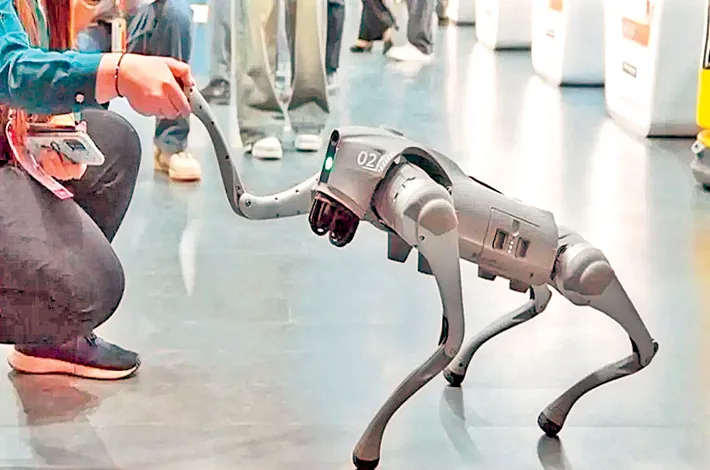
India’s AI Impact Summit was designed to showcase ambition on a global scale. With Prime Minister Narendra Modi hosting world leaders including French President Emmanuel Macron, and tech stalwarts like Sundar Pichai, the message was clear: India wants to be among the world’s top three AI powers.
The numbers were staggering—over 300,000 registrations, 100+ countries represented, hundreds of startups and sessions. The government projected confidence, citing India’s digital public infrastructure and rising AI readiness.
But amid the celebration, a single exhibit changed the narrative.
A robotic dog displayed by Galgotias University as a campus innovation was revealed to be a Chinese-made Unitree Go2. A university representative had introduced it as an in-house creation, only for the claim to unravel within hours. The institution apologised, calling it a miscommunication, but the damage was done.
The opposition, led by Rahul Gandhi, labelled the summit a “PR spectacle.” Congress leaders mocked the episode as “Fake in India,” while Union Minister Ashwini Vaishnaw acknowledged lapses but stressed swift corrective action.
The controversy exposed a deeper fault line: Is India’s AI push substance-driven or optics-heavy?
Even as political tempers flared, the broader ambition remains intact. India’s AI story is unfolding at scale—but the Galgotias episode is a reminder that in the age of scrutiny, credibility is as critical as capability.