1 May, 2026 | 12:31 AM


Reverse Governance
06-03-2026 12:00:00 AM
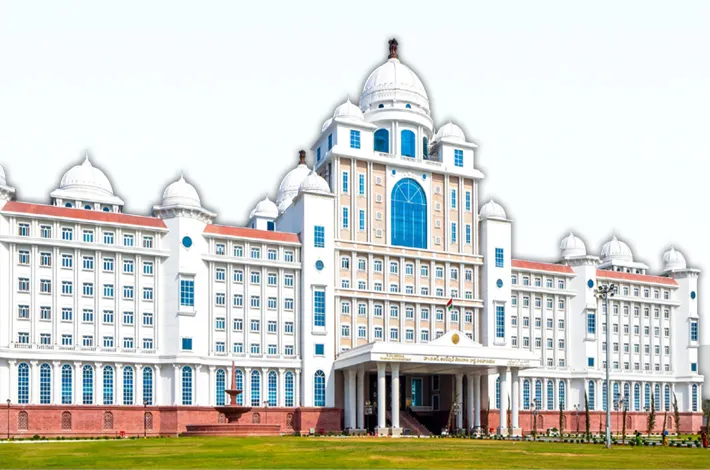
One step forward, two backwards n Decisions are reversed in sporadic regularity
Indecisiveness looms
Several policy decisions taken over the past two years have been reconsidered or revised following public or political opposition:
The government’s proposal regarding land use in areas surrounding HCU triggered protests from students and environmental activists, forcing authorities to reconsider the move.
In Velugumatla of Khammam district, demolition of houses belonging to poor families in the name of development led to strong local protests and criticism from opposition parties, prompting a review of the situation.
The allocation of land belonging to the Sharada Peetham to the Water Board faced strong opposition from Hindu organizations and devotees, after which the govt altered its stance.
The government’s announcement to abolish the Dharani land management system created uncertainty among farmers and landowners due to delays in introducing a new system, with the process being postponed multiple times.
Loan waiver implementation, a key election promise, faced dissatisfaction among farmers when it was introduced in phases, leading the government to modify aspects of its implementation.
Rythu Bharosa investment support scheme also underwent changes from its originally announced structure.
Discussions about increasing bus fares in the state-run RTC due to financial pressures faced resistance from the public, and the government appeared to step back from the move.
Concerns spread among citizens over reports that large numbers of ration cards would be cancelled based on eligibility criteria. The got later issued clarifications and slowed the process.
Decisions related to the use of land belonging to certain educational institutions also triggered controversies, forcing the govt to reconsider its plans.
The Congress government in Telangana, which came to power promising sweeping changes in governance, is increasingly facing criticism for frequently stepping back from its own decisions. Several policy announcements made with much fanfare have later been modified, delayed, or withdrawn following public opposition, protests from political parties, or resistance from affected communities.
Political observers say a pattern has emerged in which decisions taken without adequate study or consultation are triggering controversies, forcing the government to reconsider its stance. Over the past two years, multiple such instances have raised questions about the stability and clarity of the administration’s policy-making process. Critics argue that the speed at which decisions are reversed appears greater than the speed at which they are implemented.
As the Congress government approaches two years in power in Telangana, debates over its governance style have intensified. Analysts note that the lack of consistent planning and the tendency to revise policies after backlash are creating uncertainty among citizens. Decisions that initially appear decisive often undergo changes once public resistance builds, leading to perceptions of administrative hesitation.
Criticism over policy instability
Observers say frequent changes in major policy decisions are fuelling criticism that the government lacks consistency in governance. In several cases, policies were announced first and later altered or withdrawn after controversies erupted. Analysts point out that insufficient prior study and limited consultations with stakeholders appear to be key reasons behind such situations.
Public opinion, local conditions, and concerns raised by affected groups are sometimes not fully considered before policy announcements, analysts say. As a result, controversies arise soon after implementation begins. Subsequent modifications to the policies create an impression of administrative uncertainty and hesitation.
Political circles warn that repeated reversals could weaken public confidence in government decisions. Experts say that clarity, transparency, and long-term planning are essential for maintaining trust among citizens. Without stable decision-making, every new announcement may be viewed with skepticism by the public.
Struggle to win public approval
Although the Congress government has introduced several welfare schemes since coming to power, political observers believe it has not fully succeeded in winning widespread public approval. Election promises and the decisions taken after assuming office have, in some cases, sparked controversies during implementation.
Several key announcements had to be modified or reconsidered after criticism emerged. Analysts say that inadequate consultation with local communities and stakeholders has contributed to mixed public reactions.
There are also concerns about delays and lack of clarity in the implementation of some welfare schemes, which have led to dissatisfaction among sections of the public. Observers believe that faster implementation of electoral promises could help strengthen public trust in the government. Political analysts emphasize that policies must be clearly defined and implemented efficiently to ensure they directly benefit people.
Opposition using issues as political weapon
Some decisions taken by the Congress government have also become political ammunition for opposition parties. Policies announced without thorough groundwork have triggered controversies during implementation, and subsequent reversals have been highlighted by opposition leaders.
Opposition parties have been actively taking such issues to the public, accusing the government of ignoring local sentiments and ground realities. Protests and political campaigns have been organized around several contentious decisions, further intensifying the debate.
Issues such as the controversy surrounding land use in areas near Hyderabad Central University, demolitions in Khammam district, and the dispute related to land allocation involving the Sharada Peetham have drawn sharp criticism from opposition groups. Analysts say that whenever public resistance forces the government to step back, it strengthens the opposition’s political narrative.
Experts warn that if such situations continue, every policy decision could become a target for political attacks. Without clarity and advance planning, the ruling party could face increasing political challenges.