26 October, 2026 | 7:49 PM


No overcapacity, India’s demand engine roars
11-06-2026 12:00:00 AM
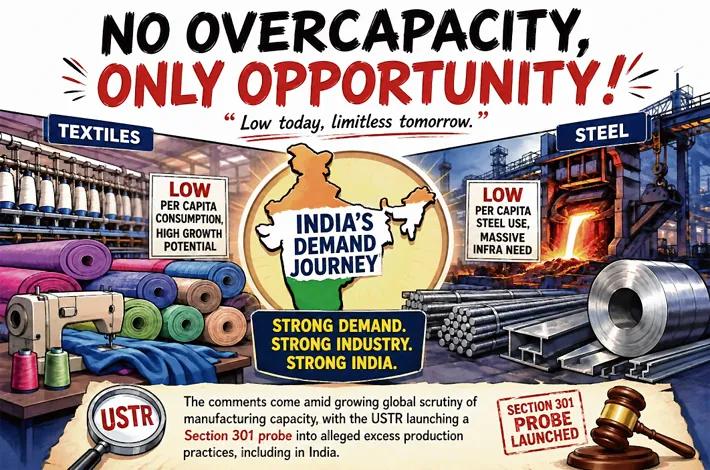
India’s low per capita steel and textile consumption leaves vast room for expansion, making overcapacity concerns largely misplaced
Commodity Desk
MUMBAI
India's rapidly expanding economy and low per capita consumption levels make concerns about overcapacity in sectors such as steel and textiles largely misplaced, according to Amitabh Kumar, Additional Secretary and Director General of Trade Remedies (DGTR).
The comments come amid growing global scrutiny of manufacturing capacity, with the USTR launching a Section 301 probe into alleged excess production practices, including in India.
Speaking at a media briefing organised by the Directorate General of Trade Remedies in New Delhi on Wednesday, Kumar strongly rejected the growing narrative that India is facing excess production capacity in key manufacturing sectors. He argued that India's consumption patterns and development needs point to significant room for future growth rather than oversupply concerns. Referring to the textile sector, Kumar said per capita consumption of textile products in India remains far below global levels, especially in segments such as man-made fibres and technical textiles.
He noted that India's tropical climate leads to greater use of cotton-based clothing, which experiences faster wear and tear, creating sustained replacement demand.
Given these factors, he said the argument that the country has developed excess capacity in textiles does not stand up to scrutiny. Kumar also dismissed concerns regarding overcapacity in the steel industry. While India is currently the world's second-largest steel producer, he pointed out that per capita steel consumption remains among the lowest globally when compared with the country's population size, infrastructure requirements and long-term economic ambitions. According to Kumar, India's ongoing urbanisation, industrialisation and infrastructure expansion will continue to create substantial demand for steel over the coming decades. He further observed that the concept of "overcapacity" does not form part of the World Trade Organization's recognised trade remedy framework. The WTO's trade defence mechanisms are limited to anti-dumping, anti-subsidy and safeguard measures, and do not specifically address overcapacity concerns.
"I don't believe in this overcapacity business," Kumar said, adding that the issue is a relatively new narrative that falls outside the established WTO trade remedy architecture. The comments come at a time when global trade tensions and concerns over manufacturing surpluses in several countries have intensified debates around capacity utilisation across industries.
The DGTR, which functions under the Department of Commerce, plays a key role in protecting domestic industries from unfair trade practices.
With rising incomes, expanding infrastructure investment and growing industrial demand, policymakers believe the country remains far from reaching saturation levels in critical sectors such as steel and textiles, leaving ample scope for capacity expansion and future growth.
(With inputs from ANI)