28 June, 2026 | 11:21 AM


Mkts fall on oil spike, FII selling
29-04-2026 12:00:00 AM
FPJ News Service Mumbai
Benchmark equity indices came under renewed pressure on Tuesday, as rising crude oil prices and continued foreign institutional investor (FII) outflows dampened market sentiment amid lingering geopolitical tensions. Weakness in heavyweight banking, financial and auto stocks further intensified the decline, dragging indices lower through the session.
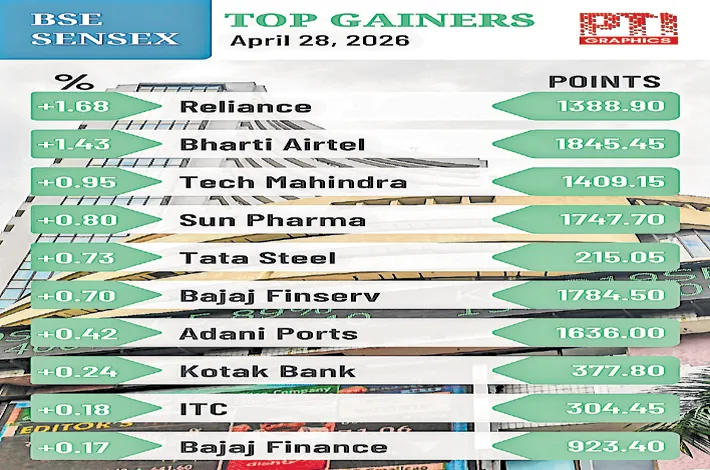
The 30-share BSE Sensex fell 416.72 points to close at 76,886.91, after slipping as much as 562.57 points intraday. The broader NSE Nifty also declined 97 points to settle below the key 24,000 mark at 23,995.70, reflecting cautious investor positioning.
Market participants remained wary as crude oil prices extended gains, raising concerns over inflationary pressures and potential impact on India’s current account balance. At the same time, sustained FII selling added to volatility, signalling risk aversion among global investors in the face of uncertain geopolitical developments.
Sectorally, banking and financial stocks bore the brunt of the sell-off, given their significant weightage in benchmark indices. Auto stocks also weakened on concerns that higher fuel costs could dampen demand and squeeze margins.
Traders said the market is currently navigating multiple headwinds, including global commodity price volatility and external risks, which are prompting investors to adopt a cautious stance. The sharp intraday swings further underscored heightened uncertainty and lack of directional clarity.
Going ahead, market direction is likely to remain sensitive to crude price movements, FII activity, and global cues, with investors closely tracking geopolitical developments and macroeconomic signals for further triggers.
Meanwhile, bank stocks faced selling pressure on Tuesday amid concerns over tighter regulatory norms. "Sectoral trends were mixed, with financials among the key laggards, with PSU Banks and Private Banks declining on concerns around tighter regulatory norms.
The RBI has finalised the implementation of the Expected Credit Loss (ECL) framework from April 2027, replacing the incurred loss model with a forward-looking system that enables earlier recognition of credit risks and continuous monitoring.