25 October, 2026 | 4:26 PM


Learn from Nepal
13-04-2026 12:00:00 AM
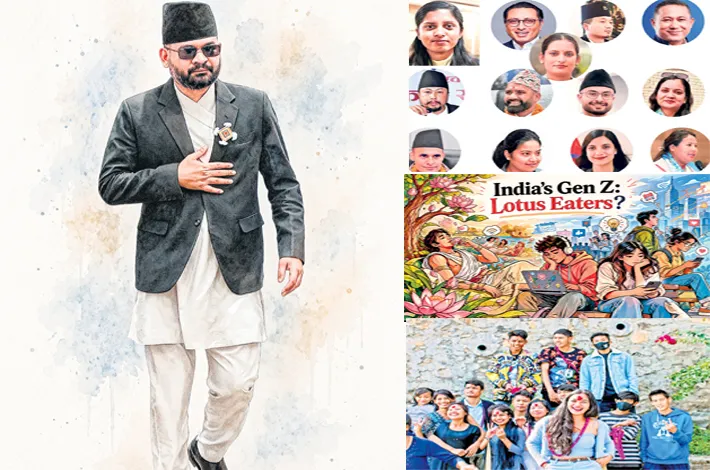
Wake up! Indian Gen Z!
Nepalis especially the youth are rallying behind 35-year- old Prime Minister Balendra Shah
VJM DIVAKAR
In the sacred Himalayas, Nepal is witnessing a quiet revolution. Just weeks after 35-year-old Prime Minister Balendra Shah—popularly known as Balen—was sworn in on March 27, his Rastriya Swatantra Party (RSP) government has launched an ambitious anti-corruption offensive that is already reshaping public trust and economic prospects. Led by a cohort of young, educated professionals forged in last year’s youth-led protests, this administration is not merely occupying office; it is systematically rewriting Nepal’s governance playbook. By prioritizing transparency, international cooperation, and direct benefits for citizens, the Gen Z-led government is delivering tangible hope to a population long weary of instability and graft.
The scale of the mandate underscores the depth of change. In the March 5 parliamentary elections, the centrist RSP captured nearly 50 percent of the vote and secured 125 of 165 first-past-the-post seats, forming Nepal’s first single-party majority government since 1999. Shah, a structural engineer and former Kathmandu mayor who rose through anti-corruption activism, and Home Minister Sudan Gurung—a protest veteran with no prior political baggage—embody a fresh leadership model. The 100-point governance reform plan, approved within days of taking power, targets asset probes into politicians and officials dating back to 1991. Early enforcement has been decisive: on March 29, former Energy Minister Deepak Khadka was arrested in a money-laundering case, while investigations now extend to former Prime Minister Sher Bahadur Deuba and his family, with potential Interpol involvement. These steps mark a decisive break from decades of elite impunity.
The most striking international dimension is the aggressive push to repatriate black money allegedly stashed in Swiss banks. Home Minister Gurung met Swiss Ambassador Daniel Meuwly this week at the Home Ministry, formally requesting joint investigations and repatriation mechanisms. Recovered funds, Gurung pledged, will directly finance national development—ranging from infrastructure and job creation to enhanced disaster-warning systems, a critical need in earthquake-prone Nepal. Swiss authorities have indicated cooperation, signaling a diplomatic breakthrough that could unlock substantial resources for a cash-strapped economy.
Nepal desperately needs such inflows. Youth unemployment hovers near 21 percent—20.82 percent in 2024 according to recent data—driving more than 2,300 citizens to migrate daily for work in the Gulf, India, and Malaysia. Remittances dominate the economy, still foreign direct investment plummeted 42.5 percent from $149.83 million in 2018/19 to $86 million in 2024/25 amid chronic governance failures. Transparency International’s 2025 Corruption Perceptions Index gave Nepal a score of 34 out of 100, ranking it 109th out of 182 countries and reflecting deep public frustration that fueled the 2025 uprising. That unrest itself exacted a heavy toll, costing an estimated 1.3 percent of GDP (roughly $586 million in direct damages). Political volatility has been relentless: Nepal has had 15 prime ministers since 2012.
Against this backdrop, the new government’s early actions are generating measurable positive impacts. By signaling zero tolerance for corruption, the RSP is restoring investor confidence. Early fiscal year 2025/26 data already show FDI commitments rising 50 percent year-on-year in the first seven months, a promising reversal. For ordinary Nepalis—especially the youth who powered the protests—this translates into renewed optimism. Recovered black money could fund vocational training, local industries, and rural infrastructure, directly addressing the migration crisis that separates families and drains human capital. Young leaders like Shah and Gurung, many in their thirties and drawn from professional backgrounds rather than dynastic politics, are making governance feel accessible and responsive. Their hands-on approach—site inspections, swift arrests, and diplomatic outreach—contrasts sharply with the bureaucratic inertia of past regimes.
This is governance being rewritten for the better. The single-party majority provides the stability absent for years, enabling long-term planning over short-term patronage. Asset probes and international probes dismantle the “elite capture” that voters rejected. By channeling recovered funds into development rather than political coffers, the government is creating a virtuous cycle: greater transparency attracts investment, investment creates jobs, and jobs reduce the desperation that once fueled unrest. Disaster preparedness enhancements with Swiss help will safeguard vulnerable communities, while youth-focused reforms address the 20-plus percent unemployment that has long been Nepal’s Achilles’ heel. Early social sentiment reflects this shift—citizens sense a government that walks the talk, igniting hope where cynicism once prevailed.
Challenges remain. Implementing probes without backlash, converting diplomatic promises into actual repatriated funds, and steering an economy still healing from 2025’s disruptions will test the young team’s resolve Still, the mandate is unambiguous: voters demanded accountability, and the RSP is delivering. Analysts note that the government’s momentum—visible in rapid arrests and proactive diplomacy—is already rebuilding institutional trust and laying groundwork for sustainable growth.
For Nepal’s 30 million citizens, this Gen Z experiment represents more than a political transition; it is a generational reset. A country long defined by political churn and outward migration now has leaders who understand the aspirations of its youth firsthand. By confronting corruption at its roots and leveraging global partnerships for domestic gain, the new government is not only recovering lost wealth but also restoring faith in the democratic process itself. The coming months will reveal the full scale of repatriated resources, but the foundation is clear: a more accountable, efficient, and people-centered Nepal is emerging. In the annals of Himalayan history, this young leadership is already making its mark—one transparent step, one recovered rupee, and one inspired citizen at a time.
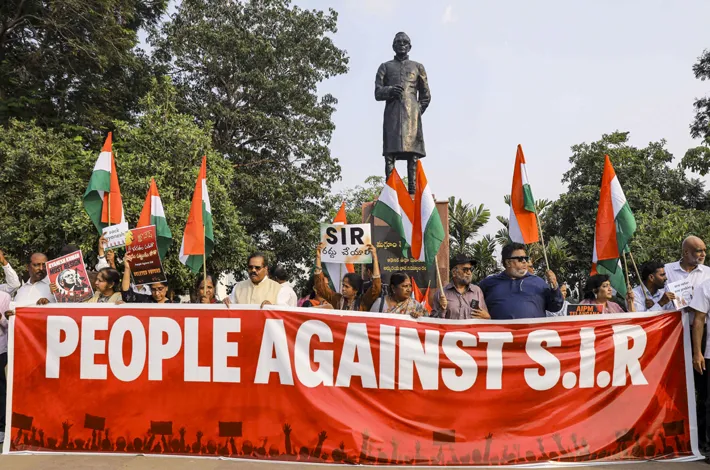
The new Nepal Government and its leaders should inspire the Gen Z in our country. With all the political parties of all hues failing in their duties and with political corruption, mis use and abuse of political power by politicians, bureaucrats, businessmen nexus eating into the vitals of our economy and democracy, the Indian Gen Z should take this as a wake up call and launch a movement to root out corruption, restore values in politics and bring in transparancy in all walks of life. Will the Indian Zen Z do it?
India’s Generation Z—about 377 million people, or 27% of the population—has grown up with constant digital exposure to governance failures. Yet, despite frequent reports of corruption across politics, land and finance, the judiciary, bureaucracy and media, this cohort shows limited street-level response. This marks a clear shift from earlier generations whose mobilisations reshaped national politics.
Historically, student and youth movements drove major change. During the freedom struggle, young Indians organised boycotts and protests against colonial rule. In 1974, the Navnirman Andolan in Gujarat began as a student protest over rising hostel fees but escalated into a mass anti-corruption movement that forced Chief Minister Chimanbhai Patel to resign. The 1990 anti-Mandal Commission protests similarly saw large-scale student participation, influencing reservation policies and political discourse. Left-leaning groups also mobilised youth on issues like land rights and economic inequality.
Today, the landscape is markedly different. According to Transparency International’s 2024 Corruption Perceptions Index, India scored 38 out of 100, ranking 96th out of 180 countries, underscoring persistent governance challenges. Allegations of irregularities involving political leaders, financial scams, land mafias, judicial delays and media bias continue to surface. Yet, unlike neighbouring countries—where Gen Z-led protests in Sri Lanka (2022), Bangladesh (2024) and Nepal (2025) contributed to regime changes—India has seen no comparable nationwide mobilisation.
Recent data highlights this shift. Youth turnout in the 2024 general elections was about 65%, lower than previous cycles, while only 38% of eligible 18- and 19-year-olds registered to vote. A Lokniti-CSDS survey of young people aged 18–22 found that 92% believe youth should follow public affairs and nearly 79% express interest in politics. However, only 45% were registered voters, with many citing lack of time or documentation as barriers.
Economic pressures play a decisive role. Youth unemployment for the 15–29 age group stood at 9.9% in 2025, rising sharply among graduates—touching nearly 40% in some estimates. With around 367 million young people forming a large share of the workforce, competition for stable jobs is intense. As a result, many channel their energy into exams, skill development or migration abroad rather than activism. Sociologist Dipankar Gupta observes that each generation defines its own priorities, often focusing on immediate economic security over inherited protest cultures.
Digital engagement further shapes behaviour. With 98% of Gen Z using smartphones daily, awareness of corruption and inequality is high. Social media amplifies both serious issues and trivial trends, but online campaigns—whether against exam irregularities or civic policies—rarely translate into sustained offline action. Concerns over being labelled anti-national, doxing or surveillance contribute to self-censorship. Deep social divisions based on caste, region, language and religion also hinder unified mobilisation. Universities, once centres of dissent, are seen by some as less active due to restrictions and polarisation.
Institutional factors matter as well. Unlike neighbouring nations facing acute instability, India’s democratic system offers elections as a channel for change. Surveys show the Bharatiya Janata Party retaining significant youth support, with many young voters favouring incremental progress through governance schemes or economic growth. As one activist noted, no single issue currently unites India’s diverse Gen Z population.
The cabinet
Balendra Shah (Balen) Prime Minister (also Defence)
Age: 35–36 (born 27 April 1990).
Education: M.Tech in Structural Engineering (Visvesvaraya Technological University/NITTE, India); B.E. in Civil Engineering (Himalayan WhiteHouse International College, Purbanchal University, Nepal); ongoing PhD/research fellowship in Civil Engineering (heritage conservation, Kathmandu University).
Background: Former Mayor of Kathmandu, engineer, and rapper.
Ruby Thakur, just 25 years old, has been elected as the youngest Deputy Speaker of the Nepali Parliament.
Dr. Swarnim Wagle – Finance (often ranked high in hierarchy)
Age: 51 (oldest in cabinet).
Education: PhD in Economics (Australian National University); MPA/ID (Harvard Kennedy School); BSc Economics (London School of Economics).
Sudan (Sudhan) Gurung Home Affairs
Age: 38.
Education: A-Levels (higher secondary equivalent).
Shishir Khanal Foreign Affairs
Age: 47.
Education: Master’s in Public Policy (University of Wisconsin–Madison, USA); Bachelor’s in Political Economy (University of Bridgeport, USA); I.Sc. (Trichandra College, Nepal).
Biraj Bhakta Shrestha – Energy, Water Resources & Irrigation
Age: 44.
Education: Bachelor’s in Business Administration (SANN International College).
Khadak Raj (Ganesh/Khadka) Paudel – Culture, Tourism & Civil Aviation
Age: 46.
Education: Master’s in English Literature (Tribhuvan University).
Sasmit (Sasmita) Pokharel – Education, Science & Technology / Youth & Sports (youngest minister)
Age: 29.
Education: Ongoing Master’s in Policy, Good Governance & Anti-Corruption (Tribhuvan University); BBM & LLB (Kathmandu University).
Nisha Mehta – Health & Population
Age: 38–39.
Education: Master’s in Nursing (Gwalior, India); clinical nursing background.
Dr. Bikram (Bikram Timilsina/Timalsina) – Communication & Information Technology
Age: 43.
Education: PhD in Politics & International Relations (Griffith University, Australia); Master’s in International Studies (Peace & Conflict, University of Queensland); Master’s in English (Tribhuvan University).
Pratibha (Pramila) Rawal – Federal Affairs & General Administration / Land Management, Cooperatives & Poverty Alleviation
Age: 32.
Education: PG Diploma in Journalism (Asian College of Journalism); BA in English Literature & Journalism (Golden Gate International College, Tribhuvan University).
Sobita Gautam – Law, Justice & Parliamentary Affairs
Age: 30.
Education: BA LLB (National Law College, Tribhuvan University); BA in History & Political Science (Tribhuvan University).
Geeta (Gita) Chaudhary – Agriculture, Livestock Development / Forests & Environment
Age: 33.
Education: LL.M (Tribhuvan University); LLB (Kathmandu School of Law). Lawyer and activist.
Sita Badi (Wadi) – Women, Children & Senior Citizens
Age: 30–31 (born ~1995).
Education: Master’s in Political Science; earlier Bachelor of Social Work background.