11 September, 2026 | 1:27 AM


‘Inscription of Veera Narasimha Raya reveals origins of Ramalingeswara temple’
11-09-2026 12:00:00 AM
Metro India News | Tirupati
In a major breakthrough regarding the architectural history of the historic Sri Bugga Ramalingeswara (Rameswara) Temple in Tadipatri, Anantapur district, historian and researcher MyNaa Swamy has unveiled a critical, hitherto unknown historical fact.
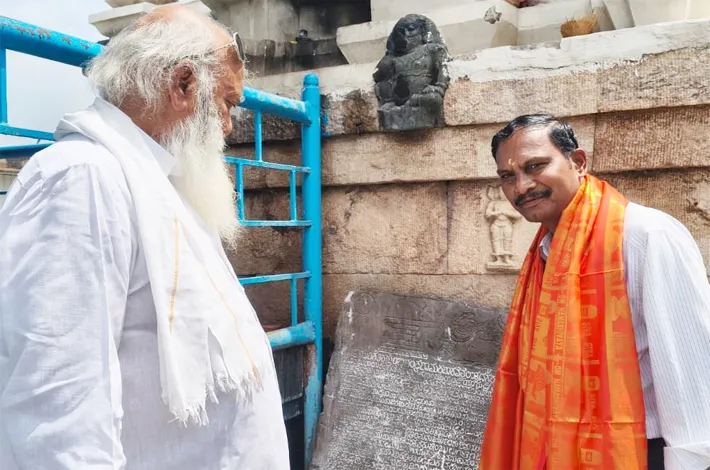
Analyzing a rare inscription from the Vijayanagara era, MyNaa Swamy announced on Thursday that the foundational origins of the temple's outer walls (prakaram), entrance towers (gopurams), and the wedding hall (bhoga mandapam) have been definitively traced to an edict issued by Emperor Veera Narasimha Raya. He visited the temple along with former Tadipatri MLA J.C. Prabhakar Reddy to share these details.
According to the revised details released by MyNaa Swamy, the inscription is composed in the Telugu script, incorporating both Sanskrit and Telugu language influences, and opens with traditional invocations to Lord Shiva. Through dedicated research into Vijayanagara architecture and sculpture, MyNaa Swamy deciphered the complete text, bringing to light authenticated evidence of the temple's patrons.
Writings carved onto three stone slabs behind the sanctum sanctorum, inside the western and southern gopurams, and at the main entrance gates detail the history of the deity's abode—with the earliest among them identified as belonging to Tuluva Veera Narasimha Raya. Based on this, the historian deduced that except for the northern gopuram, the construction of the entire temple complex was completed by May 4, 1509.
Issued during the reign of the Vijayanagara Emperor Veera Narasimha Raya (elder brother of Sri Krishnadevaraya), the dharma inscription dates back to the Salivahana Saka year 1431, Vaishakha Shuddha Purnima (Friday, May 4, 1509 CE). While most inscriptions of this era merely record land grants or religious rituals, lines 23–24 of this text explicitly state: "...we have constructed the bhoga mandapam and are executing the construction of the gopurams and prakaram..."
Furthermore, to bestow spiritual merit upon Emperor Veera Narasimha Raya, Saluva Timmarusu renamed the village of 'Neladalapadu',located in the Pennabadi region under the Gutti kingdom as 'Veera Narasimhapuram' and consecrated it to Lord Rameswara of Tadipatri through a ceremonial water-offering (Sahiranyodaka Dhara). Revenue generated from this village was allocated in perpetuity for the daily rituals and grand celebrations of the temple, offering a clear glimpse into the administrative hierarchy (Rajyam – Sthalam – Gramam) of the Vijayanagara period.
MyNaa Swamy noted that Emperor Veera Narasimha Raya passed away shortly after this inscription was laid, leading to the ascension of Sri Krishna Deva Raya. Consequently, this discovery serves as a vital milestone in understanding the dawn of the Tuluva dynasty's rule and the broader architectural heritage of the Vijayanagara Empire.