22 November, 2026 | 1:51 AM


Indian food does not need labels
22-11-2026 12:00:00 AM
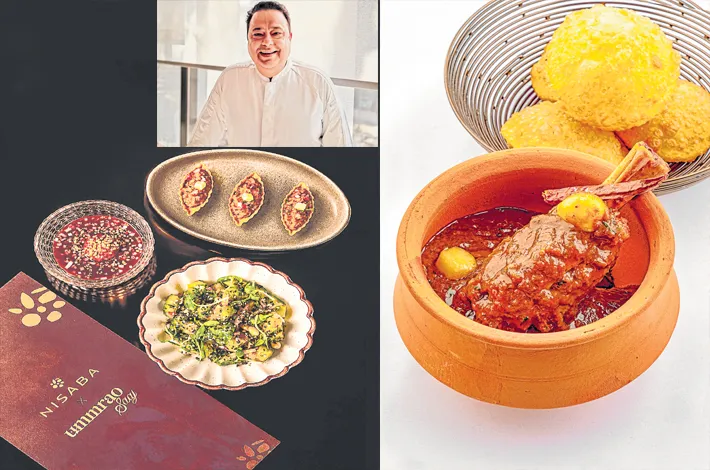
Chef Manish Mehrotra shares how Indian cuisines don’t have a choice but to evolve
Sayoni Bhaduri
It's been 10 months since Chef Manish Mehrotra opened Nisaba in Delhi’s Humayun’s Tomb Museum Complex. This has been the next chapter for the award-winning chef who paved the way for a contemporary avatar and representation of Indian cuisines. He is bringing the taste of Nisaba to Mumbai for a three-day residency at Ummrao Saaj, Courtyard by Marriott from 2-4 December, 2026. At their core, both Ummrao Saaj and Nisaba are built on the same foundation: staying true to India’s culinary heritage, regional flavours, and time-honoured techniques, while reimagining them for the contemporary palate. “We deeply understand how modern India eats, and our ethos mirrors Chef Manish’s own philosophy. That shared sensibility makes this partnership an effortless fit,” shares Abhishek Sachdev, General Manager at Courtyard by Marriott Mumbai International Airport.
Despite being a pathbreaker in modern Indian progressive food, Mehrotra is clear that his food at Nisaba today doesn’t fit that definition anymore. “It is Indian food of modern India. I don't think Indian food needs a tag like ‘modern Indian’,” he says. He adds that just like there's nothing called modern French food or modern Italian food, it is the same now for Indian food with different chefs’ point of view. “Massimo Bottura's lemon tart is not a traditional Italian tart; it's his interpretation.” It is a perspective he shares; he and chefs like Varun Totlani, Prateek Sadhu, Gaggan Anand, Garima Arora, Rijul Gulati and Hussain Shahzad are trying to offer their interpretations of Indian cuisines.
Diners too are appreciative of this pursuit. They have travelled and have had genuine experiences that help them appreciate a vision behind a dish or menu. “When I introduced blue cheese naan in 2009, people hated it. Today it has become a classic dish that has become associated with me. I still get asked about the dish,” Mehrotra says. Indian cuisines are breaking out of stereotypes. “Bengalis only eat fish; Gujaratis only eat sweet food. South Indians states are all about idli, dosa and sambar: these misconceptions have been busted,” he continues. Modern restaurants are playing a key role in changing this perception. They offer a complete experience that includes food, beverage programmes, ambience and service. “It is experiential dining rather than just fine dining. Experience is what distinguishes two restaurants,” he adds.
For Mehrotra, Indian food has to evolve while staying familiar. It risks being stagnant and losing out. “Twenty-five years ago, restaurants had similar menus, same dishes and same regional focus,” he explains, unlike today, where regional food is getting its share of the spotlight and becoming mainstream. “But since we have such a long history of food we need to have a touch of familiarity that does not alienate.”
For a chef who does not want to rest on his laurels, Mehrotra’s idea of success is to stay focussed on what he can do in the kitchen. His biggest critics are his diners who need to go back happy each and every time. With the Ummrao Saaj residency, alongside Nisaba’s signature repertoire, Mehrotra has crafted four exclusive dishes specifically for this dining experience, each drawn from his memories and connection with Mumbai, Sachdev adds.
Guests can look forward to tasting the Old-Fashioned Cucumber Kimchi with Chakli, Pao Bhaji Tart with Amul Butter, Quinoa Pakodi with Amritsari Tamarind Chutney, and Kali Gajar Ka Halwa with Pista, creations you won't find on the regular Nisaba menu. “I want to also have a bit of fun and learn something with a new team. No real major agenda as such,” Mehrotra concludes.