13 September, 2026 | 7:22 AM


India shifts oil imports amid Middle East tensions
09-03-2026 12:00:00 AM
Metro India News | NEW DELHI
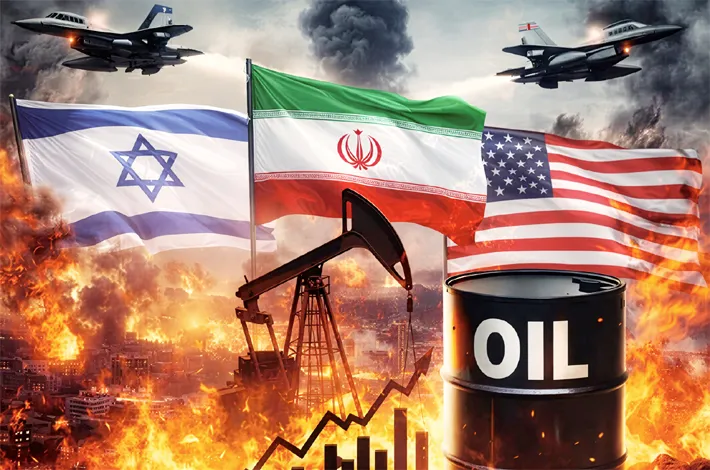
Indian refiners are actively seeking crude oil supplies from the United States, Russia, West Africa, and Latin America as escalating tensions in the Middle East raise concerns over energy security. The move comes after recent US and Israeli strikes on Iran, followed by Tehran’s retaliatory attacks on US bases and Israel, which have disrupted tanker movements through the Strait of Hormuz—a critical passage for nearly half of India’s February crude imports.
Refineries, which process crude into petrol, diesel, and other fuels, have postponed planned maintenance and are running at normal rates to build buffer stocks capable of meeting near-term demand. With India importing roughly 88 per cent of its crude, officials say diversifying supply sources has become urgent amid the ongoing conflict.
According to a senior oil ministry official, non-Strait of Hormuz shipments, which accounted for 60 per cent of total imports in 2025, have increased to 70 per cent since the crisis began. Indian companies are now procuring crude from West Africa, Latin America, and the US, while a temporary waiver from the US Treasury allows delivery of sanctioned Russian crude already loaded on vessels before March 5. This permits shipments to continue until April 5 without breaching sanctions, with around 15 million barrels near India and another seven million near Singapore.
Major refiners, including Reliance Industries, Hindustan Petroleum Corporation Ltd, and HPCL-Mittal Energy, have resumed limited Russian crude imports after halting them last year due to sanctions. In February, India imported roughly 1.04 million barrels per day (bpd) of Russian oil, compared with 1.6–1.8 million bpd in earlier years. Combined inventories of refiners and strategic reserves can cover about 50 days of domestic demand, with onshore storage holding 144 million barrels—equivalent to 30 days of imports—and total capacity, including strategic reserves, around 74 days.
Analysts caution that while physical supply is adequate, costs are expected to rise due to higher crude prices, longer shipping routes, freight charges, and insurance premiums. International crude has surged above USD 92 per barrel from USD 70 before the Iran strikes, while liquefied natural gas prices have more than doubled to USD 24–25 per million British thermal units.
Higher import costs may widen India’s current account deficit, exert pressure on the rupee, and raise consumer prices if passed on. In February 2026, India still received 2.8 million bpd from Middle Eastern nations, accounting for 53 per cent of total imports, underscoring continued dependence on the region.
The government and refiners are closely monitoring supply routes and stock levels, emphasizing diversification and alternative sourcing to safeguard India’s energy security amid ongoing geopolitical uncertainty.