24 November, 2026 | 3:53 AM


India and NZ settle for a draw
24-11-2026 12:00:00 AM
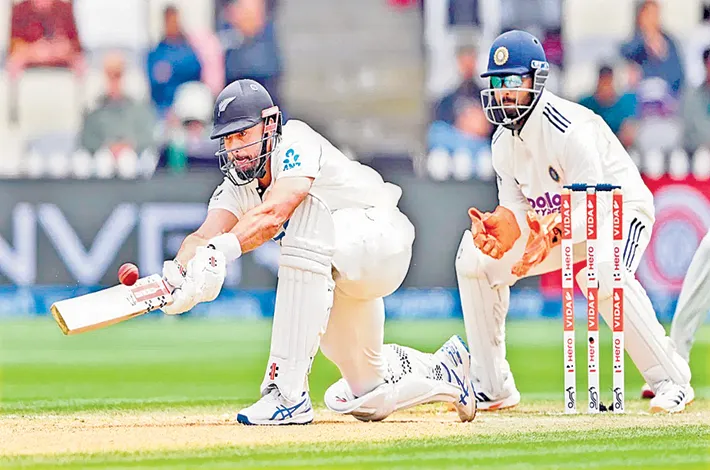
There are pitches that make Test cricket a fascinating contest between bat and ball, and then there are those that threaten to take the contest away from both. The Basin Reserve in Wellington belonged to the latter category as New Zealand and India played out a draw after five days of cricket, with the home side successfully negotiating a daunting final-day examination to deny India an unlikely victory.
India, having piled up 720 for nine declared in their first innings, needed eight wickets on the final day to turn their monumental effort into a win. For a while, there was enough drama to suggest that the visitors might just pull off a remarkable turnaround. But the surface, which offered diminishing assistance to the bowlers as the match progressed, eventually had the final say.
New Zealand began the day 233 runs behind, but there was little urgency in their approach. Devon Conway and Rachin Ravindra concentrated on survival before Washington Sundar broke through, inducing an inside edge that ended Conway's resistance at 65. Prasidh Krishna then removed Ravindra, while Anshul Kamboj finally found a way past Tom Blundell, leaving the hosts with five wickets down and India briefly entertaining thoughts of a late assault.
However, Daryl Mitchell and Glenn Phillips had other ideas. The pair batted with admirable discipline and application, adding precious hours to their overnight resistance. Mitchell remained unbeaten on 49, facing 186 deliveries, while Phillips occupied the crease for 126 balls. Their partnership effectively extinguished India's hopes, with prolonged periods of defensive batting making a result increasingly improbable.
Even the second new ball failed to provide the breakthrough India desperately sought. Jasprit Bumrah, carefully managed through the day, could not conjure a miracle either, despite finishing the match with five wickets.
India's team selection also invited questions. The exclusion of Mohammed Siraj and Ravindra Jadeja, two experienced campaigners with very different strengths, inevitably came under scrutiny as the bowlers struggled to make inroads on the final day. Siraj's ability to extract movement and maintain pressure, along with Jadeja's accuracy, variations and knack of exploiting even the slightest assistance from the surface, could have offered India additional options.
Whether their presence would have altered the outcome is debatable, particularly on a pitch that had progressively taken the contest away from the bowlers. But with eight wickets to take and a result still theoretically possible, their absence was certainly a talking point.
The draw was a frustrating outcome for India, whose substantial first-innings total ultimately yielded little reward. It also came at a cost to their World Test Championship ambitions. New Zealand, despite collecting four points, slipped to third in the standings.
-Partha SV