26 October, 2026 | 2:27 PM


Heavy rain forecast raises crop risks
11-08-2026 12:00:00 AM
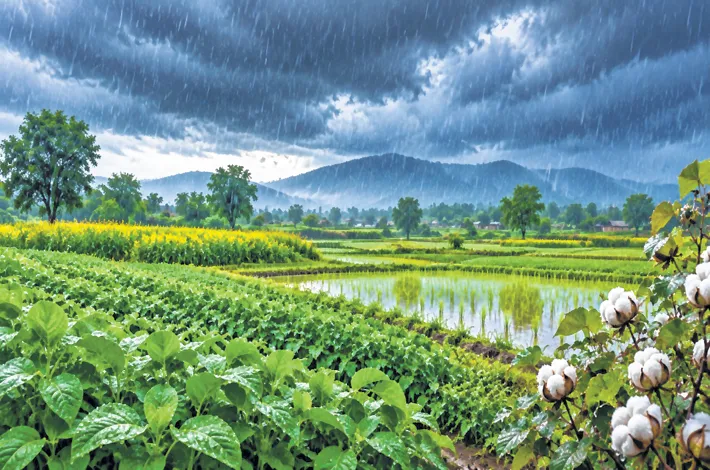
Soyabean, pulses, cotton, groundnut, rice, spices and vegetables face shifting price risks as intense showers threaten crops, arrivals and logistics
FPJ News Service MUMBAI
Forecasts of intense rainfall across several parts of India have put agricultural commodities in focus, with soyabean, pulses, cotton, groundnut, rice, spices and vegetables potentially facing contrasting effects from improved soil moisture and the risks posed by excessive precipitation. The India Meteorological Department (IMD) expects intense rainfall to remain concentrated across parts of northwest, eastern and northeastern India over the next five days.
Central, western and southern peninsular India are expected to receive mostly light to moderate showers. A low-pressure area lies over north Madhya Pradesh, accompanied by a cyclonic circulation, while a western disturbance is affecting the northwest. Another low-pressure system is expected to develop over the northwest Bay of Bengal around Wednesday. Very heavy rainfall is forecast over eastern Rajasthan and Himachal Pradesh on Tuesday. Odisha could receive intense showers from Wednesday to Saturday, while Arunachal Pradesh, Assam and Meghalaya face similar conditions during the weekend.
Heavy rainfall is also forecast across parts of Madhya Pradesh and Chhattisgarh. Gujarat, Konkan, Goa and central Maharashtra could receive heavy spells, while scattered showers, thunderstorms and gusty winds are expected across parts of southern India.
For soyabean and other kharif crops, rainfall across Madhya Pradesh could replenish soil moisture and aid development. Prolonged downpours, however, could cause waterlogging and crop damage, potentially supporting prices if production concerns increase. Pulses face similar risks. Well-distributed showers would improve crop prospects, while excessive rainfall could disrupt field operations and arrivals, tightening near-term supplies.
Cotton will be closely watched in Gujarat and Maharashtra. Persistent rainfall could affect crop health and increase pest and disease risks. Any deterioration in yield expectations could lend support to prices.Groundnut, particularly in Gujarat, is also weather-sensitive. Beneficial rainfall could strengthen production prospects, but waterlogging or prolonged showers could damage standing crops and reduce yields. Rice cultivation across eastern and northeastern India could benefit from adequate rainfall. Flooding in low-lying areas, however, could damage paddy and alter production expectations. Spices, including coriander, may receive short-term price support if rainfall disrupts harvesting, transportation or arrivals at wholesale centres.
Vegetables face a more immediate logistical threat. Heavy showers in Maharashtra and other producing regions could disrupt harvesting and transportation of onions, potatoes and other perishables, potentially lifting wholesale prices. The overall price impact remains finely balanced. Well-distributed rainfall could improve kharif output and restrain agricultural prices, while excessive precipitation, flooding, crop damage and supply disruptions could quickly create upward pressure.