24 October, 2026 | 11:33 AM


‘Give unique codes to OBC communities before caste enumeration’
21-08-2026 12:00:00 AM
Metro India News | Hyderabad
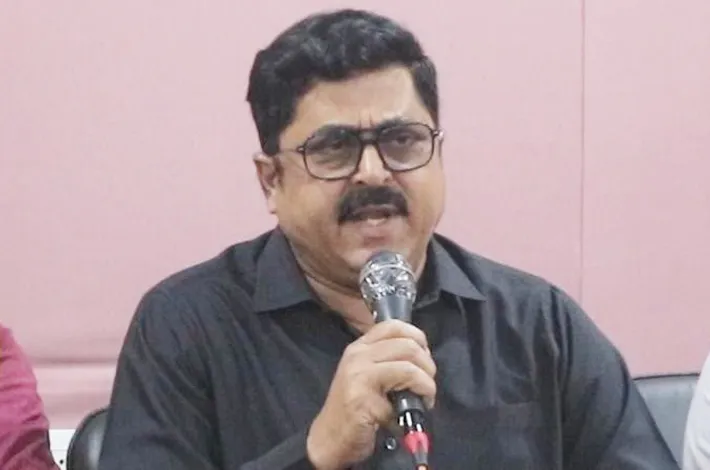
The Union government should assign a unique code to every Other Backward Class community and prepare a standardized caste directory before undertaking caste enumeration as part of the Census, DMK Rajya Sabha member and senior advocate P. Wilson and former Director-General of Police and All India Bahujan Samaj Party National Coordinator J. Purnachandra Rao said on Thursday. Addressing a press conference at the Press Club, Basheerbagh, they said caste enumeration without a standardized coding system could result in the same community being recorded under different names, sub-castes, regional variations and spellings, thereby defeating the purpose of the exercise.
Former Minister V. Srinivas Goud, retired IAS officer and BC Intellectual Forum Chairman T. Chiranjeevulu and All India OBC Students Association national president G. Kiran Kumar were among those who participated in the press conference. Dr. Purnachandra Rao mentioned that for SCs and STs, enumerators could select the appropriate notified community from a predefined list. There was no reason why a similar mechanism could not be introduced for OBCs, he said.
He demanded that caste enumeration be deferred until a unique caste code, a standardized directory and a selection-based system for OBC communities were put in place. MP Wilson recalled that the Mandal Commission, after studying the situation across more than 400 districts, identified 3,743 socially and educationally backward communities and estimated the OBC population at about 52%. The 1931 population figures ultimately formed an important basis for the recommendations that led to 27% reservation for OBCs in Central government employment, he added.
The absence of standardised caste codes during that exercise had resulted in a very large number of caste-name entries, including variations arising from spelling, pronunciation and local nomenclature, he said. He said the EWS quota was introduced through a constitutional amendment without a comparable nationwide caste enumeration, while demands for enhanced OBC reservation were frequently confronted with the requirement of adequate empirical data.
Srinivas Goud, Chiranjeevulu and Dr. Kiran Kumar said an accurate caste census should become the statistical foundation for policies concerning education, employment, political representation, welfare programs and allocation of public resources. The meeting called upon the Union government to introduce unique caste codes, State-wise standardized selection lists and a national directory linking synonyms and regional variations before commencing caste enumeration.