29 July, 2026 | 3:20 AM


English and medium Lalita Iyer Musings
14-06-2026 12:00:00 AM
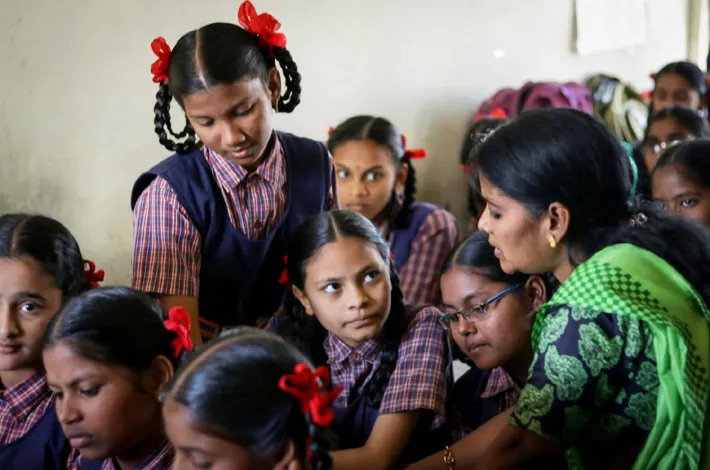
It took a certain conviction and definitely a support system for two gram panchayats and a few wise men in Chinnaboyinapalli and Mupparam in Hanamkonda to issue a diktat to parents saying that if they opted for private schools for their children, they would not get the government sops, which includes subsidised rice and social security pensions.
The gram panchayat also decided that private school vehicles would not be allowed to enter the village to transport students. This move by a few is to boost the enrolment in government schools. Luckily for the gram panchayat, there was immediate result with 103 children being admitted to the DNT Upper Primary Government School.
The wise men spoke and wondered that if the parents could afford private schools, they surely didn't need government welfare schemes. According to them, with the state government providing quality education and free uniforms and books for students in government schools, why would parents go out of their way to put their children in private schools?
Why I mention the above is because in comparison, the private schools are no sterling examples. Except for a few. In fact the way they are mushrooming should be fair warning that having a school is a money-making business. And many of them might be in that only to make moolah and might not even be registered.
There are a few extremely expensive private schools from where students have all travelled to foreign shores and have become foreign nationals. Their contribution to the Indian society, if at all, might be in some expensive lifestyles and more expensive real estate.
There is no better time for the government schools to overhaul their reputation and get a facelift in terms of better education. It will probably take a long time for them to get rid of their notorious name of either having no teachers or one teacher for all classes. Govt jobs are much favoured for the salaries, arrears and pension packages. Here I must relate a personal story.
The vahan-chalak's son has now come to Class III. I hear about his notoriety only from his father, when we are on our sojourns. More often than not it is laughable, but the reality is something else. This boy dresses up, carries his loaded back pack, along with done homework (with the help of his mother, who looks after another child and stitches fashionable blouses), lunch box and water bottle, travels by auto with many other small children and does what small, unattended children do. He goes to an English-medium school. The boy cannot speak English.
"Our ambience is such," confesses driver, "at home we talk Telugu and he is always with the neighbouring 'poragalu'." This of course raises the topic of nature/nurture vs ambient surroundings. While at home, he might not be supported with 'growth' contributions (I cringe to say this), neither does his school take care of that aspect. As in getting him more interested in other activities, reading, sports, etc. In fact I am beginning to believe most schools are only completing their year's academic journey by seeing that the parents pay the fees on time.
The boy, not knowing any better, returns home from school, feeling like a free bird, thinks he is amidst his friends, when he shouts and behaves like everyone else, talks the mother tongue in slang and we have normalised it. Once in a while he gets a comic book or a colourful short story, as a gift. And for that the parent needs to know English. We fight a losing battle.
It has also been established that the child can be taught in English from Class V, after he has been taught in his mother tongue. But I have a feeling that every child who goes to these so-called English medium schools learns neither his mother tongue nor another language, because he is taught everything by rote, to pass each class with over-eager parents pushing him/her.
We have now admitted the said boy in Udbhav Schools, a high-value education at a subsidized cost. Here in the slums, Udbhav Schools demonstrate that quality education need not be the privilege of a few. Established in 2001 by the IIM Ahmedabad Alumni Association Hyderabad Chapter Charitable Trust (IIMAAAHCCT), Udbhav is conceived and governed by IIM and IIT alumni who are committed to offering underprivileged children the same standard of education they seek for their own. With professional governance and outcome-driven planning, Udbhav operates two schools in Rasoolpura and Fatehnagar, catering to aprox 1100 children , located close to low-income communities. While this may sound like a promotion, it is a proud moment each time a child communicates confidently.
The school helps these children grow into confident students through English-medium academics, digital literacy, values education, life skills, health and nutrition support, and strong family engagement. Udbhav is a proven, trusted model, recognised by the government and partners alike. In fact, for some mysterious reason, children from this school take to regatta, like ducks to water, winning many accolades, both local and International.
I have nothing against private institutions, but I believe that education and health and the environment and poverty upliftment, etc should be the duty of the government and run by government. While what I ask is moot, I wonder where did the pride in the government and its efforts go? Why are the efforts of government not showing? Not too far away in time the famous government school, Telangana State Residential School (TSRS), Sarvail (formerly the Andhra Pradesh Residential School, Sarvail), stood out. This was the first residential school in India, established in 1971 by former Prime Minister P.V. Narasimha Rao.
It has produced top-tier bureaucrats, police personnel, and public servants, including M. Mahender Reddy (Former Director-General of Police (DGP) of Telangana and TSPSC Chairperson), Akunuri Murali (Retired IAS officer), Dinakar Babu (Retired IAS officer), Surendra Mohan (Secretary to the Governor), among the many more. Is it the teaching methodology? Is it the teacher? Or is it the student? The mystery will continue and the argument over it will be perpetual.
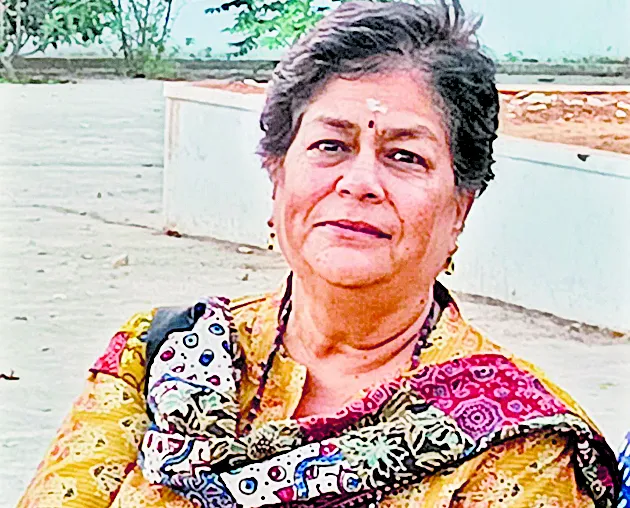
– Lalita Iyer
Senior Journalist