22 September, 2026 | 6:20 AM


Anti-Reservation Wave Rides
29-07-2026 12:00:00 AM
Youth Power
metro india news I hyderabad
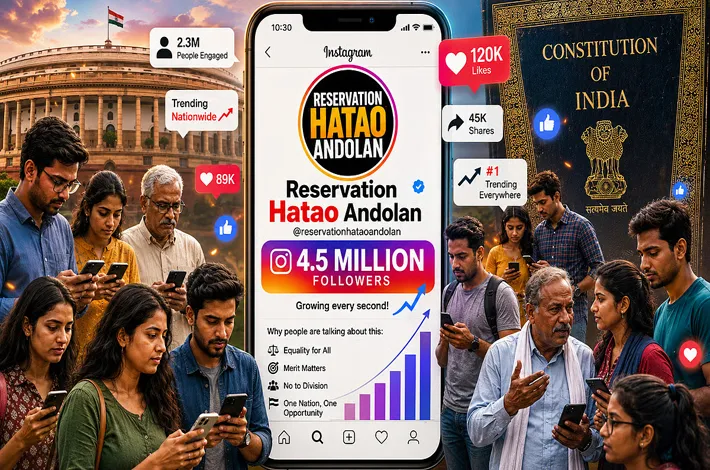
Just weeks after Gen Z-led protests forced sweeping accountability over the NEET-UG 2026 paper leak scandal, a new digital storm is brewing across Indian social media and streets: the “Reservation Hatao Andolan” (RHA). This youth-driven movement, demanding an end to caste-based reservations in education and government jobs, has exploded from relative obscurity to millions of followers, capitalizing on the raw frustration of aspirants who feel the system is rigged twice over—once by leaks and again by quotas.
The spark was the NEET fiasco. The movement’s viral success—mixing street marches, hunger strikes, and savvy social media—proved Gen Z could move the needle. That template is now fueling RHA. An Instagram handle for the movement reportedly surged to millions of followers within days of launch in late July 2026, with parallel accounts and hashtags trending. Organizers frame it as a non-violent, constitutional push for merit and economic-need-based opportunities, not caste. “After fighting paper leaks, students are asking why even a fair exam isn’t enough when seats vanish based on birth,” said one young coordinator in Delhi, speaking anonymously due to the sensitivity.
Supporters share stories of high-scoring general category students missing medical seats while reserved ones with lower marks secure them. India’s reservation system, rooted in the Constitution for social justice, allocates significant quotas. In central government jobs and higher education, it typically includes 15% for Scheduled Castes (SC), 7.5% for Scheduled Tribes (ST), 27% for Other Backward Classes (OBC), and 10% for Economically Weaker Sections (EWS) among the general category. In medical admissions via NEET, this translates to roughly 50-60% of seats under various quotas depending on All India Quota and state policies. Proponents argue it corrects historical discrimination and promotes diversity.
Critics, including RHA voices, point to “creamy layer” beneficiaries, perpetual quotas without review, and reverse discrimination that hurts meritorious poor from non-reserved groups amid fierce competition—only about 55,000-60,000 government MBBS seats exist for lakhs of qualifiers. Data underscores the pressure. NEET qualifiers often exceed 10 lakh annually (11.21 lakh in 2026 re-exam results), yet seats remain scarce. Unemployment among educated youth hovers high, with many blaming a system where merit is secondary in public institutions. Historical parallels abound: 1990 Mandal Commission protests against OBC quotas saw self-immolations and deaths; 2006 saw “Youth for Equality” rallies against further hikes. RHA echoes these but leverages digital scale and post-NEET anger for fresh momentum.
Unlike past movements often led by upper-caste students, RHA claims cross-caste support, including some OBC voices prioritizing merit. Viral posts feature testimonials: an OBC student arguing reservations should be time-bound or economic; general category aspirants citing family debts from coaching. “I scored 650+ but lost a seat. My friend with 520 got one under quota. How is this fair after we all suffered the leak chaos?” read one widely shared story. The movement demands a white paper on reservation efficacy, economic criteria focus, and review mechanisms—echoing 2006 demands but amplified by Gen Z tools.
Critics warn of dangers. Social justice advocates argue dismantling reservations ignores persistent caste atrocities and inequality. Dalit and tribal groups have protested past attempts at “creamy layer” extensions or reforms. Political parties tread carefully; no major national party has fully endorsed RHA yet, given vote-bank realities. Some see it as upper-caste backlash or BJP-aligned, though organizers insist it’s apolitical. Ground reality is tense. Small protests have popped up in Delhi, Mumbai, and Bengaluru, with students holding placards reading “Merit Matters” and “End Caste Arithmetic.” Clashes with counter-protesters remain limited, but police vigilance is high.
Online, the discourse is polarized—hashtags like #ReservationHatao trend alongside defenses of affirmative action. Experts offer nuance. Sociologists note reservations boosted representation but stagnated without complementary primary education reforms. Economists highlight that elite institutions show quota students often catch up, yet overall access gaps persist. A 2024-26 review could argue for hybrid models: income-based aid, better school infrastructure in backward areas, and sunset clauses.
The NEET protests succeeded partly because they tapped universal student pain—leaks affected everyone. RHA bets on extending that to systemic “unfairness.” Whether it translates to policy is uncertain. Prime Minister Modi’s government has emphasized exams and skilling, but reservation tweaks risk alienation.
Opposition parties may rally behind status quo. As one CJP protester who joined RHA discussions said, “We forced a re-exam and arrests. Now we want a system where hard work alone decides doctors, engineers, and officers. Gen Z isn’t asking for privilege—we’re asking for equality of opportunity.” With over 2 million NEET aspirants annually symbolizing youthful ambition, this movement signals deeper churn. India’s demographic dividend—its vast young population—could reshape affirmative action debates. For now, RHA rides the wave of proven youth power, forcing a conversation long deferred. The coming weeks, with potential rallies and political responses, will test if digital outrage becomes lasting reform.