24 September, 2026 | 1:15 PM


Energy Choices, High Stakes
12-02-2026 12:00:00 AM
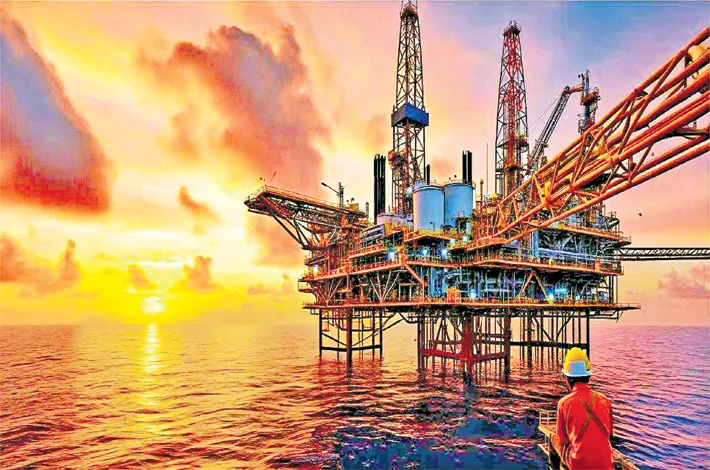
Energy experts note that India has tried domestic production before. Since the discovery of Bombay High in the 1970s, the country has aimed to boost local output. While there were successes, several projects in Rajasthan and Gujarat failed to deliver expected reserves, often due to overestimation
India’s energy challenge has moved from a long-running policy debate to an urgent national question. As the fastest-growing major energy consumer in the world, India’s demand for oil and gas is expected to keep rising for at least the next two decades. Yet, nearly 90 percent of this demand is met through imports. This dependence leaves the economy exposed to global disruptions, where conflicts, sanctions, or even blocked shipping routes can sharply increase costs and strain foreign exchange reserves.
Recent global developments have sharpened this dilemma. The United States transformed itself from a major oil importer into a leading producer through aggressive domestic drilling. China has spent years securing critical minerals and rare earths across the world to safeguard its industrial future. Europe, shaken by supply shocks after the Russia-Ukraine war, is scrambling to diversify energy sources. Against this backdrop, India faces a core question: should it invest more aggressively in domestic energy production, or continue relying on imports while pushing hard toward renewables?
The debate resurfaced after Vedanta Group Chairman Anil Agarwal publicly argued that India has the geological resources, technical talent, and cost advantages to become a significant energy producer. According to him, excessive regulation, fear of environmental backlash, and policy uncertainty have discouraged exploration. He suggested that global powers prefer India to remain a large consumer market rather than emerge as a competitor in energy production.
Not everyone agrees. Critics warn that expanding oil and gas drilling risks locking India into fossil-fuel infrastructure just as the world accelerates toward cleaner energy. They caution about stranded assets, where expensive hydrocarbon projects may become economically unviable as climate policies tighten and renewable technologies advance. This tension highlights a deeper paradox: can India realistically aim for a developed economy while remaining energy-dependent, or should it pursue self-reliance even if fossil fuels lose relevance over time?
Energy experts note that India has tried domestic production before. Since the discovery of Bombay High in the 1970s, the country has aimed to boost local output. While there were successes, several projects in Rajasthan and Gujarat failed to deliver expected reserves, often due to overestimation. These experiences have made investors cautious. At the same time, underutilizing India’s large refining capacity could force the country to import finished fuels like diesel and petrol, increasing dependency rather than reducing it.
Others argue that the focus should gradually shift toward critical minerals rather than only oil and gas. Minerals such as lithium, cobalt, and rare earths are essential for renewable energy, electric vehicles, and batteries. India has known reserves of rare earths and has been mining them for decades, but lacks downstream processing capabilities, which are currently dominated by China. Experts suggest that domestic value addition, recycling of scrap, and strategic overseas acquisitions could help control future import bills.
From a practical standpoint, an immediate shift away from fossil fuels is unrealistic. Transportation, heavy industry, and large parts of manufacturing still depend heavily on oil and coal. Domestic crude production has fallen from around 36 million metric tonnes in 2014–15 to about 26 million tonnes today, reflecting limited reserves and difficult geology. While electricity generation is slowly moving toward renewables and nuclear power, oil and coal are expected to remain dominant for at least the next 20 years.
Economic realities also shape decisions. Cheap imports, such as discounted Russian crude, which now forms a large share of India’s oil intake, make domestic drilling less competitive in the short term. However, some experts argue that exploration must continue, similar to the US shale model, so that reserves can be activated quickly when global prices rise or supply disruptions occur. From this perspective, domestic production is less about immediate profits and more about insurance against future shocks.
There is also skepticism about claims that India holds extremely large untapped hydrocarbon resources. Past examples, such as sharply revised gas estimates in the Krishna-Godavari basin, show how initial optimism can fade with deeper exploration. Still, recent enthusiasm around mining auctions and policy reforms suggests that clearer rules and better data sharing could attract long-term investors, especially if advanced exploration technologies are brought in from countries like Australia and Canada.
Many experts agree that diversification is the safest path forward. Alongside limited domestic drilling, India must strengthen renewable energy, invest in storage solutions like pumped hydro, and explore hydrogen for grid stability. Maintaining strong relationships with multiple oil suppliers, from the Middle East to Russia and the US, also reduces geopolitical risk. In the end, India needs affordable energy today and cleaner energy tomorrow. Balancing security, economics, and climate goals will define whether the country gets this transition right.