27 July, 2026 | 11:08 AM


Coffee prices slide despite rising global shipping costs
22-05-2026 12:00:00 AM
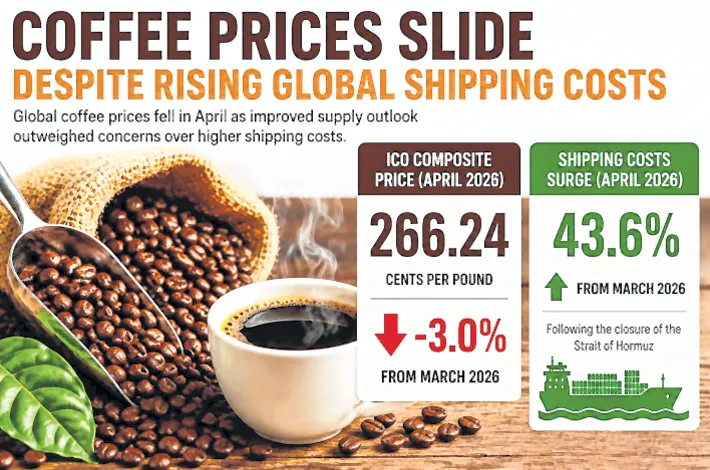
Improving harvest prospects and stronger exports eased market worries despite escalating transport disruptions across major trade routes
Global coffee prices declined in April as improving supply prospects outweighed concerns over rising shipping costs caused by disruptions in West Asia, according to the International Coffee Organisation (ICO).
The ICO’s composite coffee price indicator averaged 266.24 cents per pound in April, down nearly 3% from March. The organisation said freight costs surged 43.6% during the month after the closure of the Strait of Hormuz, but the market focused more on expectations of better global supplies.
“The balance between the impacts of an improved global supply outlook and the blockage of the Strait of Hormuz shifted in April,” the ICO said. The market had largely factored in geopolitical risks, while supply-demand fundamentals continued to evolve, it added. Prices of all major coffee varieties declined during the month, with Robustas recording the steepest fall.
Robusta prices dropped 6.9% on month to 164.64 cents per pound amid a sharp increase in supply availability.
The ICO said Robusta supply rose 16.7% during the first six months of coffee year 2025-26.Prices of Colombian Milds and Other Milds eased 0.9% each to 334.56 cents and 331.32 cents per pound, respectively. Brazilian Naturals prices fell 2.1% to 313.76 cents per pound. Coffee export trends remained mixed in March. Robustas exports surged 24% on year to a record 5.52 million bags, while exports of Other Milds rose 0.9% to 2.59 million bags.
However, Brazilian Naturals exports declined 16.8% on year, while Colombian Milds shipments fell 33.8%. Regionally, exports from Asia and Oceania increased, whereas Africa and South America recorded declines.
Traders and analysts said the decline in coffee prices indicates that the market is currently more focused on improving crop availability than geopolitical disruptions. Increased shipments of Robustas from producing nations have also eased concerns over supply tightness in consuming countries.
However, market participants continue to closely monitor developments in West Asia and global shipping routes, as any prolonged disruption could again push transportation costs higher and impact coffee trade flows in the coming months.
Analysts said coffee markets may remain volatile in coming weeks as traders monitor weather conditions, export flows and geopolitical developments closely.