17 September, 2026 | 9:56 AM


CM Revanth Reddy Accuses BRS of Stalling Assembly
17-09-2026 12:00:00 AM
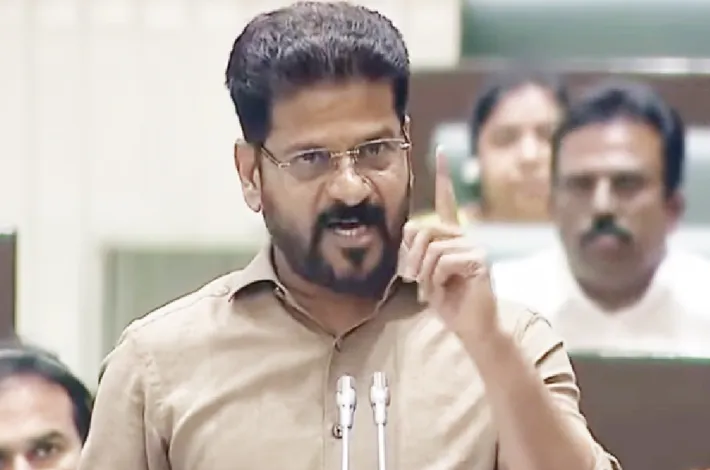
metro india news I hyderabad : Chief Minister A Revanth Reddy on Wednesday launched a sharp attack on the opposition Bharat Rashtra Samithi (BRS), accusing the party of conspiring to obstruct the ongoing Assembly session out of fear that its past misdeeds and wrongdoings would be exposed during house debates. Speaking during the discussion on the 22-A prohibited list in the Telangana Legislative Assembly, the Chief Minister charged that the BRS had engineered disruptions to prevent scrutiny of issues ranging from the alleged plundering of government lands to fee reimbursement irregularities, the state’s drought situation, and even occult rituals reportedly performed by certain individuals.
Revanth Reddy asserted that the opposition’s tactics were not spontaneous but a calculated attempt to stall proceedings. “The opposition BRS conspired to stall the session fearing their misdeeds and wrongdoings will come to light in the house,” he said. He argued that once the house settled into substantive debate on land-related matters and other pressing public concerns, the previous government’s record would face uncomfortable questions. By creating pandemonium, the BRS sought to avoid accountability on these fronts, the Chief Minister maintained.The Chief Minister devoted significant time to defending the Speaker’s handling of the recent disruptions.
He noted that the Speaker had followed rules and procedures framed by the previous BRS government itself. Despite BRS members hurling abuses at the Chair and allegedly assaulting police personnel outside the Assembly premises, the Speaker had still permitted them to enter the house.
“Speaker allowed BRS members in the house even after they abused the chair and assaulted police outside the assembly,” Revanth Reddy pointed out. The expectation, he said, was that the legislators would apologize and then participate constructively in debates on issues affecting ordinary citizens. Instead, according to the Chief Minister, the BRS MLAs refused to express any regret. They created further ruckus inside the house, forcing the Speaker to suspend them.
Revanth Reddy underlined that respecting the Speaker is a long-standing parliamentary tradition and that the Speaker’s role is to protect the rights of every member. “Respecting the Speaker is a tradition for the members. The Speaker is the one who protects the rights of every member in the House,” he stated. He described the Speaker’s decision to allow entry despite the earlier misconduct as a gesture of fairness that was ultimately met with continued disruption rather than cooperation.
On the specific question of entry protocols and attire, the Chief Minister rejected opposition claims that the enforcement of dress or slogan-related rules was arbitrary or unprecedented. He clarified that the directives issued by the Speaker were in line with norms established under the previous regime. Police personnel at Gate No. 3 had simply implemented those directives. Drawing a contrast with Parliament, Revanth Reddy dismissed comparisons involving Leader of the Opposition in the Lok Sabha Rahul Gandhi’s appearance in a black T-shirt. He noted that the Lok Sabha Speaker had not imposed similar restrictions; had such orders been issued prohibiting entry in T-shirts bearing slogans, members would have complied. The point, he suggested, was that rules once framed must be followed consistently, and the current Speaker was operating within the framework left by the BRS government.
Beyond the immediate confrontation, the Chief Minister used the occasion to highlight his government’s priorities, particularly its focus on women’s empowerment. He said the Congress government had resolved to safeguard the self-respect of women and had set an ambitious target of creating one crore (10 million) women crorepatis. This goal, he indicated, reflected a broader commitment to economic inclusion and dignity for women, contrasting it with what he portrayed as the previous administration’s record.
The debate on the 22-A prohibited list provided the immediate context for the Chief Minister’s remarks. The list relates to land matters that have remained sensitive in Telangana politics for years. Revanth Reddy argued that a calm and orderly discussion on such subjects would inevitably bring to the surface questions about how government lands were handled in the past, whether fee reimbursement schemes for students were implemented fairly, how the state managed drought conditions, and other governance issues. By choosing disruption over debate, the opposition had revealed its anxiety about these topics, he charged.Throughout his speech, the Chief Minister maintained that the Assembly is meant for deliberation on people’s issues rather than for theatrical protests or obstruction.
He recounted that BRS members had verbally abused police, staged a semi-nude protest, and insulted the Speaker, yet were still given an opportunity to return and participate. Their subsequent refusal to apologize and continued disorder left the Chair with little choice but to enforce discipline through suspensions.Political observers in Hyderabad noted that the exchange reflects the sharp polarization that has marked Telangana’s Assembly since the Congress assumed power. The BRS, which ruled the state for nearly a decade, has frequently clashed with the new government over procedural matters, land policies, and allegations of past irregularities.
The Congress, for its part, has repeatedly sought to put the previous regime on the defensive by raising questions about land allocation, welfare scheme implementation, and administrative decisions.Revanth Reddy’s intervention on Wednesday fits into this pattern. By linking the disruptions directly to a fear of exposure on land and related issues, he sought to frame the BRS not as a responsible opposition but as a party attempting to shield its record. At the same time, by emphasizing that the Speaker was merely applying rules inherited from the BRS era, the Chief Minister attempted to undercut any narrative of selective enforcement or authoritarian control of the house.
As the session continues, both sides are expected to remain locked in confrontation. The government insists it wants orderly debate on public concerns, while the opposition continues to protest what it sees as restrictions on its right to raise issues. For now, the Chief Minister’s message was unambiguous: the disruptions were deliberate, the Speaker had shown restraint by allowing entry despite provocations, and the real fear driving the BRS was the prospect of its past actions coming under the Assembly’s spotlight.
The developments underscore the intense political contest underway in Telangana, where every procedural dispute quickly escalates into a broader argument over governance, accountability, and the legacy of the previous decade. Whether the house can move past the current standoff and engage with substantive legislative business remains to be seen in the coming days.