22 July, 2026 | 10:08 PM


Cabinet expansion delay faces criticism
28-03-2026 12:00:00 AM
metro india news I hyderabad
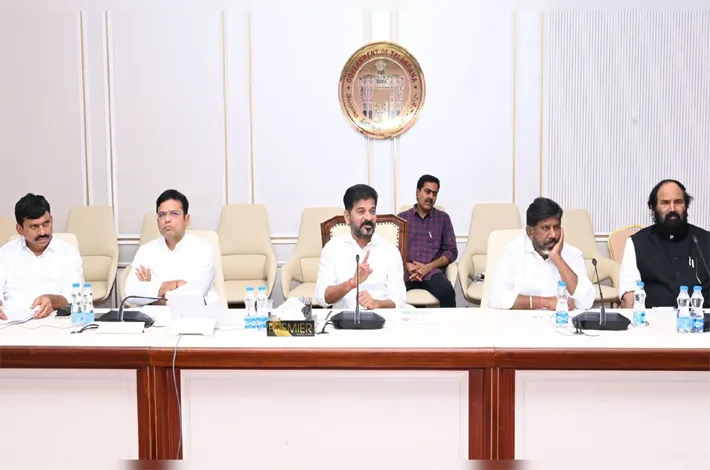
Nearly two and a half years after the Congress party came to power in Telangana, the state cabinet remains incomplete, triggering widespread discontent and sharp criticism even within the ruling party itself. Telangana has 119 MLAs, and as per norms, the cabinet size—including the Chief Minister—should not exceed 15 percent of the legislative strength, which works out to a maximum of 18 members.
However, the current cabinet has Chief Minister A. Revanth Reddy along with 16 ministers, leaving two berths vacant for nearly two and a half years. The prolonged delay in filling these positions has become a major talking point, with party leaders and aspirants questioning when the much-awaited cabinet expansion will finally take place.
The prolonged delay in filling these positions has become a major talking point, with party leaders and aspirants questioning when the much-awaited cabinet expansion will finally take place. Several MLAs are actively lobbying for the two remaining ministerial posts. In addition, key positions such as Deputy Speaker and Chief Whip in the Assembly have also remained unfilled, adding to the grievances.
According to sources, when some leaders recently raised the issue of filling the vacant posts with Chief Minister Revanth Reddy, he reportedly responded by saying that the government was functioning smoothly without any hurdles. This response has reportedly dampened the hopes of several ministerial aspirants, leading to fresh rounds of criticism within the party.
In the present 17-member cabinet (including the Chief Minister), seven ministers belong to the OC (Open Category) community. Among them, four are from the Reddy community — Chief Minister Revanth Reddy, Uttam Kumar Reddy, Komatireddy Venkat Reddy, and Ponguleti Srinivas Reddy. Other OC ministers include Tummala Nageswara Rao (Kamma), Duddilla Sridhar Babu (Brahmin), and Jupally Krishna Rao (Velama).
From the SC community, representation includes Deputy Chief Minister Bhatti Vikramarka, Vivek Venkataswamy (Mala), Damodar Rajanarsimha, and Adluri Laxman Kumar (Madiga).ST representation is limited to Seethakka (Adivasi), while the minority community is represented by Azharuddin. Notably, the BC (Backward Classes) community, which constitutes more than 50 percent of Telangana’s population, has only three ministers — Ponnam Prabhakar, Vakiti Srihari and Konda Surekha.
Ideally, BCs should have had at least seven ministers in the cabinet, but they have been allocated only around 16 percent representation. There is also a demand for including the Lambada community within the ST quota.
The Congress government’s approach to cabinet formation has come under heavy fire, with critics accusing it of turning into an “OC quota” rather than ensuring social justice. While the party projects itself as the champion of social justice and backward classes, its actions in power-sharing are being questioned. There is growing pressure from within the party to ensure social justice while filling the two vacant ministerial positions. Many argue that OCs have already received more than their fair share and that the remaining posts should go to BC communities.
Leaders from BC groups are demanding that the government demonstrate its commitment to backward classes by implementing reservations within its control, even as the 42 percent BC reservation issue awaits clarity in Parliament. They are pressing for adequate representation to communities such as Munnuru Kapu, Gollas, Kurumas, Rajakas and other MBC groups. Additionally, with women’s reservation likely to be implemented at 33 percent ahead of the next elections, there is discussion in political circles about providing due representation to women in the state cabinet as well.