8 October, 2026 | 12:39 AM


BJP, Jana Sena ‘Fake Hindutva’ Voices: MNR
08-10-2026 12:00:00 AM
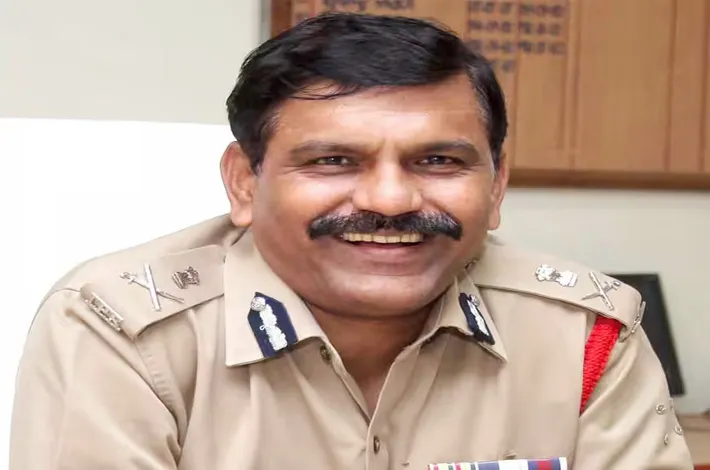
Former CBI Director Nageswara Rao Terms BJP and Allies ‘Fake Hindutva’ Voices
Metro India News | Hyderabad : In a hard hitting interview given to Vijaya Kranti Digital TV that has stirred political circles, M. Nageswara Rao, the national president of the Sarvajana Sanatan Party (SSP) and former interim director of the Central Bureau of Investigation, has launched a sharp critique of the Bharatiya Janata Party (BJP) and Jana Sena, labelling certain political actors as “kuhana Hindutvavadulu” — fake Hindutva advocates. Speaking with characteristic directness, Rao argued that these forces merely mouth “Sriranga neetulu” (polished, rhetorical principles) while failing to uphold the true spirit of Sanatana Dharma once in power.
Rao, a 1986-batch Odisha-cadre IPS officer who briefly headed the CBI between October 2018 and February 2019, assumed the leadership of the SSP in Varanasi earlier this month. He framed his entry into active politics after nearly four decades in security, law and order, and administration as a mission to rebuild India on civilizational foundations rather than mere administrative tweaks. “Satya Sanatan, Nitya Nutan is not merely a slogan but the foundation of our vision,” he has repeatedly stated. Sanatan, in his view, is not confined to ritual worship but constitutes a comprehensive way of life rooted in truth, dharma (righteousness), duty, justice, compassion, self-control, harmony with nature, family values, social responsibility, and public welfare.
He was critical of the broader Sangh ecosystem and said they invoke Hindutva when in opposition only. “RSS and BJP talk about Sanatan only when they are in the opposition. Once they come to power, they forget it. Refererring to Jana Sena, he said some pose superficial Hindutva. Rao has been consistent in his long-standing critique of what he terms “pseudo-Hindutva.”
For years on social media and in public forums, he has described the Sangh Parivar’s ideology as a political project that misuses Hindu externalities, imagery, and grievances primarily to capture and retain power, rather than to achieve genuine Hindu civilizational renaissance or address collective disabilities imposed on Hindu society. He has argued that pseudo-Hindutva and pseudo-secularism are two sides of the same anti-Hindu coin — one cloaked in minority appeasement rhetoric, the other in Hindu nationalist language — both ultimately subordinating authentic Sanatana concerns to power politics.
The SSP, under Rao’s leadership, positions itself as an alternative that seeks “Modern India, with its Sanatan civilizational roots.” Its programme rests on four pillars: education that integrates India’s civilizational history and knowledge traditions with modern, globally competitive learning; accessible and quality healthcare blending contemporary medicine with traditional Indian systems; dignified livelihoods for youth, farmers, artisans, labourers, and entrepreneurs; and civilizational reconnection that values languages, arts, temples, pilgrimage sites, festivals, family structures, and cultural continuity. Rao has emphasised that the party is not against any caste or community and does not aim to create social divisions. “Sanatan is not against anyone,” he has clarified. “Our objective is to work for all.”
Notably, Rao has declared that he himself will not contest elections. His focus, he says, remains the preservation and revival of India’s civilizational identity. The party has signalled ambitious plans, including contesting all 403 assembly seats in Uttar Pradesh in the coming elections, beginning its organisational push from Kashi — the city Rao describes as the living symbol of India’s unbroken civilizational continuity.
The interview has drawn attention precisely because it comes from a retired senior police officer with extensive experience in high-stakes investigations and administration, rather than a conventional politician. Rao hails from Warangal district in Telangana and brings a reputation for outspokenness that predates his formal political entry. His remarks are likely to intensify debates within Hindu political discourse, especially in the run-up to state elections, as they challenge the monopoly of established parties over the language of cultural nationalism.
Whether the SSP can translate this ideological critique into organisational strength and electoral traction remains to be seen. For now, Nageswara Rao’s pointed observations have underscored a growing contestation over the meaning and ownership of Sanatan and Hindutva in contemporary Indian politics — a contestation that pits rhetorical appropriation against what he insists must be lived civilizational values.