21 June, 2026 | 9:38 AM


Bharat-Ratna for Savarkar?
27-02-2026 12:00:00 AM
Will Modi heed the advice of RSS CHIEF?
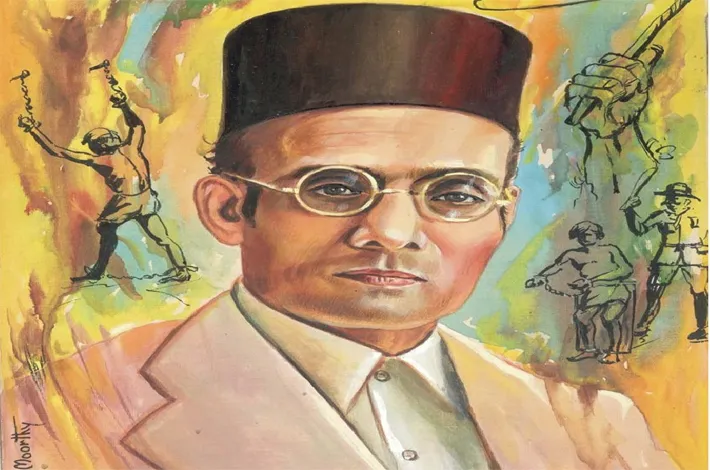
It has been more than a fortnight since we last heard the demand for conferring the highest honour of the land, Bharat-Ratna, on Vinayak Damodar Savarkar. The demand was put forth by no one else but RSS Sarsangchalak Mohan Bhagwat. The Man who taught & showed the BJP the path of Hindutva certainly deserves a Bharat Ratna, from the BJP government. But it remains to be seen how soon the Modi government will act on the advice given by RSS Chief.
Significantly, even those who differ with his political trajectory, admit to his iconic contributions to studies in history and to Marathi Literature.
Without openly voicing the demand, Mohan Bhagwat had stated that if Bharat-Ratna is conferred on Savarkar, then, perhaps the prestige of the honour itself would be greatly enhanced. Evading direct comment on whether the decision to confer India's highest honour on Savarkar has already been unduly delayed, Bhagwat remarked that even without Bharat-Ratna, Savarkar made his way into crores of hearts, to become their Hriday-Samrat.
This leaves no one in doubt where the ideological mentor of the ruling BJP stands on this highly emotive issue. That this issue figured at RSS Centenary event in Mumbai is not without its significance. Savarkar is strictly not from the RSS but broadly belongs to what is called Sangh Parivar. Savarkar was with Hindu Mahasabha that was formed in 1915, while RSS was started in 1925 by Dr Keshav Baliram Hedgewar. Hindutva, written by Savarkar in 1923, gave the RSS its foundational values and its driving ideology. That way, Savarkar is the RSS Ideologue. On the other hand, Nanaji Deshmukh was instrumental in enlarging the Sangh footprint in the Hindi-Heartland. Together, Savarkar and Nanaji Deshmukh brought the RSS on to the national political center stage.
There is growing awareness within the RSS that none of the tall leaders in the Sangh, who have been widely recognized and celebrated. Addressing this issue is vital for bringing Sangh into the social, cultural and political mainstream.
As the first step towards honouring the Sangh icons, in 1999, Prime Minister Atal Behari Vajpayee conferred the second-highest honour of the country, Padma Vibhushan, on Nanaji Deshmukh. Carrying it forward, in 2019, Prime Minister Narendra Modi conferred Bharat-Ratna on Nanaji Deshmukh. This move ever since has triggered speculation over the possibility of conferring Bharat-Ratna on Savarkar, as well.
While Savarkar gave the RSS its guiding ideology of Hindutva, equally important was the contribution of Nanaji Deshmukh, who brought the political front of the Sangh to power. In the early 1970s, Nanaji Deshmukh is considered as being instrumental in roping in Jaya Prakash Narayan to launch and lead the Anti-Indira Gandhi Movement.
In 1974, JP became the face of Total Revolution and Nanaji was the brains behind it. Putting together a team of Madan Lal Khurana, Ravindra Verma, Dattopant Thengde and Dr Subramanian Swamy, Nanaji organized resistance to the Emergency during 1975 and 1976, paving the way for the Janata Party Government under Morarji Desai in 1977. Following the downfall of the Indira Gandhi Government, the first non-Congress Government since Independence was formed at the Centre.
Savarkar's historical persona, his politics and political Ideology continues to remain entangled in controversy. Yet, there is another side to Savarkar that evokes admiration across party lines. That is Savarkar's legacy, his work as poet, playwright and short-story writer, most of which is in Marathi.
Savarkar is responsible for bringing about a paradigm shift in the perspective on the Great Indian Uprising in 1857. While the British called it Sepoy Mutiny and Revolt, Savarkar changed the nomenclature to the First Indian War of Independence. In his book, The Indian War of Independence -- 1857, Savarkar depicted it as a unified struggle for Indian Independence, rather than as a revolt.
Yet, when it comes to the political front, there are controversies galore. Savarkar stood trial in Gandhiji's assassination case, but he was acquitted.
When the Vajpayee Government decided in February, 2003, to get President A P J Abdul Kalam to unveil Savarkar’s portrait in the Central Hall of Parliament, the Congress protested and boycotted the function. In fact, the then Congress President Sonia Gandhi urged President Abdul Kalam to reconsider his decision to unveil Savarkar's portrait.
It did not end there. During the Vajpayee Government, a plaque for Savarkar in the Cellular Jail in Andaman was put up by the then Union Petroleum Minister Ram Naik. During his imprisonment in the Cellular Jail, Savarkar wrote at least seven mercy petitions to the British, seeking his release from Cellular Jail in Andaman. Eventually, Savarkar was moved from Andaman to Ratnagiri prison, before he was finally set free. After release from the prison, he received a pension of Rs 60 per month from the British till as late as 1937. Does Savarkar deserve a plaque is the question raised by the Congress.
After the Congress-led UPA Government came to power in May, 2004, Union Minister Mani Shankar Aiyar removed Savarkar plaque installed in the Cellular Jail by his predecessor Ram Naik in the Vajpayee Government. Mani Shankar Aiyar replaced it with another plaque to honour Father of the Nation Mahatma Gandhi. After the Modi Government came to power in 2014, the then Uttar Pradesh Governor Ram Naik in 2015 reinstalled Savarkar plaque in Andaman Cellular Jail.
Refusing to die away, controversies continued to abound. In the normal course, Pakistan founder Mohammad Ali Jinnah is credited with the Two-Nation Theory. But, on the other hand, Savarkar is seen as the first to have propounded the Two-Nation Theory in 1937. Savarkar claimed there are two antagonistic nations living side by side in India. After the Pakistan Resolution was passed by the Muslim League in Lahore on March 23, 1940, Savarkar made it clear in Nagpur on August 15, 1943 that he had no quarrel with Mohammad Ali Jinnah’s Two-Nation Theory. Savarkar said Hindus are a nation by themselves and it is a historical fact that Hindus and Muslims are two nations.
Savarkar, as Sangh ideologue, and Nanaji as the architect of the first non-Congress Government at the Centre, are remembered for their iconic contributions. While Nanaji Deshmukh has been accorded recognition, Savarkar is still under the wraps, waiting to be brought into the national spotlight.
Prime Minister Narendra Modi is the first BJP leader to bring the Saffron Party to power on its own majority at the Centre. Modi is also the first to implement key elements of the Sangh Parivar Agenda, like Ram Mandir in Ayodhya, Abrogation of Article 370 and ban on Triple Talaq. Though Modi is playing his cards close to his chest on the issue of conferring Bharat-Ratna on Savarkar, yet it is a matter of time, when the prestigious award will be conferred on Savarkar.
Prime Minister Modi is not among those who are afraid of the Opposition. Relationship between Modi Government and the Opposition Congress is already strained and the principal Opposition party is on the warpath. It goes without saying that any such move would only further widen the gap between the Modi Government and the Opposition Congress. Whether or not Prime Minister Modi will bite the bullet and confer the Bharat-Ratna on Savarkar, is still a million dollars question.
— Anita Saluja
(Writer is Delhi-based senior journalist, political commentator and analyst. Views are personal.)