23 October, 2026 | 1:51 PM


Benefit or curse?
01-09-2026 12:00:00 AM
Social media
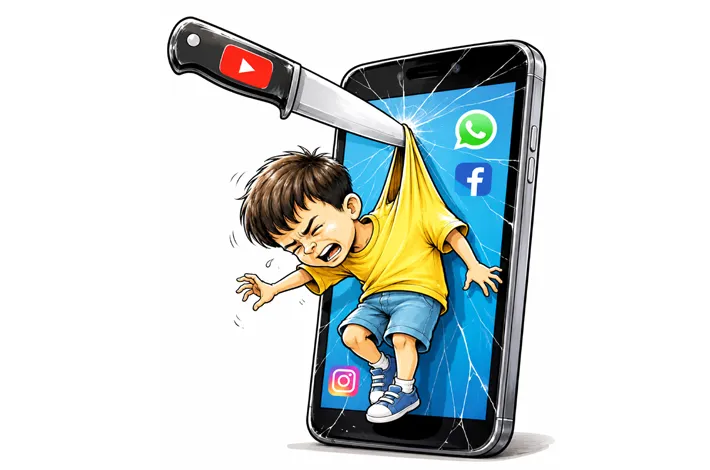
There was a time when the world waited patiently outside our doors. Today, it glows restlessly in our palms. News, entertainment, education, business, politics, friendships and conflicts all enter our lives through one screen. Social media is among the most powerful technologies placed in human hands. But are we using that power wisely, or is it shaping our thoughts, fears and emotions in ways we barely understand?
Social media is not merely a mirror of society; it magnifies what it sees. It can transform compassion into collective action or anger into violence, carry an ordinary person’s voice across continents or turn a baseless lie into dangerous propaganda. The real question, therefore, is whether we possess the wisdom, discipline and responsibility to handle this enormous power.
The Whole World in Our Palm
The smartphone is no longer just a communication device. It is a library, classroom, newsroom, marketplace, bank, entertainment centre, political stage and emergency lifeline. A student in a remote village can access lectures from world-class universities, while small traders, artists and writers can reach audiences without large advertising budgets.
A photograph or social media post can also force authorities to respond to injustice. From blood donation and medical assistance to tracing missing children and organising disaster relief, social media has repeatedly demonstrated its power to mobilise solidarity.
Yet, while bringing the world closer, it can distance us from those beside us. Family members may sit together while each remains absorbed in a different screen. Our contacts increase while conversations shrink. Followers multiply, but meaningful relationships may diminish. As the digital world expands around us, loneliness can grow within us.
When a message became a lifeline
The 2018 Kerala floods revealed social media at its best. As roads disappeared and conventional communication networks failed, WhatsApp messages, live videos and location details helped guide rescue teams. Volunteers verified information about stranded families, children needing medicines, food shortages and rescue requirements before sharing it with officials, fishermen and rescue personnel.
Phones normally used for entertainment became emergency control rooms. A location pin could become the address of a family fighting for survival; a message could guide a rescue boat towards people awaiting help.
Young people, often criticised for being glued to their phones, used those devices to mobilise humanity. Kerala demonstrated that technology need not destroy compassion. When used responsibly, it can organise and accelerate human kindness.
When rumours grow with wings
The same technology that saved lives can also endanger them. False messages and old videos have sometimes been circulated as evidence of new incidents, including alleged child kidnappings, leading people to attack innocent individuals.
Who is responsible when a rumour causes violence? Not only the creator of a lie, but also those who spread it without verification. Saying “I only shared what I received” does not remove social responsibility.
Virality is not evidence. Repetition is not verification. Before forwarding a sensational message, users should ask: Who published it? What evidence supports it? Who could be harmed if it is false? In the speeding vehicle of social media, verification is the only real brake.
The hidden price of free of cost
Social media may be free in money, but users pay with time, attention, emotions and personal information. Algorithms learn what attracts, excites, frightens or angers us and then provide more of it to keep us scrolling.
We think we are reading the feed; in reality, the feed is reading us. Anger and fear can keep users engaged, while comparison can create dissatisfaction and encourage the search for approval. The endless scroll is therefore not simply a design feature but part of a business model built around attention.
The Cambridge Analytica controversy highlighted the political value of personal data and raised concerns about voter profiling and targeted messaging. Our likes, preferences, movements and online behaviour can create a digital map of our personalities. Such information can influence not only what we buy but also what we think.
Digital literacy must therefore mean more than knowing how to use an application. It must include understanding what platforms learn about us and how that information may be used.
The illusion of perfect lives
Social media shows selected moments, not complete lives. We see success but not the failures behind it, holidays but not their financial cost, and smiles but not hidden pain. We compare other people’s carefully presented moments with the unedited reality of our own lives.
When likes become measures of worth, identity itself becomes a commodity. Filters define beauty, comments influence confidence and followers begin to determine happiness. Yet digital approval cannot guarantee affection, friendship or emotional security. A person may receive thousands of reactions to a photograph and still have nobody to call in a moment of despair.
Cyberbullying: violence with an audience
Cyberbullying can follow a child home through a phone. Abusive comments, private photographs shared without consent, manipulated images and humiliating videos can cause lasting distress. Calling such behaviour a joke does not make it harmless. Entertainment built on another person’s suffering is violence before an audience.
Friends and classmates should support victims, preserve evidence, report abusive accounts and inform parents, teachers or authorities. Behind every account is a human being with feelings, dignity and a life. Online cruelty must not be rewarded with attention.
Connected across continents, divided at home?
Social media connects people separated by thousands of kilometres while sometimes disconnecting those living under one roof. Parents must model responsible behaviour rather than simply criticise children’s screen use.
Children need guidance and conversation more than surveillance and punishment. Families can establish screen-free meals, breaks before sleep and regular periods for uninterrupted conversation. These are not rules against technology but safeguards for human relationships.
Responsibility Cannot End with the User
Individual users cannot bear all responsibility. Social media companies must also examine algorithms and business models that reward sensational, divisive or anger-driven content. Platforms should act against misinformation, harassment, impersonation and threats to children while protecting privacy and explaining how personal information is collected and used.
Governments, too, must balance freedom of expression with public safety. Controlling misinformation should not become an excuse for suppressing legitimate criticism. Both require transparent laws, fair procedures and accountable institutions.
The Problem Is Not in the Phone
Abandoning social media is neither practical nor desirable. Like fire, technology can be dangerous, but it can also be controlled when used wisely.
We should verify information before sharing it, avoid posting in anger, respect privacy and ask four questions: Is it true? Is it necessary? Could it harm someone? Would I say it directly to that person?
We must also protect our time and mental space. Just as we choose healthy food for the body, we should choose healthy information for the mind. Social media should have a place in our lives; our lives should not become prisoners of it.
Our Answer to the Next Generation
One day, the next generation may ask what we did when technology gave us the power to reach almost everyone. Did we spread lies, humiliation and hatred, or did we use that power to share knowledge, help strangers, challenge injustice and save lives?
We are writing that answer today through every click, comment and share. Social media is an ocean containing knowledge and opportunity as well as rumours and hatred. Blaming the ocean is not enough; we must learn to navigate it wisely.
What matters is not how smart our phones are, but how wise their users become. Not how many followers we have, but whether we are worthy of being followed. Not how visible we are online, but how useful we are to society.
Let us embrace technology without forgetting humanity and ensure that social media remains a tool that illuminates our lives rather than consumes our time, peace and relationships.
Digital citizenship must begin in schools
Schools teach children how to use computers. But do they teach them how to live responsibly in the online world? Can students identify fabricated news? Do they know how to protect personal information? Do they understand why strong passwords matter? Are they taught to obtain consent before sharing another person’s photograph? Do they know whom to approach when confronted with cyberbullying? Do they understand that a digital footprint can affect future education and employment? These are not optional computer lessons.
They are essential life skills. Schools must prepare children not only for examinations, but also for citizenship in a digital society. Education is not limited to learning how to use technology. It must also teach students to understand its influence, recognise its dangers, question its claims and respect the rights of others. A digitally skilled student may know how to create content. A digitally responsible student also knows when not to create, share or comment. That distinction will determine whether technology strengthens society or damages it.

- Malladi Venkata Gopalakrishna
Senior Journalist & Media Researcher