24 August, 2026 | 11:58 AM


Battle Royale Begins
27-06-2026 12:00:00 AM
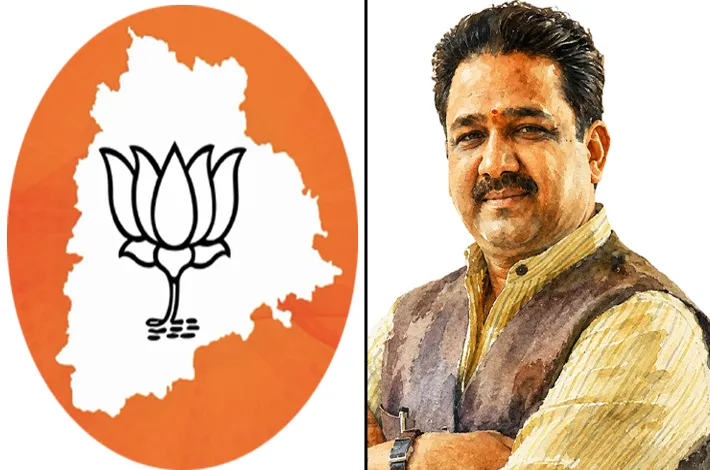
Bansal must rapidly build local leadership, expand the party’s social base beyond traditional support, and craft a narrative that resonates with Telangana’s unique aspirations rooted in its statehood movement while aligning with national priorities
metro india news I hyderabad
In the high-stakes arena of country’s politics, few figures embody quiet organisational mastery like Sunil Bansal. Often described as the most trusted lieutenant to Prime Minister Narendra Modi and Home Minister Amit Shah, Bansal has earned a reputation as the BJP’s “election engineer” — a strategist capable of turning seemingly impossible missions into electoral triumphs.
Fresh from engineering what many call a stunning breakthrough in West Bengal, the Rajasthan-born RSS veteran has now been entrusted with the critical task of elevating the BJP in Telangana, a state long dominated by regional heavyweights.
Born in Rajasthan, Bansal’s journey began in the student politics of the Akhil Bharatiya Vidyarthi Parishad (ABVP), the RSS-affiliated student wing. He was elected General Secretary of Rajasthan University in 1989 and formally joined the RSS as a pracharak in 1990. This disciplined, ideological grounding in the Sangh Parivar shaped his lifelong commitment to grassroots cadre-building, booth-level management, and long-term organisational expansion rather than short-term populism. His low-profile, backroom approach stands in contrast to the flamboyant style of many contemporary leaders, still it has proven remarkably effective.
Bansal’s rise within the BJP accelerated ahead of the 2014 Lok Sabha elections. Deputed to Uttar Pradesh as Joint Organising Secretary to assist Amit Shah, he played a pivotal role in the party’s historic sweep of 71 out of 80 seats in the state. His meticulous “Panna Pramukh” system — assigning dedicated workers to clusters of voters — and hyper-local booth management became blueprints for success. He continued as Organising Secretary in UP, contributing significantly to the 2017 Assembly victory (312 seats), the 2019 Lok Sabha performance, and the 2022 repeat success. Bansal also had stints handling organisational responsibilities in Rajasthan and Punjab, consistently strengthening the party’s machinery from the ground up.
In 2022, he was elevated to National General Secretary with oversight of key states including West Bengal, Odisha, and Telangana. His assignment in West Bengal was particularly daunting: transforming the BJP from a marginal player into a formidable force against a deeply entrenched Trinamool Congress. According to party insiders and analysts, Bansal’s strategy focused on building active booth committees across tens of thousands of polling stations, micro-level social coalition engineering, and sustained cadre mobilisation. The results, as seen in the party’s impressive 2026 performance, have been hailed as a landmark organisational achievement in a state historically hostile to the BJP’s national narrative.
Now, Bansal brings this proven playbook to Telangana. The state presents a complex three-cornered contest. The ruling Congress, led by Chief Minister A. Revanth Reddy, boasts an energetic leader with strong oratory, financial resources, and ground-level experience. The Bharat Rashtra Samithi (BRS), under the formidable K. Chandrashekar Rao (KCR) and his son K.T. Rama Rao (KTR), commands deep local knowledge, a vast network of proven leaders, and emotional connect built over years in power. The BJP, traditionally third, faces an uphill task but senses opportunity amid anti-incumbency and shifting alliances.
Bansal’s arsenal is formidable. He commands the BJP’s robust national organisation, backed by RSS cadre and ideological commitment to Hindutva. Financial resources, the personal backing of Modi and Shah, and extensive organisational experience provide significant leverage. Strategic tools include potential governor interventions where applicable, the women’s reservation bill, upcoming seat delimitation exercises, mini by-elections, targeted defections from weakened opponents, and the appeal of “double engine” governance promising accelerated development for Telangana. The party also plans to exploit perceived corruption or governance lapses in rival camps while projecting a vision of capability and national integration.
But the challenges are substantial. Telangana lacks a deep bench of prominent local BJP faces compared to the established networks of BRS and Congress. KCR’s legendary mass connect — a single bus yatra can electrify crowds — and the BRS’s granular knowledge of every constituency remain potent. Revanth Reddy’s youthful energy, strategic acumen, and bloc of loyal MLAs add another layer of competition. Bansal must rapidly build local leadership, expand the party’s social base beyond traditional support, and craft a narrative that resonates with Telangana’s unique aspirations rooted in its statehood movement while aligning with national priorities.
Analysts see Bansal’s deployment as a signal of the BJP’s serious intent. His method is rarely about flashy rhetoric; it is about structure. In UP, he perfected voter slabs of 50-60 households. In Bengal, he reportedly achieved functional committees in over 65,000 booths. In Telangana, expect similar emphasis on booth-level saturation, Panna Pramukh-style networks, and relentless outreach. The party will likely leverage central schemes, development promises, and organisational muscle to chip away at regional dominances.
The impending battle in Telangana promises to be a “royal” contest among three powerful forces.
For the BJP, success would mark another milestone in its southward expansion and validate Bansal’s model of patient, precision-driven politics. For the state, it could reshape power equations, forcing all players to recalibrate strategies around development, welfare, and identity.
Bansal himself remains the quintessential Sangh-style organiser — disciplined, unassuming, and results-oriented. Tipped by some for a Rajya Sabha berth from West Bengal as recognition of his contributions, his focus stays on delivery. As Telangana gears up for polls, the quiet commander’s ability to deliver the “impossible” once more will be under national scrutiny. Whether he can replicate Bengal magic in the Deccan heartland may well define the next chapter of BJP’s national ambitions.
In an era of personality-driven politics, Sunil Bansal reminds observers that behind spectacular victories often lies years of invisible organisational labour. Modi and Shah’s trust in him is not misplaced; it is earned through repeated delivery in tough terrains. Telangana’s political landscape is about to witness that machinery in full throttle. The battle has begun — and the nation will be watching.