27 July, 2026 | 5:35 AM


Arrogance or ignorance?
26-05-2026 12:00:00 AM
Hema Singuluri I hyderabad
In an era where every public moment is clipped, shared, and dissected within seconds, even minor celebrity mistakes no longer fade quietly. The line between ignorance and arrogance is now debated in real time, often shaped more by social media outrage than intent.
Recent incidents involving actor Ram Charan have once again brought this tension into focus, sparking conversations about celebrity awareness, fandom loyalty, and the rising intolerance of viral culture toward public errors.
Mix up with Bumrah as ‘Footballer’, Bhopal as ‘Bihar’
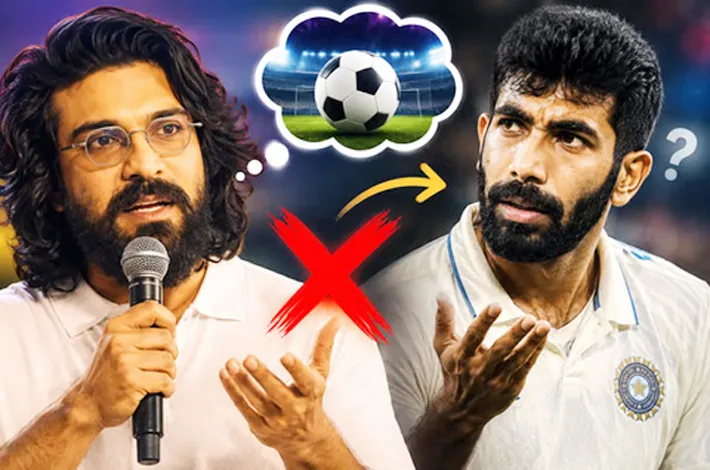
At a promotional event for his upcoming film Peddi in Bhopal, Ram Charan made two widely circulated mistakes. In a rapid-fire interaction, he referred to Indian cricketer Jasprit Bumrah as a “footballer” and, in a separate moment, addressed the audience in Bhopal as people of Bihar. The remarks immediately triggered online reactions, with clips spreading across platforms.
The Bumrah reference drew particular attention, as the actor had just spoken about being an admirer of several cricketers before incorrectly associating Bumrah with football. The geographical mix-up further intensified discussions, with users questioning how such slips occur during high-visibility promotional events.
People online connect this to a larger perception problem
The response online was divided but intense. A section of viewers described the incidents as harmless lapses under pressure, typical of live-stage fatigue and rapid questioning formats. Others, however, interpreted them as signs of celebrity detachment, arguing that such figures often engage in performative admiration without basic accuracy or preparation.
Following the backlash, Ram Charan issued an apology on X (formerly Twitter), describing the moment as an “honest human error” caused by high-energy excitement on stage. He reiterated respect for Bumrah and clarified that his memory lapses occur in fast-paced public interactions. The apology was largely seen as calm and non-defensive, with many fans accepting it as closure.
However, the debate did not end there. On Instagram and X, several users questioned whether such mistakes reflect deeper celebrity ignorance or simply the pressure of constant public exposure. Comments such as “know your roots first” circulated widely, reflecting frustration with perceived superficial engagement by public figures.
Some users also drew comparisons with older public moments involving other celebrities. Actor Chiranjeevi was referenced in resurfaced clips where he appeared to mispronounce or mix up names of actors such as Urvashi Rautela and Rashmika Mandanna, though these were largely contextualized as on-stage slips rather than intentional errors.
Allu Arjun’s incident resurfaced
Separately, actor Allu Arjun’s momentary lapse in recalling Telangana Chief Minister Revanth Reddy’s name during a Pushpa 2 success event was also revisited online. While initially treated as a minor slip-of-the-tongue, the incident later became overshadowed by a much larger controversy following a tragic stampede at Hyderabad’s Sandhya Theatre during a film premiere. The incident resulted in the death of a female fan and injuries to her son, leading to political criticism regarding crowd management and permissions.
The Chief Minister had alleged lapses in conduct and permissions, while the actor maintained in a press interaction that he had police clearance and was unaware of the tragedy at the time.
Beyond individual cases, a broader narrative has emerged online: that celebrities often engage in emotionally charged public messaging about culture, people, and icons, but occasionally lack precise grounding in the details they reference.
This has fueled accusations of performative admiration where cultural and emotional references are used for connection but not always backed by accuracy.
Many users were not angry merely because he misspoke. They saw it as performative admiration, scripted PR culture, stars trying to appear relatable without preparation.
In Telugu cinema especially, stars are not viewed merely as entertainers but as cultural representatives, political influencers, demi-god figures by fans.
This magnifies both admiration and scrutiny. Yet, a counter-question continues to surface: whether modern audiences, amplified by viral platforms, are now less forgiving of ordinary human mistakes.
Ultimately, the real issue may not be whether celebrities are arrogant or ignorant, but whether modern fandom has stopped treating celebrities as ordinary people capable of ordinary mistakes.