2 October, 2026 | 12:33 AM


Apostle of Hindu-Muslim Unity
02-10-2026 12:00:00 AM
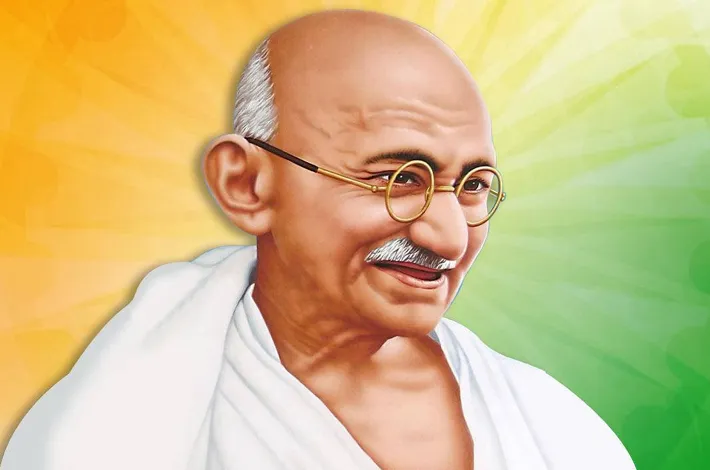
Hindu-Muslim Unity remained Mahatma Gandhi's life-long mission. His life was dedicated to this single-most important movement and Gandhiji pursued it with great passion and courage of his convictions.
Gandhiji lived and died for Hindu-Muslim Unity. It began with the Congress, under Gandhiji's direction, extending support to Khilafat Movement in 1919; as a result, he transformed the Congress from a party of prayers and petitions, into a mass organization. A string of measures throughout his life marked his greatest commitment to the cause closest to his heart.
Hindu-Muslim Unity topped his Constructive Programme in 1922; his fast for the first time for Hindu-Muslim Unity lasted for 21 days, from September 17, 1924; his last fast for Hindu-Muslim Unity was from January 13-18, 1948, just days ahead of his dastardly assassination on January 30, 1948; and his daring visit, unarmed, to Noakhali and Kolkata, in the grip of frenzy and communal conflagration, in the wake of Jinnah’s Direct Action Day call for August 16, 1946.
When India attained Independence, Gandhiji was in faraway in Kolkata, fasting and praying for immediate cessation of senseless killings. Lord Mountbatten called Gandhiji "one-man boundary force," because his presence ensured peace in Bengal, while other regions faced severe bloodshed.
Constructive Programme
Hindu-Muslim Unity ideal is on top of his Constructive Programme. Other issues in his Constructive Programme include Removal of Untouchability; Khadi Promotion; Village Industries; Prohibition; Nai Taleem, as part of which Jamia Millia Islamia was set up, which was a rival to Aligarh Muslim University of Sir Syed, who aligned it with the British; Adult Education; Women's Emancipation; Provincial Languages; and Health and Hygiene, among other issues.
In the West, John Locke, Thomas Hobbes and Jean-Jacques Rousseau focussed largely on political theories and politics. Perhaps, Gandhiji has the unique and unrivalled distinction of being the only political leader to come up with Constructive Programme. It is considered the blueprint for national reconstruction, after Indian Independence, addressing social and economic aspects, alongside political issues.
Charkha as Symbol
In his Harijan weekly, Gandhiji responds to Gurudev Rabindranath Tagore's outburst against Gandhiji, for what he describes as the cult of Charkha. Gandhiji responds to Gurudev Tagore's attack by invoking Ramayan metaphor. Gandhiji says, "I wander after my beloved Sita, the Charkha, and seek to deliver her from the ten-headed monster from Japan, Manchester, Paris, etc." Employing the mythological imagery, Gandhiji brings out the spiritual and moral dimension of Charkha, an evocative symbol of Swadeshi.
On the economic front, Idea of Charkha is to protect weavers from the multi-headed monster of aggressive Western textiles empire. Manchester, at the heart of the British textile empire, was systematically destroying India’s domestic weavers by flooding the market with cheap, mill-made cloth. Gandhiji wanted ordinary women to perceive daily spinning, not just as manual labour, but as a sacred duty to rescue the nation from colonial, economic bondage.
On the social front, Gandhiji focuses on Hindu-Muslim Unity, Women's Emancipation, removal of Untouchability, Nai Taleem and education as tool for social transformation.
Two-Nation Theory
Gandhiji stoutly strongly opposed Two-Nation Theory, which brought untold misery and suffering to the Indian Sub-Continent. He rejected Mohammad Ali Jinnah’s assertion that Hindus and Muslims constituted two separate nations, incapable of living together.
Gandhiji engaged Jinnah in talks. The meetings took place from September 9 to September 27, 1944, at Jinnah’s residence in Mumbai. It marked a historic moment, as Gandhiji recognized that Partition could have disastrous impact on the Indian Sub-Continent.
Gandhjii based his proposal on C Rajagopalachari Formula, suggesting plebiscite in Muslim-majority area of North-West and North-East India, to decide on separate sovereign state after the British left. Gandhiji favoured common Central Government, controlling essential subjects like Defence, Foreign Policy and Commerce; but Jinnah demanded full sovereignty for Muslim-majority regions, without Central interference.
Direct Action Day
Talks ended in a deadlock; with the failure cementing the divide. With Jinnah’s call for Direct Action Day on August 16, 1946, riots ravaged Kolkata and Noakhali. Gandhiji rushed to riot-affected areas and worked hard to end the senseless violence.
Gandhiji famously remarked, "Partition only over my dead body." In March and April 1947, Gandhiji rejected the very idea of Partition. He made it clear to one and all, like Pandit Jawaharlal Nehru, Sardar Patel and Maulana Azad, that as long as he was alive, he would neither agree for Partition, nor allow the Congress to accept it. It required the combined Congress leadership to persuade Gandhiji that acceptance of Partition alone shows the way out of mindless violence across the country.
Ram Dhun
Gandhiji's Ram Dhun had Ishwar-Allah Tero Naam, Sab ko Sanmati De Bhagwan. For Gandhiji, Hindu-Muslim Unity was the basis of his Ideology and this was what he preached, through precept and practice.
(Venkat Parsa is a senior journalist)
“This is the man (Mahatma Gandhi), who has stirred 300 million people to revolt, who has shaken the foundations of the British Empire and who has introduced into human politics the strongest religious impetus of the last 2,000 years.”
- Nobel Laureate Romain Rolland on Mahatma Gandhi.