11 October, 2026 | 2:16 AM


1000-year-old stone inscription discovered in Bachannapalli
11-10-2026 12:00:00 AM
Metro India News | GORANTLA( SRI SATYA SAI DISTRICT)
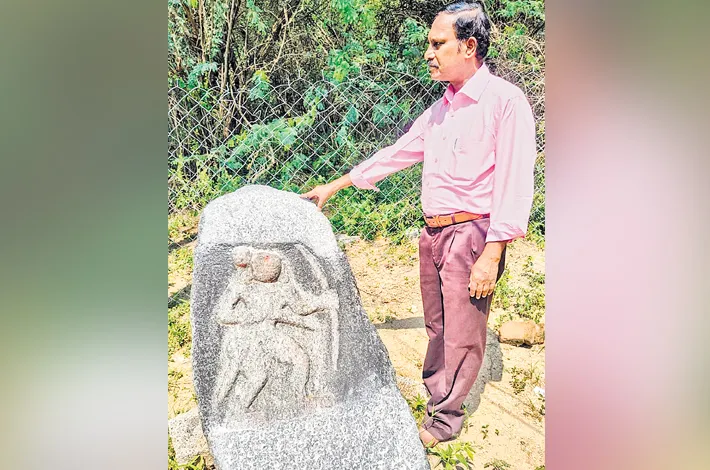
An exceptionally rare hero stone (Veeragallu) inscription dating back roughly 1000years to the 10th century CE has been unearthed in Bachannapalli village of Vanavolu Gram Panchayat, Gorantla Mandal, announced historian MyNaa Swamy during a media briefing on Saturday. Following an invitation from the villagers, the historian conducted a field survey in Bachannapalli, where he identified the inscribed stone slab adjacent to a ruined Siva temple east of the settlement. Based on the distinctive iconography and paleographic traits, he identified the memorial stone as belonging to the Nolamba-Pallava dynasty.
Observing that Bachannapalli likely possesses a continuous heritage spanning at least 1,400 years, MyNaa Swamy urged academic researchers, university scholars, and the Archaeological Survey of India (ASI) to extend their field studies beyond institutional confines and document such remote rural heritage sites. Detailing the sculptural features, MyNaa Swamy observed that at the center of the memorial slab stands an intricately carved warrior depicted as a valiant archer in mid-combat.
Holding a tall bow in his left hand, he readies an arrow with his right, charging toward hostile forces. The iconography suggests that the warrior fell in battle defending the village against enemy armies or marauding bands along the Nolambavadi frontier. The slab bears an eight-line inscription engraved in early Telugu-Kannada script—four lines across the arched crescent top and four beneath the warrior's feet. Beginning with the auspicious benediction 'Svasti Sri' characterized by curvilinear letterforms, the text documents the reigning monarchs of the era. MyNaa Swamy analyzed that in recognition of the warrior's supreme sacrifice, the rulers likely conferred a tax-exempt land grant upon his surviving family—a customary posthumous military honor known historically as 'Rakta Kodaga' (blood grant).