27 November, 2026 | 12:01 AM


Women who shaped the constitution
27-11-2026 12:00:00 AM
metro india news I hyderabad
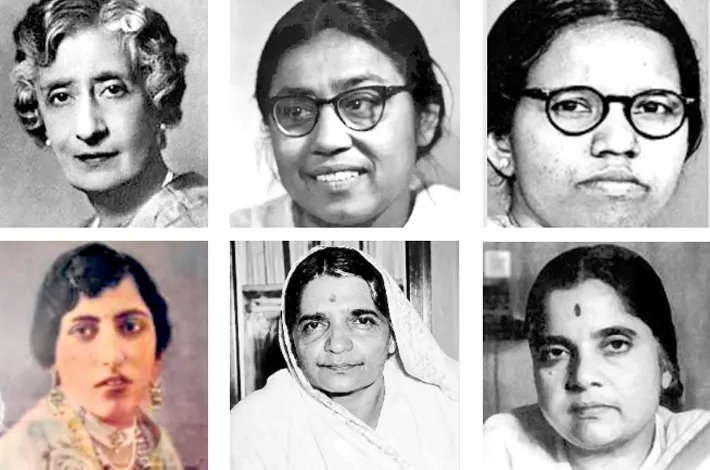
When the Constituent Assembly began its work in December 1946, its 299 members included just 15 women. Though a small group, they left a lasting imprint. The tallest among them, Sarojini Naidu, was a celebrated poet and the first Indian woman to head the Indian National Congress. Born in Hyderabad and educated in Madras, London and Cambridge, she championed women’s suffrage and fought social restrictions. After Independence, she became the first woman governor of an Indian state, serving in Uttar Pradesh.
Rajkumari Amrit Kaur came from a princely family in Punjab. Educated in England and later served as secretary to Mahatma Gandhi. She opposed child marriage, purdah and the devadasi system, she sat on the Fundamental Rights and Minorities Sub-Committees. She argued for a Uniform Civil Code and helped ensure that religious freedom would remain subject to social welfare and reform. After independence she became India’s first Health Minister and played a central role in establishing the All India Institute of Medical Sciences.
Born into a prominent Baroda family, Hansa Mehta studied philosophy, journalism and sociology in England. Introduced to the freedom movement by Sarojini Naidu, she later became a leading figure in the All India Women’s Conference. In the Constituent Assembly, she served on key committees on fundamental rights and provincial constitutions, championing gender equality and a Uniform Civil Code. Internationally, she is remembered for securing the change from “all men” to “all human beings” in the Universal Declaration of Human Rights.
Durgabai Deshmukh joined the freedom struggle as a child. Born in Andhra Pradesh in 1909, she participated in the Non-Cooperation Movement at 12 and later the Salt Satyagraha, spending time in prison. She continued her studies in jail, earning a master’s degree and qualifying as a lawyer. She founded the Andhra Mahila Sabha to promote women’s education and welfare. In the Constituent Assembly, she spoke on judicial independence, the national language and lowering the age qualification for Council of States membership. She later became a social welfare pioneer and the first woman to chair the Central Social Welfare Board.
Dakshayani Velayudhan was the Assembly’s only Dalit woman and one of its youngest members. Born in 1912 into the Pulaya community in Cochin, she was among the first women from her community to receive formal education and India’s first Dalit woman graduate. She challenged social restrictions by wearing an upper cloth, a right long denied to her community. In the Assembly, she supported abolishing untouchability but opposed separate electorates and rigid reservations, arguing they would perpetuate divisions. Her presence challenged caste hierarchies in the nation’s highest deliberative body.
Begum Qudsia Aizaz Rasul was the Assembly’s only Muslim woman. Born into a princely family in Malerkotla, she discarded purdah and entered electoral politics in the 1930s, winning a general seat. She persuaded Muslim members to abandon the demand for separate electorates, calling them self-destructive, and advocated secular citizenship and national unity.
Other members brought diverse perspectives. Ammu Swaminathan, co-founder of the Women’s India Association in Madras, advocated adult franchise and women’s political participation. Annie Mascarene, a lawyer from Travancore’s Latin Christian community, championed the integration of princely states and balanced Centre-state relations. Renuka Ray, educated at the London School of Economics, pressed for reforms to address women’s legal disabilities and personal laws.
Sucheta Kripalani, later India’s first woman chief minister, and Vijaya Lakshmi Pandit, who became president of the UN General Assembly, brought organisational experience and international perspectives. Purnima Banerjee, Kamala Chaudhri, Malati Choudhury and Leela Roy contributed to social reform, education and nationalist mobilisation.
Operating in a male-dominated chamber and a society constrained by patriarchal and caste norms, these 15 women linked constitutional principles to the realities of women, minorities and marginalised communities. Their contributions helped strengthen the foundations of equality before the law, universal adult franchise, abolition of untouchability and social reform, influencing later legislation, including the Hindu Code Bills.
Their backgrounds ranged from princely families and overseas professional education to rural reform and struggles against caste discrimination. Together, they brought a wider spectrum of Indian experiences into constitution-making. Their imprint remains visible in the Constitution, which came into force on January 26, 1950, and its commitment to justice, liberty, equality and fraternity.