23 October, 2026 | 11:52 PM


Why governments should care about Startups
15-08-2026 12:00:00 AM
STARTUPS ON SATURDAY
More than 5.0 million young Indians search for a job each year. That is more than the population of many countries. Government cannot hire all and business houses and corporates are automating. So, where will new jobs come from? Increasingly, the answer points to “new firms that did not exist 5-10 years ago”. That is why you hear the corridors of power in Delhi and in state capitals care about startups.
On this very day, on August 15, 2015, the Prime Minister gave a rallying cry, “Startup India, Standup India”. Listen to the speeches of other national and regional leaders across party lines; they extol startups like no other industry. Every state in the country has its own startup policy and sometimes a ministry is attached to the cause. This phenomenon is global, i.e. nations compete for startups and so do provinces within each nation. Strip aside, all the photo-ops, there are practical reasons for governments to do this. Startups quietly serve four needs for governments anywhere in the world.
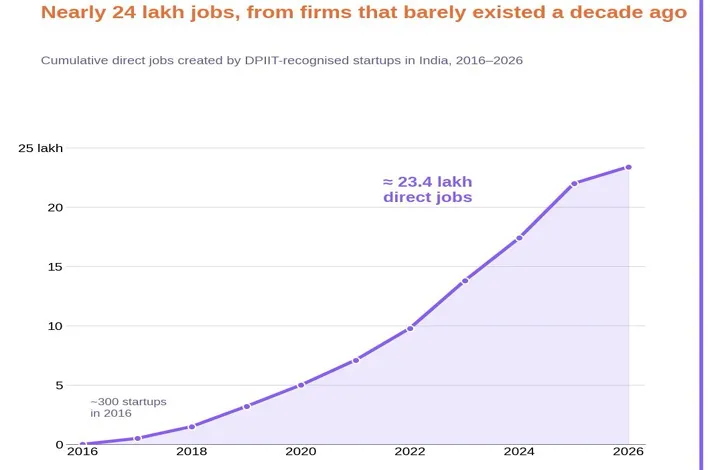
The reasons are same across every economy. First, jobs-these new young firms create most of the net new jobs, precisely as more established giants begin to slow down. Second, Innovation-they commercialize new technology and drag productivity upward in the economy. Third competition- A steady stream of new entrants keeps markets honest and forces incumbent giants to sharpen their pencils.
This type of creative destruction is necessary for a country to become richer-per-person. Last , but not the least, Strategic flex- In the age of modernized defence, AI, semiconductors, a country that cannot build its own technology ends up “renting” it from others. In the words of the Founder of Sarvam AI, “If not, we will become a digital colony.” The last one stretches the argument from mere economics to sovereignty.
India has some additional peculiarities. It has built some of the best digital rails for enhancing innovation – Aadhar & UPI. The entire digital identity stack and the digital payments stack allow a tiny startup to reach hundreds of millions of people almost at no cost. A fintech app can give a payment confirmation voice assistant to a vegetable vendor. Look past the metros.
A farmer can check crop prices in different markets before shipping his harvest. Here, startups can deliver development and inclusion. A kirana owner in a small town who accepts digital payments, tracks stock on an app and draws on working capital digitally, is being pulled into the formal economy, widening the tax base, one business at a time. A graduate in a district town can prepare and land a remote job at a company headquartered thousands of kilometres away. So, when a Chief Minister unveils a startup policy, it is a real deal, not just a photo-op.
Why it matters: Startup policy isn’t the luxury of a developed economy that India can ignore. It is a bet for a developing one. A bet on solving its big problems including two hardest ones i.e. jobs and inclusion. The state (and the tax payer) have already paid for some enabling rails.
(Ravi Ravulaparthi is CEO & Cofounder of Qapita)