23 October, 2026 | 2:13 PM


Treat sanitation as public health priority, say experts
23-10-2026 12:00:00 AM
Metro India News | Hyderabad
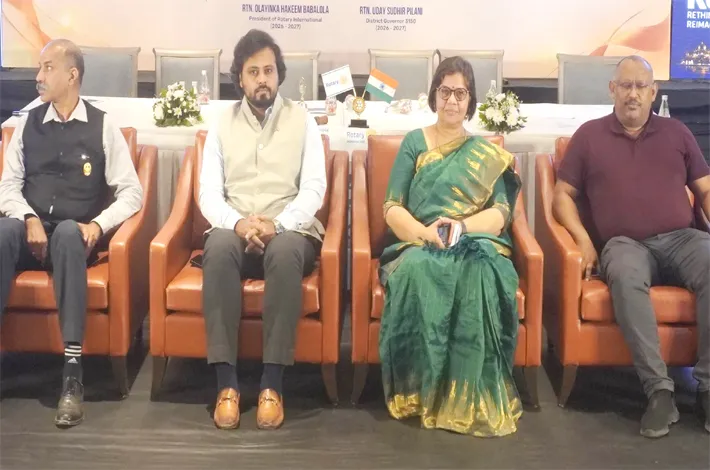
Sanitation must be treated as a public health priority rather than merely an infrastructure issue, experts said at a panel discussion organised by the newly formed Rotary Club of One Hyderabad (RC1H) on the eve of its Charter Presentation Ceremony.
Moderated by Prof. V. Srinivas Chary, former Director of ASCI, and Abhishek Nath, founder of LooCafe and ReFlow, the discussion highlighted sanitation's role in disease prevention and sustainable development.
Dr. T. K. Sridevi, Secretary, Municipal Administration Department and Commissioner and Director of Municipal Administration, Telangana, said unclear accountability often pushes sanitation into the background. Recalling Mahatma Gandhi's emphasis on cleanliness, she called for greater investment and an end to the “flush and forget” mindset.
Dr. Zelalem Birhanu Tafesse, UNICEF India's Chief of Field Office, described sanitation as a “super vaccine”, highlighting the preventive benefits of sanitation and handwashing. He cited Rotary's collaboration with UNICEF in polio eradication, including support from over 7,000 volunteers in Uttar Pradesh and Bihar.
Vivek Pandey, WASH professional and Gates Foundation consultant, urged decentralised wastewater treatment and recycling, citing the ReFlow Model toilet at Hyderabad's Lumbini Park.
Rohit Chandragiri of FCDO, British Deputy High Commission, noted that sanitation directly or indirectly affects 130 of the 169 targets under the 17 United Nations Sustainable Development Goals.
MPM Group Chairman and Managing Director Girish Mallpani urged homebuyers and residential welfare associations to check the adequacy and maintenance of wastewater treatment plants. Col. M. Chandan Kumar of T-Works called for affordable, scalable technologies, while Rotary District 3150 Governor Uday Pilani stressed collective responsibility.
Prof. Chary cited Japan's prioritisation of sanitation over major infrastructure projects, urging India to reconsider its development priorities. The panel called for coordinated action by governments, businesses and communities to improve public health, protect the environment and uphold human dignity.