23 October, 2026 | 3:23 PM


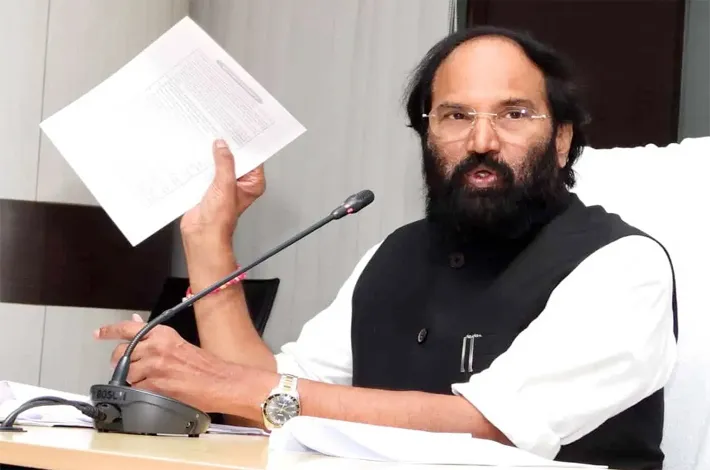
Telangana Bets Big on Oil Palm: Uttam
27-08-2026 12:00:00 AM
- ■ Advices farmers to cut Paddy dependence
- ■ Reliance Industries plan Integrated oil palm Hub in Suryapet dist
- ■ Crop diversification gets fresh push amid
- ■ El Nino conditions and uncertain reservoir inflows
- ■ Kodad-Huzurnagar belt proposed as starting point
- ■ Reliance explores plantations, processing, refinery and downstream products; Khammam and Kothagudem also on radar
metro india news I hyderabad
In a major move to reduce Telangana's excessive dependence on water-intensive paddy, the State Government is preparing for a big push to oil palm cultivation, combining crop diversification with investment in processing, refining and downstream industries.
The initiative assumes significance amid uncertain rainfall and inadequate inflows into some major irrigation projects this year, reinforcing the need for a diversified cropping pattern that provides farmers with remunerative alternatives to paddy.
A senior team from Reliance Consumer Products Ltd, led by Executive Director Kheten Modi, held detailed discussions with Irrigation and Civil Supplies Minister N. Uttam Kumar Reddy, Agriculture Minister Tummala Nageswara Rao and Kodad MLA N. Padmavathi Reddy on Wednesday on developing an integrated oil palm ecosystem in Telangana.
Reliance Consumer Products Vice-President Arpan Basu and Sanjeev Giri, Head of Staples Division, were among the company representatives who participated. Director of Horticulture Shaik Yasmeen Basha and senior officials also attended.
Uttam Kumar Reddy said that the discussions covered expansion of plantations, Fresh Fruit Bunch (FFB) availability, processing capacity, crude palm oil (CPO), palm kernel oil, utilisation of shells and other byproducts and, eventually, downstream consumer products.
Hev suggested that Reliance initially examine Suryapet district, particularly the contiguous Kodad-Huzurnagar belt, for developing a plantation-and-processing cluster. Khammam and Kothagudem could subsequently be integrated into a larger raw-material catchment.
The government views oil palm expansion primarily as a crop-diversification strategy. Paddy has become the dominant crop across large irrigated areas because of established cultivation practices and assured procurement. However, its extensive cultivation places enormous pressure on irrigation resources while leaving the government with the huge task of procuring, transporting, milling and storing paddy year after year.
The risks are particularly evident during seasons of uncertain rainfall. Officials pointed out that Nagarjuna Sagar has not received the desired inflows so far this year, while the Sriramsagar Project (SRSP) and several medium irrigation projects are also facing constraints.
The Ministers stressed that farmers could not be persuaded to move away from paddy merely through advisories. Crop diversification would succeed only if alternative crops offered competitive returns, assured markets, reliable processing facilities and institutional support.
Telangana has already emerged as one of the fastest-growing States in oil palm cultivation under the National Mission on Edible Oils–Oil Palm (NMEO-OP).
According to figures presented at the meeting, the State now has about 3,12,275 acres under oil palm, covering 65,691 farmers. Before NMEO-OP, around 46,325 acres were under the crop. Another 2,65,950 acres have since been added under the mission, with cumulative financial achievement of around ₹515.84 crore.
The expansion accelerated considerably from December 2023. Officials said approximately 1.29 lakh acres had been brought under oil palm cultivation since then, with expenditure of around ₹388.99 crore. During 2026-27 so far, another 21,230 acres have been added.
Suryapet currently has around 5,753 acres under oil palm. However, the meeting acknowledged that one district alone may not generate sufficient FFB to sustain a large integrated facility. Reliance was therefore asked to examine aggregation of supplies from Suryapet, Khammam, Kothagudem and other suitable districts.
The company will study the age and productivity of plantations, projected FFB output, future acreage, transportation, collection centres, nurseries and availability of palm kernels and shells before determining the capacity and location of its proposed facility.
A phased investment model was discussed, with plantation and raw-material development preceding large-scale industrial capacity. Processing facilities could initially be aligned with available FFB and expanded as plantations mature.
Eventually, an integrated complex could handle crude palm oil, palm kernel oil, shells and other byproducts, while downstream units could manufacture soaps and other palm-based consumer and industrial products.
Officials said oil palm offers one of the highest oil yields per unit of land among commercial oil crops and can provide remunerative income for nearly 30 years. According to the presentation, around 0.625 acre is required to produce one tonne of oil, substantially less than several conventional oilseeds.
The government believes that a strong oil palm ecosystem could simultaneously improve farm incomes, ease pressure on irrigation resources and reduce the State's massive annual paddy procurement burden.
Fourteen companies are already associated with Telangana's oil palm programme. Officials will provide Reliance with updated district-wise acreage, production, subsidies, company allocations and projected FFB availability.
The Reliance team is expected to visit potential plantation and processing zones, including Kodad, Huzurnagar, Suryapet, Khammam and Kothagudem, before preparing its proposal.
If taken forward, the initiative could transform the Kodad-Huzurnagar-Suryapet belt into the nucleus of a larger farm-to-industry oil palm corridor, offering farmers a viable alternative to paddy while strengthening Telangana's contribution to India's effort to reduce dependence on imported edible oils.