15 November, 2026 | 5:36 AM


STEAMING PLEASURES
15-11-2026 12:00:00 AM
Lalita Iyer Musings
I love steaming hot food and my all-time favourite statement has been 'food should be hot enough to boil my teeth'. I still go by that statement except that the teeth have now given way and that steam from the hot samosa hit the cavity and the gums.....
There is a small bandi guy close to my house, behind Mountain Bakery Mosque, enroute to Banjara Hills Police Station. An innocuous board, barely readable says it is the RK Yadav samosewala.
I used to go there often because it was enroute to wherever I went and that timing was correct to tickle the hunger pang and the taste bud. Every visit of mine has coincided with a new batch of just-fried-golden-hued samosas. And with it the fried green chilly, wrapped in a newspaper. The ink smell added to the taste. Steaming hot, with the steam hitting the top of your mouth and you had to take an exhaling breath with your mouth, hoping the potato won't fall off along with crisp top.
Bags filled with this treat go to the various offices nearby. And there is always a crowd of office goers, lanyards intact enjoying the quintessential tea break. And the smoke afterwards. The puffing out has a grand sigh attached to it.
The other big place where your order comes steaming hot in thin brown envelopes, oil stained with six crisp, small samosas sitting inside, lending further warmth to the green chillies are the Rio samosas. Filled with cooked onions and carrots, these pockets of fried goodness are a delight, because even if steaming hot, they can be finished in two bites. Ok, with three bites.
I sauntered in thinking I will have a chat with the owner guy, but if he did look up from writing orders, it was to take a breath. The place is tiny and clean, where they plate them and through the crevices you can see guys sitting cross legged making them with an unbelievable speed.
Every once in a while there might be a cold batch, but if the math is correct, there is no time for the samosas to get cold. In fact they also sell lukhmis and to my mind, lukhmis are filled with mutton. I love the shape of lukhmis and so wanted to ask the Rio owner if they were also vegetarian. The next time, maybe.
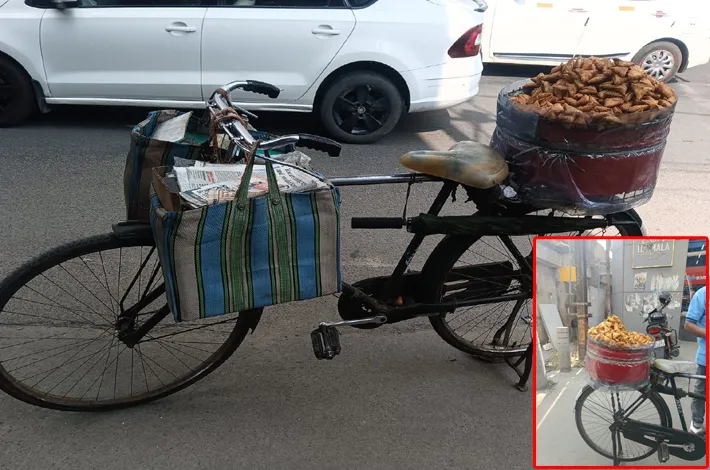
I used to take great pleasure in wandering the city. Simply. And then a long time ago, I spotted this guy on a bicycle and a huge plastic bag, filled to the brim with the tiniest, cutest, button sized samosas. Those days I bought these single, delicious mouthfuls at 10 for Rs. 10.
Writing
The other day, outside Panjagutta mosque, I bought five samosas for ₹20. The deliciousness remained, though the mouthfuls had shrunk. The decidedly rude vendor refused a photograph: “Cycle aur samaan ka le lo.” I wanted the samosas, not him! Strangely, he cycled away just as Friday noon prayers ended and potential customers emerged.
Originating in the Middle East and Central Asia around the 9th–10th centuries, samosas travelled to India through Delhi Sultanate kitchens in the 13th–14th centuries. Originally meat-filled, they eventually embraced potatoes, introduced by the Portuguese after the 17th century.
Today, Punjabi samosas compete with Hyderabadi patri samosas, but my heart belongs to Bengali shingaras: delicate, flaky, thin-crusted, with visible cubes of potato rather than mashed filling.
There are many stores and several bandis across Hyderabad which sell this hot and robust, yet delicately delicious triangles. There are those moments in a day when the body craves for a satisfying crunch and yet the teeth dig a into soft, tasty filling. And that is the samosa.
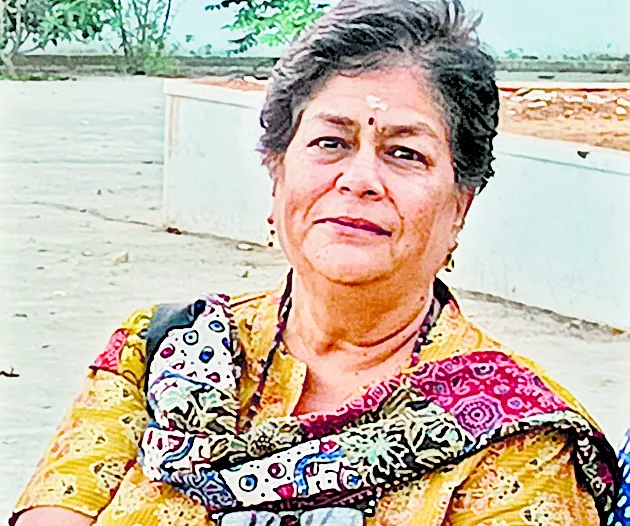
-Lalita Iyer Senior Journalist