18 October, 2026 | 8:31 AM


Rahul faces major electoral test in UP
18-10-2026 12:00:00 AM
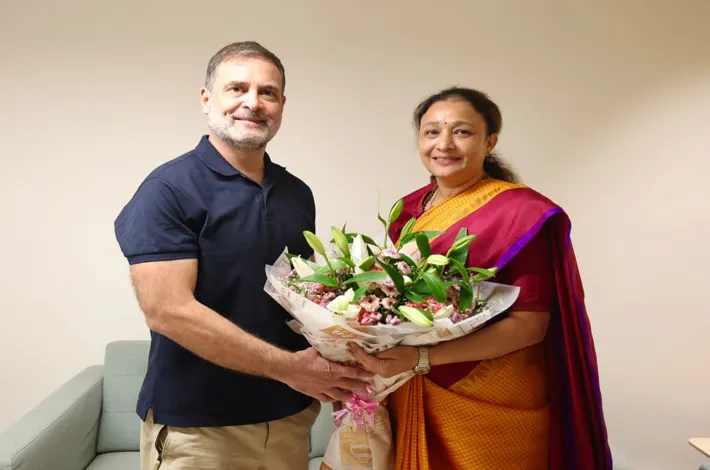
Buoyed by the spectacular response to the ‘Vote-Chori Agitation’ in the Capital, Rahul Gandhi is determined to convert it into a larger agitation, to take the issue down to the grassroots level, turning it into an emotive election plank. Over 200 AICC Observers have been appointed, to take the issue down to district-level across the country. UP Assembly elections will be the first major test to see if Rahul Gandhi's efforts really translate into vote.. If the Congress is to emerge as a serious contender in 2029 Lok Sabha elections, it has to necessarily perform creditably in Uttar Pradesh Assembly elections.
As part of a larger political plan for UP, Rahul Gandhi has embarked upon a multi-pronged strategy. It includes narrative building; social engineering to enlarge the party votebase; and trying to stitch up an advantageous electoral alliance with the Samajwadi Party. For the first time, the Congress is seen to be working hard, to try its hand at social engineering. With eye on the 13 per cent Brahmin vote, Aradhana Mishra Mona has been named UPCC President. As many as 149 Assembly seats in UP have over 10 per cent Brahmin votes, while 42 seats have 20 per cent Brahmin votes.
With Muslims being around 22 per cent, Imran Masood has been elevated as UPCC Working President. Similarly, one UPCC Senior Vice-President Devendra Nishad, is from Boatman community, belonging to the Extremely Backward Class (EBC) and the other UPCC Senior Vice-President Alok Prasad is Dalit. AICC Incharge for Uttar Pradesh Rajendra Pal Gautam, too, is Dalit and an Ambedkarite. The Congress is making sure it gets its caste calculus right.
For his part, Samajwadi Party leader Akhilesh Yadav is aware that as Chief Ministerial face of the alliance, he stands to gain from pre-poll tie-up. Since his Samajwadi Party is primarily Yadav-oriented, alliance with the Congress will only complement his own votebank. The Congress brings along sizeable chunks of Dalits and EBC votes, which only benefits the alliance. Besides, Muslims, who are 22 per cent, will consolidate behind the Congress-Samajwadi Party alliance, which, otherwise, gets split between the two parties.
Ever since it lost power in Uttar Pradesh in 1989, the Congress steadily lost its votebank, even as the organizational structure collapsed. Now, Rahul Gandhi is seeking, not merely to restructure, but to rebuild, the Congress organization, which does not exist in several parts of Uttar Pradesh, through Sanghatan Srijan Abhiyaan. The attempt is to rebuild the party, grassroots upwards. Rahul Gandhi faces a tough challenge, having lost successive key elections. Rahul Gandhi is working diligently. Will his efforts be crowned with success? All eyes are on Uttar Pradesh Assembly elections in 2027.
– Anita Saluja
The author is a documentary film maker and freelance journalist