19 September, 2026 | 1:16 AM


Priest revives Munivahana legacy
19-09-2026 12:00:00 AM
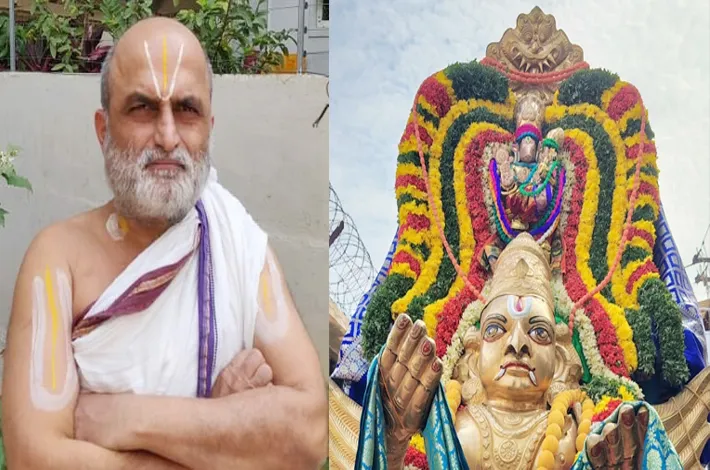
Metro India News | Hyderabad : Chilkur Balaji temple priest C.S. Rangarajan posted in social media platform X on Friday, a photograph of a richly garlanded golden deity—arms raised, a smaller figure seated above, draped in silk and flowers. The image itself contained almost no caption. Its meaning lay in the post it quoted. That earlier message, dated 31 August, declared that deities from temples across the Shri Ram Janmabhoomi landscape had “guided the Art 363 Constitutional Munivahana Journey.”
Attached was a document setting out submissions made on behalf of the Tiruppan Alwar Ammal community, described as an SC/ST group claiming a pre-constitutional temple-entry right and “Ammal duty” under Article 26(b) of the Constitution. The community argues this right is of divine origin and therefore not justiciable because of the bar in Article 363. The papers mention representations to a nine-judge Supreme Court bench, the Sabarimala review, communications involving Andhra Pradesh’s Deputy Speaker and a former MP, and comments attributed to former Chief Justice M.N. Venkatachaliah.“Munivahana” refers to a 2,700-year-old Vaishnava episode in which a priest carried the saint Tiruppan Alwar into the Srirangam temple after social barriers had kept him outside.
In 2018 Rangarajan publicly re-enacted the ritual by carrying a Dalit devotee into a Hyderabad temple. He has since framed years of legal correspondence as a modern “Constitutional Munivahana”: an effort to treat the community’s claimed duty of care toward deities as constitutionally protected and to link Travancore-era Padmanabha Swamy rights with the legal personality of Ram Lalla after the 22 January 2024 consecration.Article 363 generally prevents courts from entertaining disputes arising from pre-Constitution covenants with former princely rulers.
Their documents urge the Attorney General and Union Law Ministry to place this interpretation before the Court so that any review of earlier temple-entry judgments does not dilute those rights. The September photograph therefore functions less as decoration than as a visual marker in an ongoing campaign. Whether courts accept the Art 26(b)–Art 363 reading remains an open question. What the posts make clear is the priest’s consistent thesis: traditional temple practice, social inclusion symbolized by Munivahana, and constitutional text can be read together as one continuous journey.