27 September, 2026 | 3:30 AM


Parliament passes Transgender Bill, more questions raised then those answered
27-03-2026 12:00:00 AM
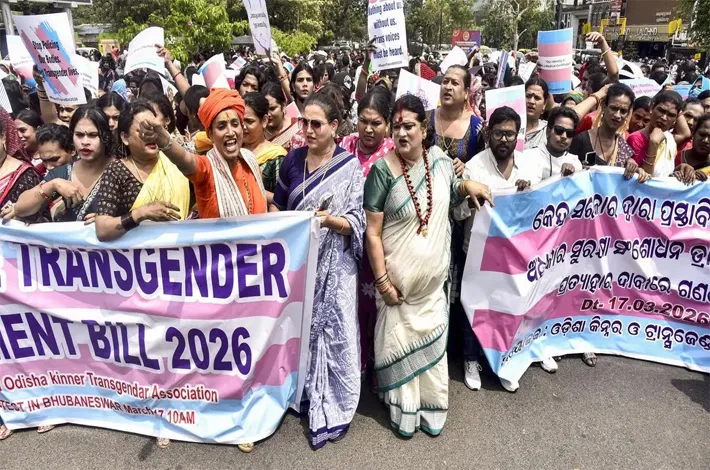
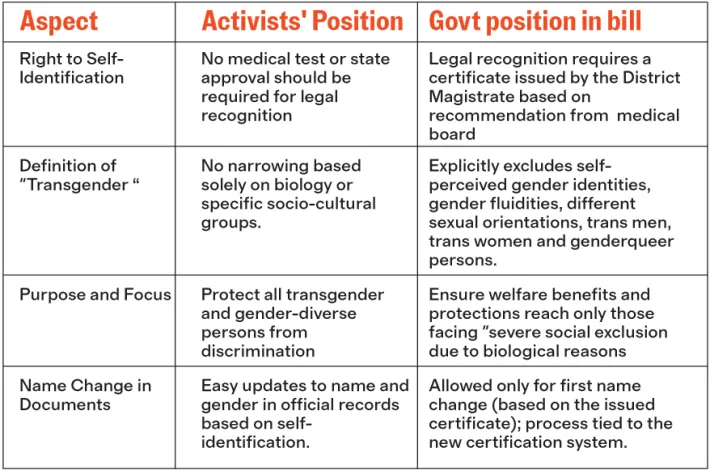
In a move that has ignited widespread debate and protests across the transgender community, the Lok Sabha on Tuesday passed the Transgender Persons (Protection of Rights) Amendment Bill 2026 by voice vote. The bill introduces significant changes to the 2019 Act, shifting away from the principle of self-identification of gender towards a system requiring medical examination, certification by a district magistrate, and state approval.
Opposition parties, including Congress, Aam Aadmi Party, Trinamool Congress, DMK, Shiv Sena (UBT), NCP, and CPI(M), staged a walkout during the proceedings, expressing dissatisfaction with the government's responses. Critics argue that the legislation undermines fundamental rights affirmed by the Supreme Court's landmark 2014 NALSA judgment, which recognized gender identity as a matter of self-perception integral to dignity and personal autonomy under Article 21 of the Constitution.
The core controversy revolves around the bill's redefinition of a "transgender person." Earlier provisions allowed individuals to self-identify their gender without medical or state gatekeeping. The amendment narrows this to focus on specific biological variations, intersex conditions, or socio-cultural identities such as hijra, kinnar, aravani, or jogta. It explicitly excludes self-perceived gender identities and certain sexual orientations that do not fit these categories. The government maintains that the changes provide "clarity" to ensure welfare benefits and legal protections reach genuinely vulnerable groups facing severe social exclusion, preventing potential misuse of schemes.
Under the new framework, applicants seeking legal recognition as transgender must undergo examination by a designated medical board, typically headed by a chief medical officer or deputy chief medical officer. A certificate of identity will be issued only after this process and approval by the district magistrate. The bill also allows certificate holders to update their first name in official records, including birth certificates. For those undergoing gender-affirming surgery, the process becomes more formalized, with medical institutions required to inform the district magistrate.
However, transgender activists and legal experts have strongly opposed the changes, viewing them as a regressive step that replaces self-determination with bureaucratic and medical surveillance. A transwoman, NALSA petitioner, and gender inclusiveness activist, argued passionately in discussions following the passage: "In 2014, the Supreme Court clearly stated that gender identity is a matter of self-identification, integral to dignity and personal autonomy under Article 21. There is no medical test, surgery, or state approval required."
She criticized the bill for conflating identity with entitlements, removing trans men and genderqueer individuals from the definition, and imposing medical gatekeeping in a healthcare system already strained. "Identity is a separate issue from schemes," Patel stated, questioning why the government was reintroducing medical boards when global health bodies like the WHO have de-pathologized transgender identities.
A Supreme Court advocate acknowledged the shift from pure self-declaration to a process involving medical examination by a board and final approval by the district magistrate. He noted that the government aims to ensure welfare schemes benefit the deserving and prevent misuse by those with self-perceived identities not aligned with the narrowed criteria. He added that certain new offenses against discrimination and exploitation would likely face little opposition.
The debate highlights a fundamental clash: the government frames the amendments as protective measures to curb abuse and direct resources efficiently, while opponents see them as eroding hard-won rights. Activists point out a lack of concrete data on widespread misuse of the existing 2019 Act's self-identification provisions, with many certificate holders still not accessing promised benefits like employment, healthcare, or housing support. They argue that the bill risks excluding lakhs of individuals and reimposes barriers contrary to evolving medical understandings.
The transgender community and its allies continue to protest, demanding restoration of self-identification and broader inclusion. The outcome of this legislative shift will likely shape the future of transgender rights, welfare delivery, and the balance between state verification and individual autonomy in India for years to come.