22 September, 2026 | 9:47 AM


More universities coming up in Amaravati
28-03-2026 12:00:00 AM
Metro India News | AMARAVATI
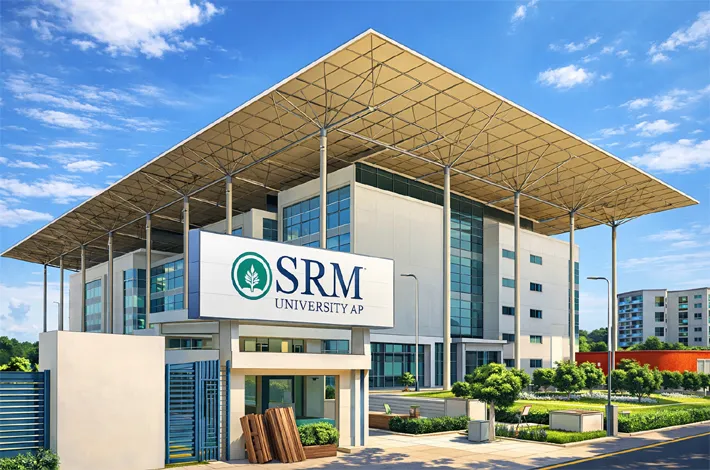
A decade after the first wave of private universities chose Andhra Pradesh’s greenfield capital, Amaravati is witnessing a renewed surge in institutional investments, signalling a strategic shift from a purely administrative vision to a knowledge-driven urban ecosystem. In 2014-19, under the TDP government, Amaravati attracted marquee institutions such as Vellore Institute of Technology, SRM University AP and Amrita Vishwa Vidyapeetham even before core capital infrastructure took shape. The early clustering created a proof-of-concept for an education hub.
However, the momentum stalled during the subsequent regime amid policy uncertainty around the capital’s future. Institutional expansion slowed, fresh investments were limited, and Amaravati’s academic ecosystem entered a holding pattern. The current revival marks a policy re-alignment and investor confidence reset, with the state actively courting institutions and fast-tracking approvals.
Today, Amaravati already hosts functioning campuses of Vellore Institute of Technology, SRM University AP, Amrita Vishwa Vidyapeetham and the National Institute of Design, creating a multi-disciplinary academic base spanning engineering, design and liberal education.
The government is now facilitating vertical expansion and higher-density academic infrastructure. A recent cabinet approval allowing SRM to construct academic buildings up to 60 metres in Neerukonda reflects a shift towards campus intensification rather than mere land allotment.
The next phase is defined by the entry of top-tier institutions. Birla Institute of Technology and Science Pilani is setting up a flagship “AI Plus Campus” in Amaravati, positioned as India’s first of its kind, with an investment of around ₹1,000 crore and capacity for 7,000 students. The curriculum is expected to integrate AI, data science, robotics, and interdisciplinary domains like agriculture, climate, and healthcare, aligning with future workforce demands.
Similarly, XLRI Xavier School of Management is establishing its third campus in Amaravati after Jamshedpur and Delhi, indicating strong confidence from premier management institutions. The agreement with the capital region authority underscores institutional trust in long-term urban planning. Beyond higher education, Amaravati is being shaped as a K-12 education cluster. Institutions such as Chinmaya Vidyalaya, Kendriya Vidyalaya Sangathan and DAV Group of Schools are planning campuses, alongside international schools. This layered approach ensures a complete education pipeline, from primary schooling to advanced research.The Andhra Pradesh Capital Region Development Authority (CRDA) has already allocated over 838 acres to 18 institutions, indicating the scale of planned academic clustering.
The clustering of universities is expected to generate significant spillover benefits, from student housing and research parks to startups and service economies. Education hubs globally act as innovation anchors, and Amaravati is aiming to replicate that model by integrating academia with industry and governance.
While the renewed momentum is evident, Amaravati could transition from a political capital project to a national academic powerhouse, reshaping Andhra Pradesh’s economic and intellectual landscape.