23 October, 2026 | 3:54 PM


Manjari’s distinction in chronicling Qawwali
23-10-2026 12:00:00 AM
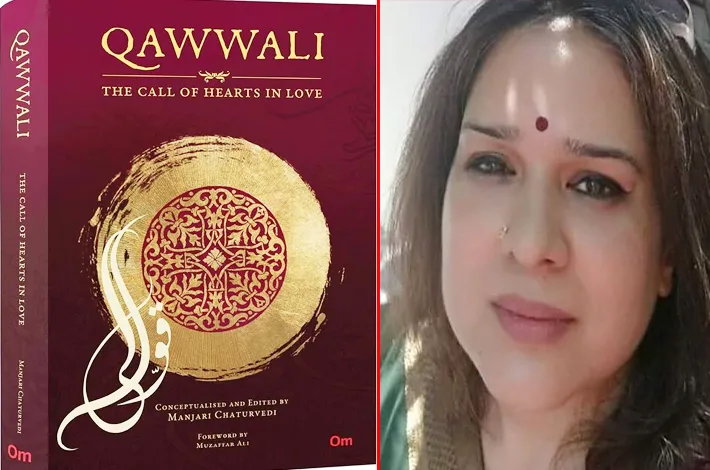
Manjari Chaturvedi
Metro India News | delhi
Qawwali captured the imagination of the people across all generations. Surprisingly, till date, there has been no historical account of Qawwali tradition across the ages. Manjari Chaturvedi, a gifted artist, cultural academic, dance choreographer, director and filmmaker, filled this gap, with the masterly work she conceived, curated and edited, Qawwali: The Call of Hearts in Love.
Manjari Chaturvedi founded The Qawwali Project in 2011, to trace and document the nearly 1,000-year-long music tradition that came to India with Khwaja Moinuddin Chishti. With roots in Chist in Herat, Khwaja Moinuddin Chishti came down from Iran, to settle down in Ajmer in Rajasthan, in 1192.
Just as Amir Khusro is considered Father of Qawwali, under whom Qawwali took shape, giving fillip to a colourful culture that is flourishing to this day, contribution of Manjari Chaturvedi is equally unmatched and unrivalled and is iconic, in reconstructing Qawwali movement. Seven editions of understanding Qawwali seminar series, besides eight years of the Qawwali photo project, treating Qawwali as a living tradition with lineage, structure, language and community, makes Manjari's work a labour of love and outstanding.
For propagating Islam in India, Khwaja Moinuddin Chishti favoured adopting the Bhajan tradition, in order to easily reach out to the local people, besides building bridges and outreach through music. This gave a new, syncretic dimension to Sama, making it a symbol of the Ganga-Jamni Tehzeeb, or the composite Indian culture. Qawwali, confined for long time to the Khanqah, was sung with clapping of hands. Originally, there were no musical instruments accompanying the renditions of Qawwali.
Ground rules were clear. Qawwali starts with Hamd, sung in praise of Allah; followed by Naat, sung in praise of Prophet Mohammad; then comes Manqabat, sung in praise of Hazrat Ali, Sufi Saints and Auliya; and concludes on Rang. During the time of Nizamuddin Auliya, belonging to Chishtiya Silsila, fierce debate broke out among Sufis on the religious sanctity and sanction for Sama in Islam. Mausiqui, or music, is considered Haram in Islam. While Sufi Saints widely welcomed Qawwali, there was a section, like Naseeruddin Chiraagh-e-Dilli, who did not entertain music.
On the other hand, Nizamuddin Auliya was greatly drawn to Sama. Yet, when some radical Moulvis did raise objections that Sama lacks Islamic sanction, Nizamuddin Auliya sought opinion from the Ulema. The Ulema ruled in favour of Sama, bringing to closure the unseemly controversy. When Prophet Mohammad migrated from Makkah to Madina, it is said the girls of Madina welcomed the Prophet by playing Daph and singing. Sufi Saints draw their sanction from this episode.
Manjari's book showcases women Qawwals, to prove it is not just a male domain. From women mystics, like Rabia Basri, Lal Ded, Meera Bai and Zebbunnisa and there have been women Qawwals, like Shakila Bano Bhopali; besides Anita Singhvi and Zilla Khan in the Sufiyana genre. Only Manjari Chaturvedi could do justice to an out-of-the-box project like this, of bringing it into public domain, what was till now only esoteric and unknown to the common people.
- Venkat Parsa
The author is a senior journalist