24 October, 2026 | 6:55 AM


Lavakusa then Irumudi Now
04-09-2026 12:00:00 AM
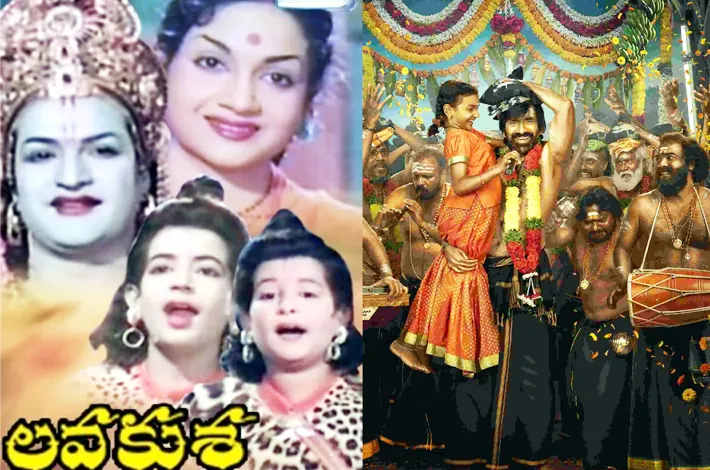
- Echoes of Faith Across Decades
- How Mythology and Bhakti Drew Rural Multitudes to Theatres in the Telugu States
VJM Divakar
In the annals of Telugu cinema, few films have stirred the collective spirit of audiences across Andhra Pradesh and Telangana quite like the 1963 classic Lava Kusa and the 2026 release Irumudi. Separated by more than six decades, these two works share a profound ability to pull vast crowds—especially rural folk—into theatres through the powerful backdrop of mythology and bhakti. Both shattered contemporary records, transforming cinema halls into spaces of devotion and celebration.
Lava Kusa, directed by C. Pullayya and C.S. Rao, starred N.T. Rama Rao as Lord Rama and Anjali Devi as Sita. Released on 29 March 1963, it marked the first full-length colour film in Telugu cinema and adapted the Uttara Kanda of the Ramayana. The narrative of Lava and Kusa, the twin sons of Rama and Sita, resonated deeply with themes of duty, sacrifice, and unwavering devotion. At a time when the combined population of the region hovered around three crore, the film grossed over Rs 1 crore—figures that, adjusted for era and scale, represented an extraordinary commercial triumph. Its theatrical run remains legendary.
Released initially in 26 centres, Lava Kusa achieved a 100-day run in all of them and eventually completed 100 days in 62 centres overall. It enjoyed a 175-day run in 18 centres and continued uninterrupted for 75 weeks in some places, with reports of extended runs reaching hundreds of days in key towns such as Rajahmundry, Guntur, and Kakinada. Prints were shifted across Andhra Pradesh to meet demand. Rural audiences travelled long distances, often in bullock carts, treating the experience as a pilgrimage. Many removed footwear before entering theatres, as if stepping into a temple. NTR’s portrayal of Rama elevated him to near-divine status; stills from the film found places in household puja rooms, while Anjali Devi received ritual reverence from women devotees. Ghantasala’s score, featuring dozens of classical compositions and poems, further embedded the film in cultural memory, with songs echoing in temples during festivals.
Fast forward to August 2026, and Irumudi, starring Ravi Teja and directed by Shiva Nirvana, has mirrored this phenomenon in the modern era. Centred on a father’s protective devotion intertwined with the sacred Ayyappa Deeksha and the carrying of the irumudi—the traditional two-compartment bundle of offerings for the Sabarimala pilgrimage—Irumudi weaves family drama with bhakti and mythological undertones drawn from Lord Ayyappa’s lore. Released on 21 August 2026 under Mythri Movie Makers, the film quickly established itself as Ravi Teja’s career-best solo success.
Trade reports place its worldwide gross in the range of Rs 170 crore within the first 10 to 12 days, with India gross crossing Rs 150 crore. It recorded strong openings, rapid milestones such as crossing Rs 100 crore worldwide in about five days, and robust holds in the Telugu states, particularly in Nizam, Ceded, and coastal Andhra regions. Occupancy remained high even on weekdays, with multiple shows selling out in key centres. Rural and mass audiences formed a significant portion of the footfalls, drawn by the film’s emotional core of paternal love extended to community protection and its authentic portrayal of Ayyappa devotion.
The title itself evokes the sacred irumudi kettu ritual, resonating with the millions who undertake the Sabarimala yatra each year.The similarities between the two films run deep. Both ground their stories in Hindu mythology and bhakti, offering audiences not mere entertainment but an affirmation of faith and cultural values. Lava Kusa brought the Ramayana’s later chapters to life in vivid colour for the first time, while Irumudi channels the living tradition of Ayyappa worship, blending action and emotion with ritualistic elements.
In both cases, rural viewers responded with particular fervour. In the 1960s, limited transport and fewer screens meant journeys by cart and overnight stays near theatres. In 2026, improved connectivity has not diminished the pull; villages continue to empty towards multiplexes and single-screen halls when a film speaks the language of devotion.Record-breaking status further unites them. Lava Kusa set benchmarks for longevity and collections that stood unmatched for years in Telugu cinema, becoming a cultural landmark that boosted Rama bhakti across the region. Irumudi has rewritten Ravi Teja’s personal records, delivering his first solo film to cross the Rs 150-crore worldwide threshold and ranking among the stronger performers of 2026 in the Telugu states.
Both films turned theatres into temporary temples of shared emotion, where applause mixed with quiet reverence.Music and performance amplified the effect. Ghantasala’s compositions in Lava Kusa became evergreen, while the devotional anthems in Irumudi, including tracks centred on the irumudi ritual, have struck a chord with contemporary audiences. Lead performances anchored the experience: NTR’s dignified Rama and Ravi Teja’s grounded, protective father figure each embodied ideals that rural viewers could relate to and revere.Across the two Telugu states, these films demonstrate the enduring power of mythology and bhakti to mobilise audiences.
From the bullock-cart processions of 1963 to the packed shows of 2026, the pattern holds: when cinema channels faith with sincerity and spectacle, rural communities respond in overwhelming numbers. Lava Kusa and Irumudi stand as bookends of a tradition, proving that the call of devotion continues to fill theatres and forge collective memories long after the credits roll.