12 October, 2026 | 3:52 AM


Is it curtains on red insurgency?
12-10-2026 12:00:00 AM
Metro India News | Hyderabad
Is it curtains on the six-decades-long Naxalbari Movement in the country? Amid fanfare, Modi Government announced end of Naxal violence in India, effective from March 31, 2026. The Naxal Movement that began in West Bengal in 1967, took its toll on national life for 60 years. Modi Government achieved remarkable success, in containing Naxal violence that peaked in 2010, with 1,936 casualties, bringing it down to 1,000 in 2025 and 36 in 2026.
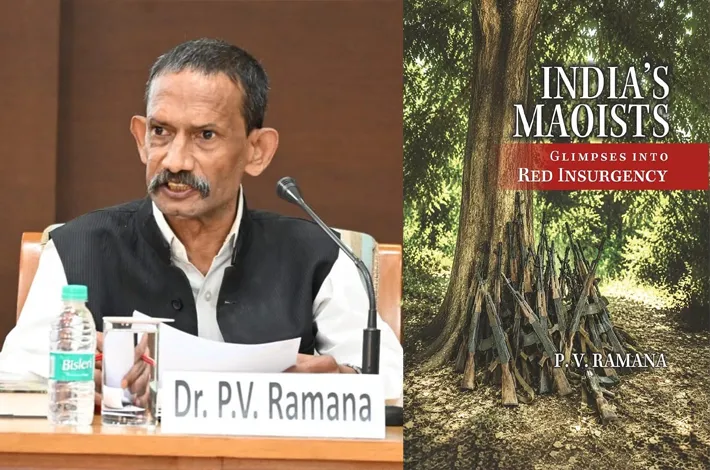
Dr P V Ramana's book, India’s Maoists: Glimpses into Red Insurgency, released on October 7 at Vivekananda International Foundation (VIF) in New Delhi, strikes a note of caution against early celebrations. Dr Ramana lists challenges, which need to be addressed on war-footing. In his book, Dr Ramana flags the issue prominently. Inherent threat lies in non-implementation of 'Surrender-cum-Rehabilitation' Policy that could spell trouble in the future, leading to a diabolical situation.
A major concern is non-recovery of Naxal wealth and weapons. Nearly 92 per cent of weapons with Naxalites were those looted from Police and Central Armed Paramilitary Forces (CAPF). Till date, at least 70 per cent of weapons have not been recovered. An estimate of Maoists wealth is pegged at a staggering Rs 2,500 crore, apart from enormous quantities of gold that remain unrecovered.
Centre's Interlocutor on Darjeeling Pankaj Singh, former Deputy National Security Adviser and former BSF DG, who released the book, highlighted how Naxal Movement shook the nation. On deputation to CRPF, Pankaj Singh was given assignment in Chhattisgarh, the Maoists citadel, during 2010-12. There were operational difficulties, like the CAPF conducted counter-insurgency operations on unfamiliar terrain. Naxals emphasis on propaganda through songs and books help win over Adivasis and people in villages, making their task that much more difficult.
Pankaj Singh referred to some blood-chilling Naxal attacks. On October 1, 2003, Andhra Pradesh Chief Minister N Chandrababu Naidu miraculously escaped, when Naxals detonated series of claymore and IED landmines targeting his motorcade, in which his car was blown up, at Alipuri in Tirupati. On April 6, 2010, 76 CRPF personnel were massacred in a major Naxalite-Maoist ambush in Dantewada in Chhattisgarh. On May 25, 2013, Chhattisgarh Congress top-brass were eliminated in Jhiram Ghati in Bastar.
In 1990, undivided Andhra Pradesh Chief Minister Dr M Channa Reddy introduced two landmark initiatives that broadly defined National Policy on Tackling Naxal Violence. Dr Channa Reddy's Remote Area Development Programme (RADP) was approved by Planning Commission, with an outlay of Rs 86 crore, in order to take governance closer to the people; and, to develop the remote areas. Idea being to wean people away from Naxal influence, by addressing root socio-economic causes.
This became defining feature of Special Central Assistance Scheme in 2017. Yet another major policy initiative of Dr Channa Reddy was the Three-Pronged Strategy. First, no compromise on law and order; two, dialogue to address genuine grievances; and three, offer to come overground to join the mainstream to carry on their campaign peacefully. The Three-Pronged Strategy primarily viewed Naxal Violence as a political challenge; but, it lost its relevance, once it was treated as law and order issue.
Dr Ramana's book affords not merely glimpses into the red insurgency, but deep insights into the genesis, the rise, the trajectory and ultimately the decline of Naxal Violence.Challenges ahead include: tracing Naxal weapons and to defuse improvised explosive devices (IEDs); tracing wealth; and ensuring full implementation of S&R Policy. Primarily, hastening development of remote areas is indispensable, as any further neglect could make these very areas the spring boards for Maoists to bounce back again.
(Venkat Parsa is a senior journalist)