19 October, 2026 | 12:42 AM


Is CJP managing youth anger for the BJP?
19-10-2026 12:00:00 AM
Metro India News | Hyderabad
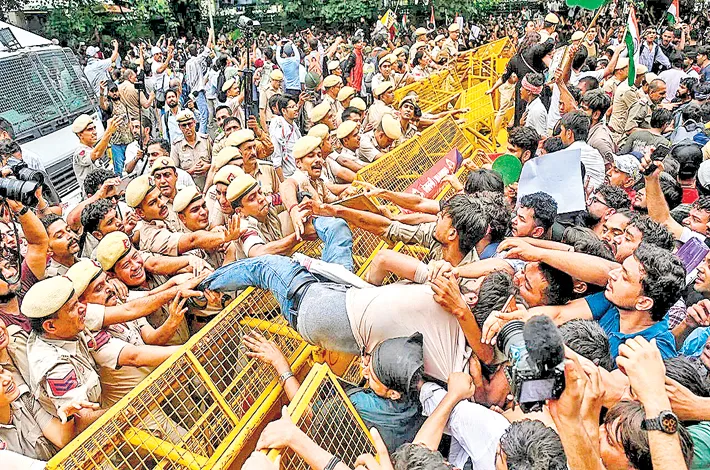
India's youth have every reason to demand answers. Millions aspire to quality education, dignified employment and secure livelihoods. Yet examination irregularities, recruitment delays, unemployment, underemployment and shrinking economic opportunities continue to fuel widespread frustration.
Youth have every right to protest. But we must ask a deeper question: Can a movement give public anger an outlet while diverting it from the problems that created it? Can dissent serve a political purpose quite different from its declared objectives? The rise of the Cockroach Janata Party (CJP), founded and publicly led by Abhijeet Dipke, makes these questions particularly relevant.
The India Against Corruption precedent
The India Against Corruption (IAC) movement, which gained national prominence in 2011–12 under Anna Hazare, mobilised public anger against corruption and the perceived failures of the Congress-led United Progressive Alliance (UPA) government. The BJP politically supported the agitation against the UPA government. In 2020, former IAC member Prashant Bhushan alleged that the movement had been substantially supported by the BJP-RSS to bring down the UPA government. The episode demonstrated how a movement built around genuine public grievances could also advance the political interests of forces seeking to dislodge an incumbent government.
CJP: A different context, a troubling question
CJP has emerged amid mounting youth frustration over education, recruitment and employment. Through satire and social media, it has transformed that frustration into a visible public movement. CJP's examination-related protests preceded the resignation of Union Education Minister Dharmendra Pradhan in July 2026. More recently, CJP has mobilised against the Special Intensive Revision (SIR) of electoral rolls and demanded the resignation of Chief Election Commissioner Gyanesh Kumar.
But individual protests tell only part of the story. The more important question is: What does the overall pattern achieve? A movement can challenge the government on individual issues while leaving its broader record insufficiently scrutinised. It can win a concession without forcing systemic reform. It can dominate social media while the problems affecting millions of young people persist.
How CJP’s Politics Benefits the BJP
The question assumes particular importance ahead of the Assembly elections in Uttar Pradesh, Uttarakhand, Punjab, Goa and Manipur, expected in early 2027. The political issue is whether CJP's activities channel youth anger into forms of mobilisation that leave the BJP less exposed to sustained scrutiny of its economic, educational and employment record. The deeper question is whether CJP's campaign pattern serves a wider political purpose beyond its stated objectives. The absence of a publicly exposed arrangement or money trail does not make this political question illegitimate. The pattern itself deserves scrutiny.
Managed Dissent: The BJP's Political Dividend
Based on the pattern of events, my assessment is that CJP is channelling youth anger away from sustained demands for structural change in education, employment and economic opportunity, thereby helping the incumbent BJP blunt anti-incumbency. For the Sarvjan Sanatan Party, the principle is straightforward. India's youth deserve more than a temporary outlet for their frustration. They deserve quality education, fair and timely recruitment, dignified livelihoods, opportunities for enterprise and a government that answers for its results.
A just civilisation must provide quality education, affordable healthcare, dignified livelihoods and prosperity for all. India's youth must not merely be given a platform to vent their frustration. They must have a credible pathway to knowledge, work, enterprise, dignity and a prosperous future.
M. Nageswara Rao(The author is National President, Sarvjan Sanatan Party& a former Director, CBI)