23 September, 2026 | 8:21 AM


Indiramma Illu Game-Changer
09-08-2026 12:00:00 AM
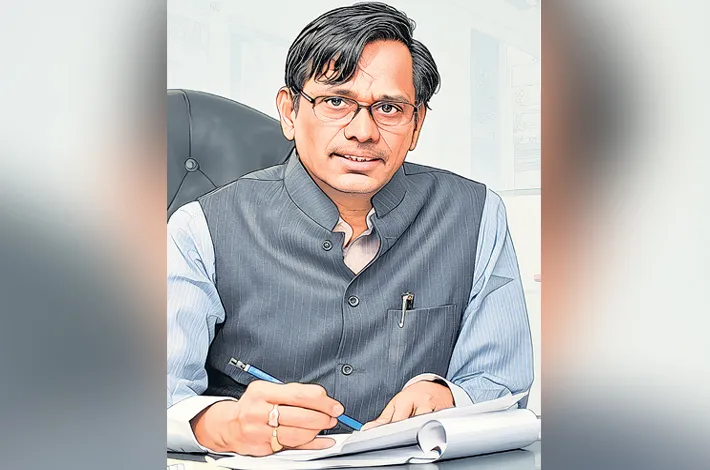
Revanth’s Masterstroke
- Avoided BRS Govt mistake of constructing houses in outskirts far away from employment opportunities
- Beneficiaries are first identified, not through lottery system as was done by BRS. The result: People are happy and sure of what they get
- If executed as planned, analysts suggest it could generate the kind of lasting goodwill once associated with the previous BRS government’s Rythu Bandhu scheme
Housing remains one of the most emotionally resonant issues for urban and semi-urban poor households. Indiramma Illu is expected to touch the sentimental chord of people. It could be the flagship programme capable of leaving a lasting imprint on Telangana’s political landscape
C L Rajam
Chief Minister A. Revanth Reddy’s Indiramma Illu housing scheme is emerging as a carefully calibrated initiative that could reshape public perception of the Congress government in Telangana. Designed with deliberate attention to location, cost, and implementation, the programme aims to deliver permanent homes to the poor without imposing heavy financial burden, while correcting the shortcomings of earlier housing efforts. If executed as planned, analysts suggest it could generate the kind of lasting goodwill once associated with the previous BRS government’s Rythu Bandhu scheme.
At its core, Indiramma Illu targets the fundamental aspiration of owning a home. For the poorest sections of society, this has long depended on government support. The state government has fixed the construction cost of each house at Rs 11 lakh. Of this, Rs 5 lakh will be provided as a full government subsidy. The remaining Rs 6 lakh is the beneficiary’s contribution, which authorities are working to arrange as bank loans, with an initial advance of just Rs 10,000 required from the recipient. Each house will measure 528 square feet.
The most distinctive feature of the scheme is its approach to land and location. Officials have decided that houses will be built as close as possible to the areas where beneficiaries already live and work. Every assembly constituency is being treated as a unit. The government plans to identify and utilise available public land, sites of old offices, and plots occupied by dilapidated buildings within these constituencies.
Crucially, this land will be provided free of cost to the beneficiaries. The explicit goal is to keep construction within roughly five kilometres of existing workplaces and residences. This location strategy carries significant implications. In high-value urban pockets such as Banjara Hills, Jubilee Hills, Gachibowli, Serilingampally and Miyapur—where land prices can reach Rs 2 lakh per square yard—the free allocation of government plots represents a substantial transfer of value. Even if construction costs are calculated at a conservative Rs 5,000 per square foot, a 528-square-foot house would ordinarily cost more than Rs 25 lakh. Under the new arrangement, with free land and a Rs 5 lakh subsidy, the effective outlay for the beneficiary drops dramatically, working out to roughly Rs 1,000 per square foot after the loan component. The resulting savings of Rs 20–25 lakh per unit are expected to make the scheme highly attractive.
The design also reflects a conscious effort to avoid the pitfalls of the previous Double Bedroom Housing scheme implemented by the BRS government. Those houses were frequently constructed on the outskirts of towns and cities, far from places of employment. Basic amenities and infrastructure were often inadequate. Beneficiaries were selected through a lottery system after construction, creating uncertainty and resentment. Many completed units remained unallotted for extended periods. Residents who did move in faced long daily commutes of 20–30 kilometres, which proved unsustainable for many workers. The scheme ultimately failed to deliver the expected political or social returns.
In contrast, the Congress government has inverted the process. Beneficiaries will be identified first. Construction will then take place on identified government land near their current areas of residence and work, without distinctions based on whether the locality is affluent, mixed, or a slum. The emphasis on proximity is intended to ensure that families can continue their livelihoods without disruption. Officials have indicated that the five-kilometre radius will be a key operational guideline. Observers draw a parallel with Rythu Bandhu, the direct income support scheme for farmers introduced by the previous administration. That programme provided Rs 5,000 per acre per season and was widely credited with enabling timely purchase of seeds and fertilisers.
Studies and political outcomes suggested it played a major role in the BRS retaining power for a second term. Indiramma Illu is being positioned in a similar category of high-visibility, tangible welfare. By treating each constituency as a planning unit and committing to a defined number of houses, the government is attempting to create a sense of local ownership and measurable progress. Success, however, will depend on disciplined execution. Beneficiary selection must be transparent and timely. Construction quality has to meet prescribed standards. Where demand exceeds the initial allocation, phased delivery according to a clear schedule will be essential to maintain public confidence.
Any perception of delay, favouritism or dilution of standards could undermine the scheme’s political potential. The government has signalled that it has prepared the programme meticulously, learning from earlier errors and avoiding the appearance of hasty announcements. The political stakes are clear. Housing remains one of the most emotionally resonant issues for urban and semi-urban poor households. Delivering functional homes in convenient locations at a manageable cost could generate sustained goodwill. If the programme rolls out smoothly across constituencies and begins to show results on the ground, it may encourage sections of the electorate that have been sceptical of the Congress government to reconsider their stance. Conversely, incomplete or uneven implementation would risk reinforcing cynicism about welfare promises.
Indiramma Illu is therefore more than a housing initiative. It represents an attempt to translate administrative learning into political capital. By combining free land in strategic locations, a substantial subsidy, accessible financing, and a beneficiary-first approach, the scheme seeks to address both the material needs of the poor and the credibility challenges facing the state government. Whether it ultimately functions as a game-changer will be determined by the consistency and quality of delivery in the months and years ahead. For now, the framework laid down by Chief Minister Revanth Reddy suggests a deliberate bid to create a flagship programme capable of leaving a lasting imprint on Telangana’s political landscape.