18 November, 2026 | 12:05 AM


Hathi Bowli set for revival after 350 years
18-11-2026 12:00:00 AM
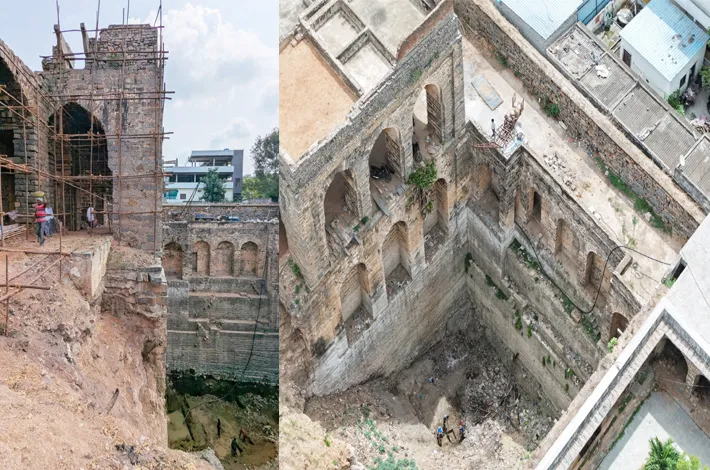
T P Venu I hyderabad : After lying neglected for nearly 350 years, Hathi Bowli (literally, the well of an elephant), located within the premises of the Hayat Bakshi Begum Mosque, also known as the Grand Mosque in Hayatnagar, is set to regain its past glory. The restoration initiative, spearheaded by the Akarmaa Foundation, marks another milestone in its efforts to revive Telangana’s historic stepwells. The foundation, which pioneered a year-long exhibition on stepwells to raise awareness about water conservation and the protection of these traditional water structures, has now embarked on giving Hathi Bowli a new lease of life.
Speaking to Metro India, Kaushik Kumar, one of the founders of the Akarmaa Foundation, said, “Work is underway, and 600 tonnes of garbage has been removed from the stepwell over the last six months.”
The project, funded by the Indian School of Business (ISB), will adhere to UNESCO norms. The restoration process will involve dewatering and desilting, followed by the use of materials consistent with those used in the original structure. Limestone will play a crucial role in the conservation work. The initiative will also focus on capacity building, providing lime craftsmen an opportunity to upgrade their skills and revive traditional restoration techniques.
Kaushik and his co-founder, Arunima Shankar, have been actively involved in documenting the State’s stepwells. According to estimates, Telangana has more than 600 stepwells, of which around 160 are located in Hyderabad alone. However, barring four or five, most of these structures are either hydrologically or structurally defunct. The foundation is also planning photographic documentation and legal protection for stepwells located within the city’s Outer Ring Road (ORR). Recently, A V Ranganath, Commissioner of the Hyderabad Disaster Response and Asset Protection Agency (HYDRAA), said that the Standard Operating Procedure (SOP) developed for the protection of lakes could also be extended to stepwells.
Kaushik says the first step towards their revival would be to identify and mark all the stepwells on revenue maps, followed by engaging with stakeholders to explore ways to restore them. As part of this effort, the Akarmaa Foundation has recently launched a series of exhibitions at different venues across Hyderabad to generate public awareness and encourage wider participation. The foundation is looking forward for sponsorship.
With the El Niño effect already impacting agriculture and intensifying concerns over water scarcity, the founders believe that reviving traditional water-harvesting systems such as stepwells could be an important part of the solution.
Huge tourism potential
The historic complex has considerable tourism potential. Hathi Bowli, one of the largest stepwells in Hyderabad, is located within the premises of the Hayat Bakshi Begum Mosque and could emerge as a major attraction once restored.
Built in the distinctive Qutb Shahi architectural style using lime and mortar, the mosque is flanked by a caravanserai, a traditional resting place where travellers could halt for the night. The caravanserai comprises 133 rooms, adding to the historical and architectural significance of the complex. Together, the mosque, caravanserai and stepwell offer an opportunity to create a heritage destination that showcases the region’s architectural legacy as well as its traditional water-management systems.