23 October, 2026 | 3:47 PM


Ex-DGP demands ‘population based fair share’ in representation
17-08-2026 12:00:00 AM
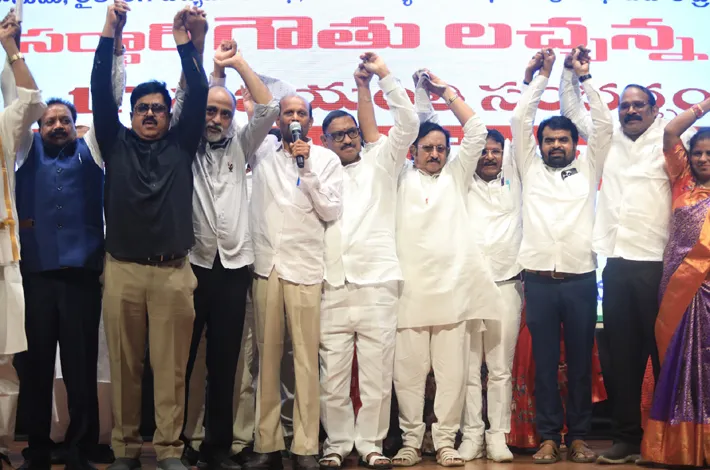
Metro India News | RAJAMAHENDRAVARAM
Political power in Andhra Pradesh has remained concentrated for decades in the hands of a few socially dominant communities, and the time has come to ensure a fair share in legislatures, cabinet and governance for BCs, SCs, STs, Muslims, Christians and other sections in proportion to their population, former Director General of Police and All India Bahujan Samaj Party National Coordinator Dr J. Purnachandra Rao said on Sunday.
Addressing the “Bahujan Maata–Paata” program held at Anam Kala Kendram in Rajamahendravaram to mark the 117th birth anniversary of freedom fighter, peasant leader and OBC icon Sardar Gouthu Lachchanna, Rao said Lachchanna should not be reduced to the leader of one caste. He said Bahujan communities needed to rediscover their own social reformers and political leaders instead of treating contemporary political leaders who had failed to address their structural problems as their “heroes”.
Citing figures compiled for the period from 1952 to 2024, he said around 2,902–2,903 MLAs had been elected in 16 Assembly elections. Of them, 1,207 belonged to the Reddy and Kamma communities together, while only 498 were from BC communities. Rao said the central question was no longer merely who wins an election, but which communities get how much share in legislative and executive power.
He said the political share of Muslims was even more worrying. The present Assembly, however, has only three Muslim MLAs, he claimed. He also said representation within the BC category itself was highly uneven. According to the figures he cited, 124 BC communities have never had even a single MLA. Communities including barbers, potters, blacksmiths, nomadic groups and several other smaller occupational and social groups had remained outside the Assembly, he said.
Rao questioned both ruling and opposition parties over the issue of 34 per cent reservation for BCs in local bodies. He said that said BC politics should now move beyond defending existing reservations to demanding a fair share in political power itself. Rao also linked social justice with land and development. He criticized a model of development in which lands belonging to BC, SC, ST and Adivasi farmers were acquired for major projects, while the long-term gains from those projects did not flow back to the displaced communities.
The ex-DGP said conversion of religion did not automatically erase caste-based social discrimination. Political parties should address the question of SC status for Dalit Christians as an issue of social justice rather than merely electoral calculation, he said. Rao said social justice could not stop with the number of MLAs. It had to extend to the Cabinet and other centers of decision-making. If BCs constituted around 50 per cent of the population, he argued, then in a Cabinet of 25 members there should be roughly 12 BC ministers under a population-share principle.
He argued that social media had created new possibilities for grassroots mobilization and said the Telangana movement had shown how an idea could become a political force. In the same way, BC–SC–ST–Muslim unity should be converted into a social justice political force, he mentioned.